CTP Process (Cell-to-Pack): How It's Revolutionizing EV Battery Design
Related Topics
Discover how CTP (Cell-to-Pack) battery technology eliminates modules to boost energy density, cut costs, and transform electric vehicle performance.
Follow us on
Electric vehicles are getting better every year, and one of the biggest reasons is how battery packs are being built differently. We're seeing a shift away from old-school designs with lots of modules and heavy parts. Instead, the CTP process (Cell-to-Pack) is changing the game by putting battery cells directly into packs without all those extra steps in between.
Think about it like this: traditional battery packs are kind of like building a house with lots of unnecessary walls and hallways. They take up space, add weight, and make things more complicated. The CTP approach is like going open-concept – you get more usable space, better efficiency, and everything just works smoother. For anyone curious about where EV technology is headed, understanding the CTP process is pretty important. It's not just some technical upgrade; it's literally reshaping how we think about battery design, manufacturing processes, and what electric cars can do.
In this article, we're going to break down what makes CTP technology tick, why it matters for the future of transportation, and what challenges still need solving.
What Is Cell-to-Pack (CTP) Battery Technology?
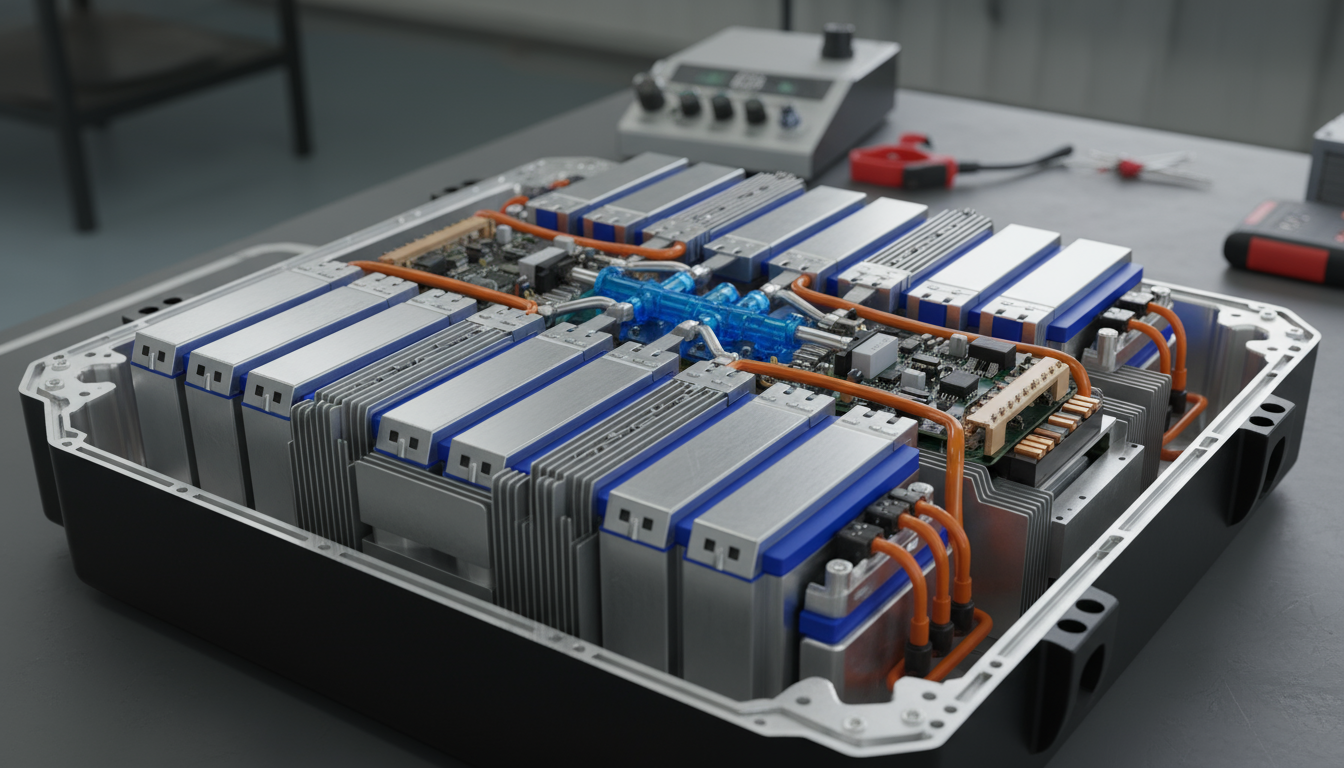
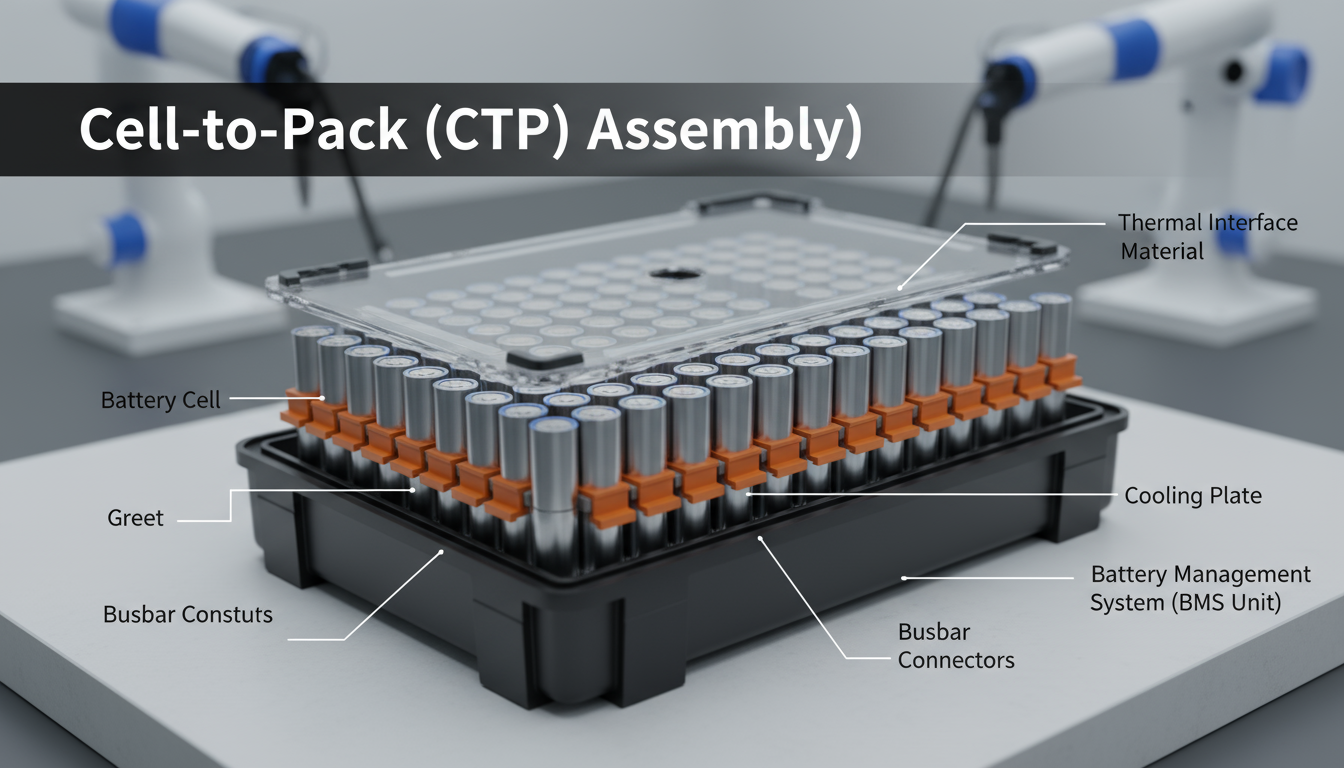
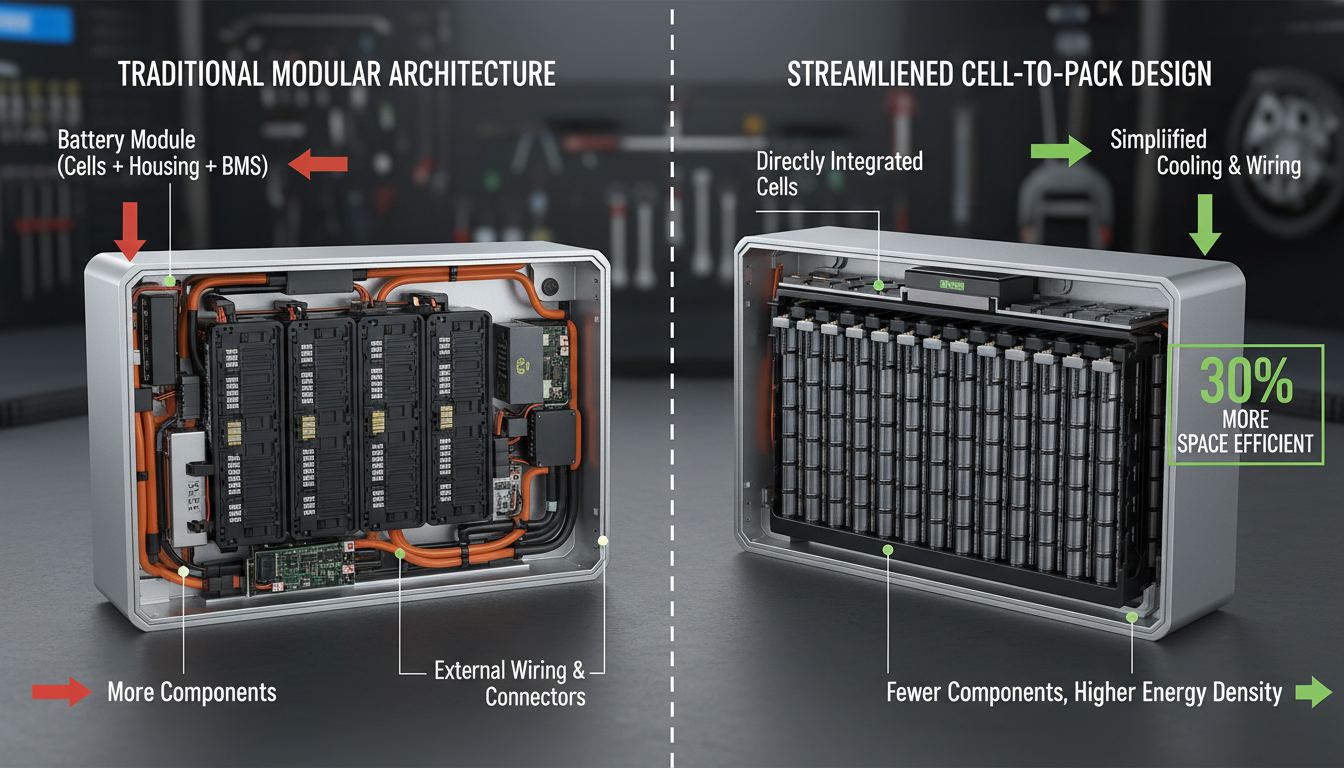
Cell-to-pack (CTP) battery design is a manufacturing process used to create lithium-ion battery packs by directly integrating individual battery cells into the pack without using module-level electronics. In simple terms, it's all about skipping the middle step. Traditional battery systems go from cell → module → pack. But with CTP, this innovative technology assembles cells directly into the battery pack, bypassing the need for modules.
Instead of grouping cells into separate modules with their own frames, wiring, and connectors, CTP just puts everything straight into the battery pack housing. Using CTP, even the space previously occupied by module cases themselves can be filled with cells. This means you can fit more actual battery cells in the same amount of space, which translates to more energy storage and longer driving range.
What makes this so different from what came before? Well, older battery designs needed all those modules because they helped with managing, protecting, and cooling the cells. But modules also added a ton of weight and took up valuable room. The CTP approach figured out how to handle thermal management, structural support, and safety without needing those bulky intermediate components. That's why this technology is being adopted by major players in the battery industry – companies like CATL, LG Energy Solution, and BYD are all pushing their own versions of CTP designs.
How Is Cell-to-Pack Revolutionizing EV Battery Pack Designs?
The electric vehicle (EV) sector is evolving, with manufacturers continuously innovating battery designs to bolster energy density for extended range, optimize space, and reduce battery cost — which accounts for about 30% of total vehicle costs. This is where CTP really shines. By getting rid of modules, this new module-free approach, referred to as "Cell-to-Pack" (CTP), reportedly increases volume-utilization space from 15-50%, depending upon battery cell design. And that's not all – moreover, the number of parts is claimed to be reduced up to 40%.
Less parts means less complexity during manufacturing. Fewer things to assemble, fewer things that can go wrong, and a whole lot less time spent on production lines. Additionally, as the module process is eliminated, the number of components used is reduced compared to the existing process, leading to reduced pack manufacturing time and cost savings. That's a big deal when you're trying to make EVs more affordable for regular people.
But here's the thing: Cell-to-pack (CTP) designs integrate battery cells directly into the battery pack, eliminating intermediate modules to enhance energy density and simplify manufacturing. So it's not just about saving money – it's about getting better performance too. When you can pack more cells into the same space, vehicles can go farther on a single charge. And at a time when ternary lithium batteries and other advanced chemistries are becoming mainstream, CTP technology helps squeeze every bit of performance out of them.
Key Benefits at a Glance:
Advantage
Impact
Space Utilization
15-50% increase in usable volume
Parts Reduction
Up to 40% fewer components
Energy Density
10-15% improvement over traditional packs
Manufacturing Time
Significantly reduced assembly steps
Weight Reduction
Lighter overall battery pack
Key Design Considerations for CTP Battery Success
Just because CTP technology sounds amazing doesn't mean it's easy to pull off. There are some real challenges that engineers have to tackle. One of the biggest is thermal management. Without modules to help spread out heat, to address the emerging trends in battery pack design, new thermally conductive adhesive technology is needed, especially given the imposition of more demanding environmental and mechanical performance conditions.
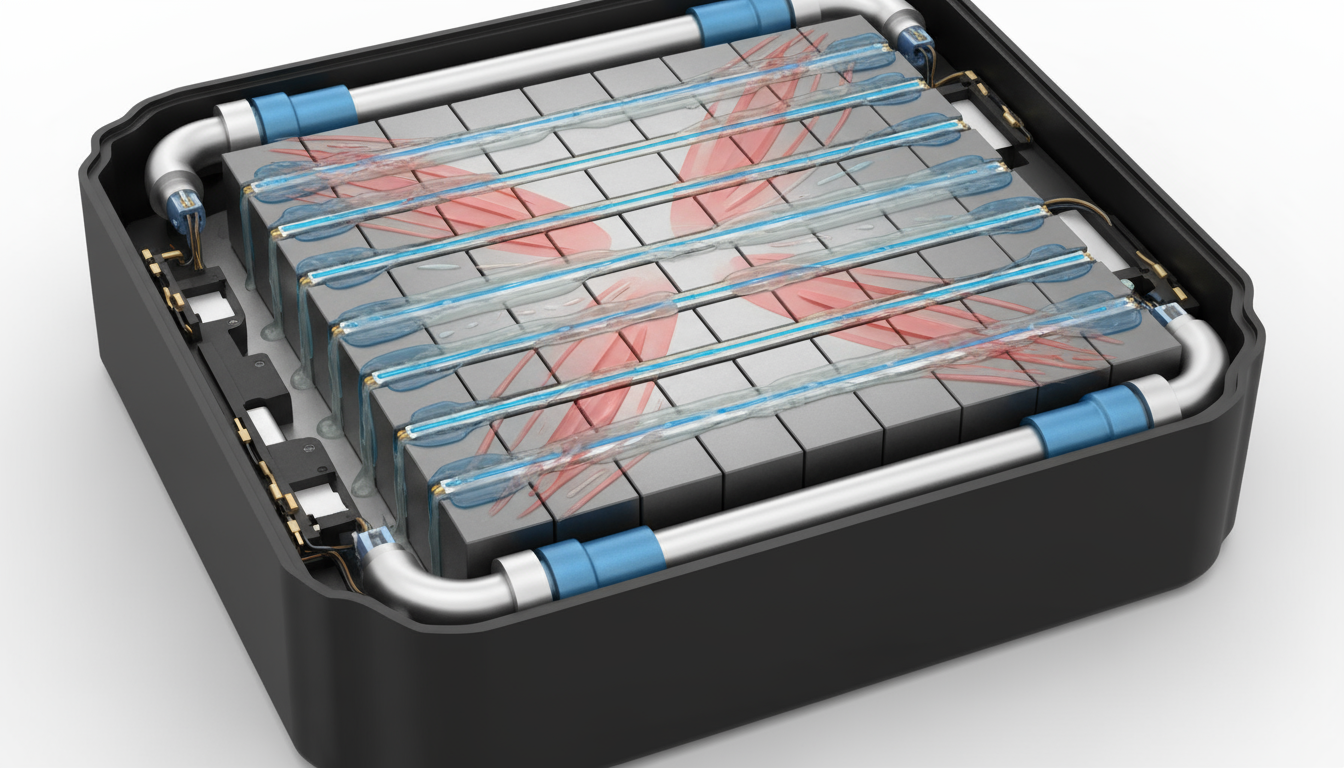
Battery cells generate heat when they charge and discharge. In a traditional pack, modules help isolate and manage that heat. But in CTP designs, many EV and battery manufacturers are eliminating modules entirely and directly bond batteries to the cooling plate. This requires advanced materials – things like thermal adhesives, heat-conducting resins, and specially designed cooling plates that can pull heat away from cells efficiently.
Structural support is another big one. Three of the biggest issues that come with a cell to pack design include the loss of structural support to the battery, effective sealing, and increased risk of battery fire. The loss of structural support comes from the loss of the side wall and enclosure of the modules. Without those rigid module frames, cells need something else to keep them in place and protect them from vibration and shock. To resist the expansion force of each battery, the module-free structure uses strapping and end panels. These parts clamp the battery pack and help control the expansion force.
And then there's safety and sealing. Traditional designs had multiple layers of protection – each module was sealed, and then the whole pack was sealed too. In a modular design, each module would have a sealed lid as well as the entire pack having a sealed lid. With cell to pack designs, there is only one seal on the pack lid. This means the sealing technology has to be absolutely top-notch to keep out moisture, dust, and anything else that could damage the cells.
Cell-to-Pack vs Cell-to-Chassis: What's the Difference?
In electric vehicle (EV) battery pack design, "cell-to-pack" (CTP) and "cell-to-chassis" (CTC) are two different approaches for integrating individual battery cells into a battery system. While they sound similar, they're actually pretty different in how they work.
With CTP, the battery pack is still a separate unit that gets installed into the vehicle. The cells go directly into a pack housing, and that whole assembly is then mounted to the car's chassis or structure. It's modular in the sense that you could theoretically remove and replace the entire battery pack if needed.
CTC takes things even further. Cell-to-chassis (CTC) designs incorporate the battery cells directly into the vehicle's chassis, optimizing space, reducing weight, and improving structural integrity. Basically, the battery becomes part of the car's structure itself. Tesla's been working on this with their 4680 battery cells and structural battery pack designs. The advantage is that you save even more weight and space, and the battery can actually help stiffen the vehicle's body.
But CTC comes with its own challenges. Fortifying chassis structures to avert cell rupture or combustion during vehicle impacts poses challenges. If the battery is built into the car's structure, what happens if there's an accident? And maintenance becomes way harder – you can't just swap out the battery pack if something goes wrong.
For now, original equipment manufacturers (OEMs) are exhibiting no clear preference for cell-to-pack or cell-to-chassis designs. Some companies are sticking with CTP because it offers a good balance between improved efficiency and practical manufacturability. Others are pushing hard into CTC territory. Both will likely coexist for the foreseeable future, each serving different market segments and vehicle types.
Advantages and Challenges of CTP Technology
Let's be real about what CTP brings to the table and where it still struggles. On the plus side, the number of components in the battery pack is reduced by 40%, and the utilization rate is increased by 15%-20%. Energy density is increased from both mass and volume dimensions, with battery energy density increasing by 10%-15%. That's huge for making EVs more competitive with gas-powered cars.
The Upsides:
Higher Energy Density: More cells in the same space = more range
Cost Reduction: Fewer parts and simpler assembly = lower manufacturing costs
Faster Production: The production efficiency has been increased by 50%, which will greatly reduce the power battery manufacturing costs.
Better Space Utilization: More room for cells means less wasted volume
The Challenges:
Thermal Management Complexity: Without module-level cooling, managing heat is harder
Structural Concerns: Cells need protection from vibration and expansion forces
Safety Risks: Increased risk of battery fire is caused by the cells being in direct contact with the frame or body of the vehicle. If there an accident, even a small one, there is an increased chance that cells will be damaged resulting in thermal runaway and eventually thermal propagation.
Maintenance Difficulty: The bonding method of the cells makes it impossible to replace individual cells post-production. If a fault occurs in any cell within the battery pack, the entire pack must be replaced, leading to its disposal.
Manufacturing Precision: The main issue lies in ensuring consistent quality and performance across large volumes of cells. Each cell must be engineered with high precision, as any variability can affect the overall pack performance, requiring advanced manufacturing processes and strict quality control.
The technology is still evolving. Companies are developing new materials, better cooling systems, and smarter battery management systems to address these challenges. And as production scales up and manufacturers get more experience with CTP, many of these issues will likely get easier to manage.
What's Next for CTP Battery Technology?
The future of CTP looks pretty bright, even though there's still work to do. LG Energy Solution aims to mass-produce pouch-type batteries equipped with CTP technology by 2025. Other manufacturers are pushing their own timelines and innovations. CATL's third-generation CTP (the Kirin battery) claims even higher energy density and better thermal performance than earlier versions.
We're also seeing interesting variations on the basic CTP concept. The latest prismatic blade cells are one of the latest CTP concepts. The blade batteries are as long as the width of a battery pack, running up to 2.5m in length. The design provides enhanced safety, durability, performance, and greater battery space. These ultra-long blade cells are being used by BYD and others to create CTP packs with unique advantages in structural strength and heat dissipation.
There's also a lot of innovation happening in materials. We have developed thermally conductive (TC) urethane adhesives that will enable direct bonding of battery cells with cooling plates. New adhesives, sealants, and thermal interface materials are being specifically engineered for CTP applications, making it easier to solve some of the thermal and structural challenges we talked about earlier.
And looking even further ahead, CTP and Cell To Chassis (CTC)—where cells are directly integrated into the vehicle chassis—will coexist. Vehicle manufacturers with more experience in chassis development will have greater control in the future, while battery manufacturers lacking experience and technical accumulation in vehicle chassis development may lose control over entire projects. This could reshape the entire automotive supply chain, changing who has power and who needs to partner with whom.
Frequently Asked Questions
What makes CTP batteries better than traditional battery packs?
CTP batteries skip the module step, packing cells directly into the battery housing. This gives you more energy storage in the same space, cuts manufacturing costs, reduces weight, and simplifies assembly – all while delivering 10-15% better energy density than traditional modular designs.
Can you replace individual cells in a CTP battery pack?
Nope, that's one of the downsides. Since cells are bonded directly into the pack structure, you can't just swap out a single bad cell like you could with modular designs. If something goes wrong, you typically need to replace the whole pack, which can be expensive and wasteful.
How does CTP technology handle battery cooling and heat management?
CTP designs use advanced thermal management systems like large-area cooling plates bonded directly to cells with thermally conductive adhesives. Some designs also use thermal resins and specialized cooling channels to pull heat away efficiently, even without the heat-spreading help that modules used to provide.
Which EV manufacturers are using Cell-to-Pack technology?
Major players like CATL, LG Energy Solution, BYD, and others have all developed their own versions of CTP technology. CATL's Kirin battery, BYD's Blade Battery, and LG's pouch-type CTP systems are all examples being used in production vehicles today or coming very soon.
Is CTP the same as Cell-to-Chassis (CTC) technology?
No, they're different. CTP puts cells directly into a battery pack that's still a separate unit you can install in a vehicle. CTC goes further by integrating cells directly into the car's chassis structure itself, making the battery part of the vehicle's body. CTC saves even more space and weight but is harder to manufacture and maintain.
Highstar attaches great importance to your personal privacy. When you visit our website, please agree to the use of all cookies. More information about the processing of personal data can be found at "Privacy Policy"


 Buy
Buy