Dry Electrode Process: How This Technology Is Changing Battery Manufacturing
Related Topics
Discover how the dry electrode process cuts battery production costs by up to 15% while reducing emissions. Learn about this solvent-free manufacturing technology.
Follow us on
Battery manufacturing is at a turning point. We're seeing a shift from traditional solvent-based methods to a cleaner, more cost-effective approach: the dry electrode process. This technology eliminates toxic solvents, cuts energy use by 25%, and promises to reshape how we make lithium-ion batteries for electric vehicles and energy storage.
The dry process works by mixing active materials, binders, and conductive additives as dry powders—then depositing them directly onto metal current collectors. No solvents needed. The result? Lower costs, smaller factory footprints, and batteries that can deliver better performance.
What Makes Dry Electrode Different from Wet Processing
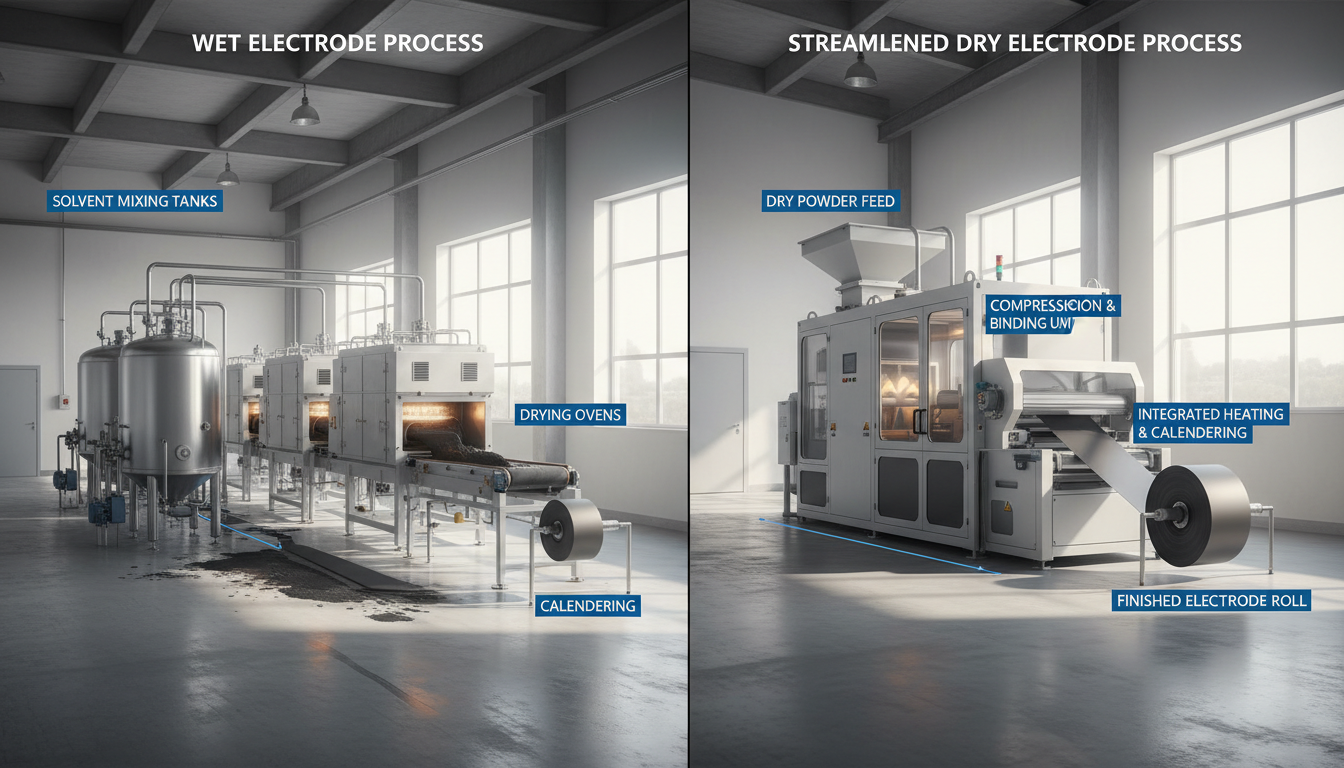
Traditional wet electrode manufacturing relies on a slurry-based approach. Active materials get mixed with toxic solvents like N-Methyl-2-pyrrolidone (NMP) to form a paste, which is then coated onto metal foils. After coating, the electrodes go through energy-intensive drying to remove solvents, followed by solvent recovery systems to reclaim and process the chemicals.
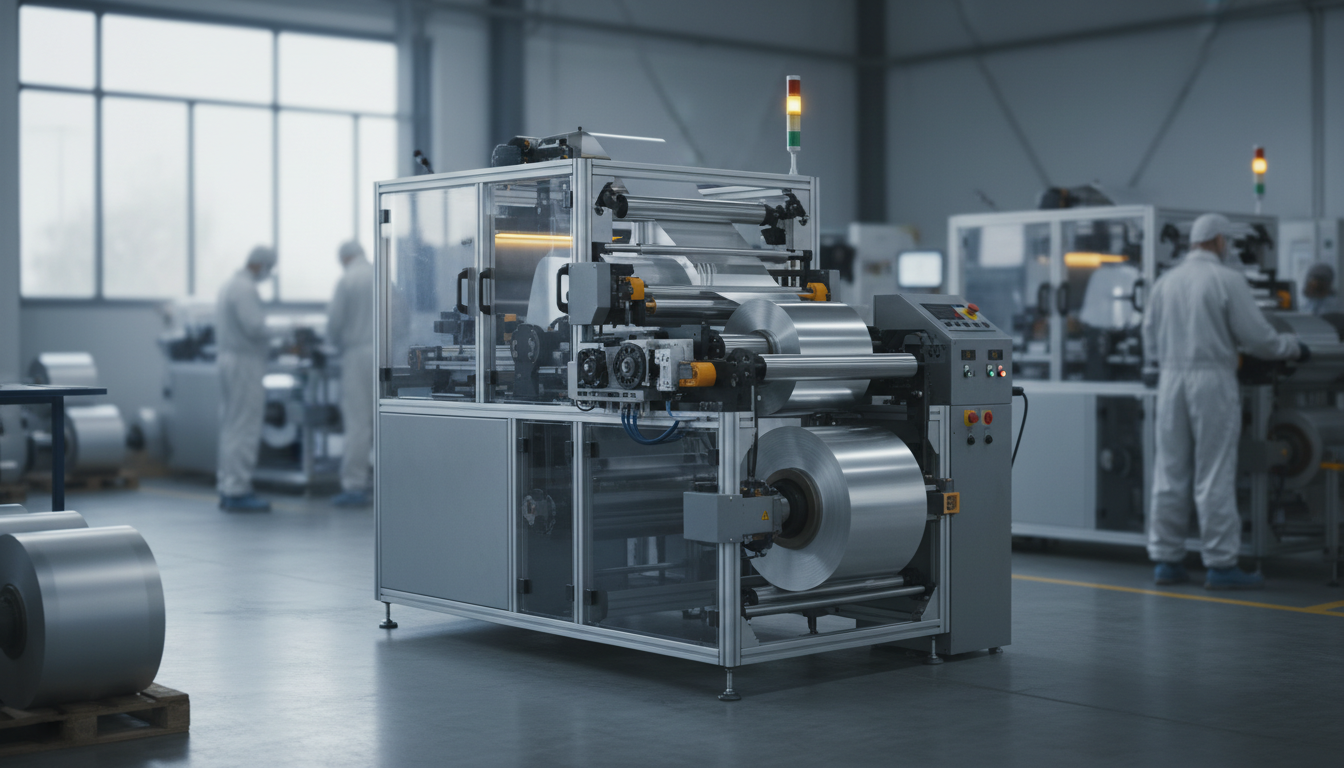
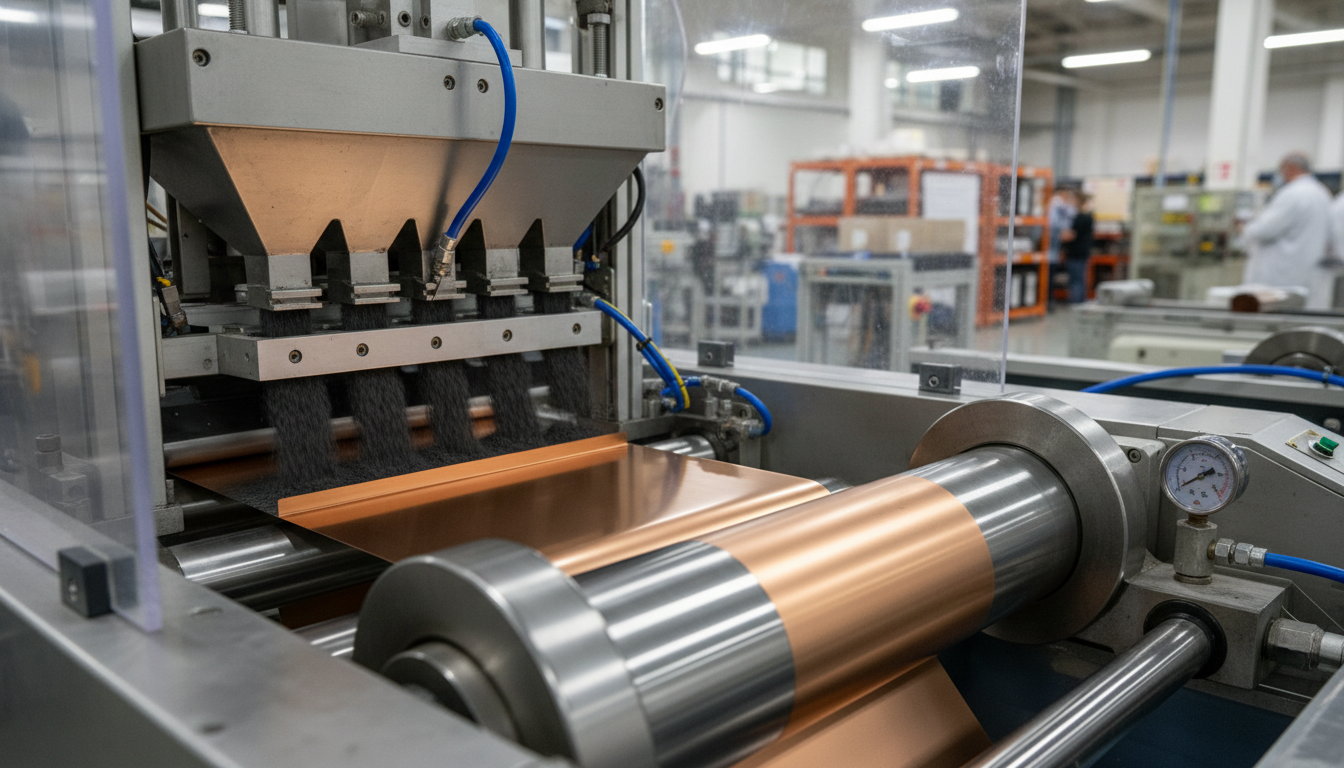
Dry electrode processing skips all that. Instead of creating a liquid slurry, manufacturers work with dry powder mixtures. These powders get deposited onto current collectors using methods like electrostatic spraying or roll-to-roll coating. Heat and pressure then bind the particles together, creating a finished electrode ready for battery assembly.
The differences go beyond just eliminating solvents. Wet processing requires massive drying ovens that consume 30-55 kWh per kWh of cell energy produced. Dry processing cuts this energy demand by 71% during electrode manufacturing. That translates to real savings—both in utility bills and environmental impact.
Cost Savings and Production Benefits
Here's where dry electrode technology gets interesting for manufacturers. Production costs drop by 6-15% compared to traditional methods. How? By eliminating several expensive steps.
First, no solvent means no solvent recovery equipment. These systems are costly to install and maintain. Second, without drying ovens, factory floor space requirements shrink by 22-60%. That's a huge reduction in capital expenditure for new facilities.
Production speed increases too. The wet process creates bottlenecks during the drying phase, which can take hours. Dry processing moves faster because it skips this step entirely. Faster throughput means higher production volumes without expanding facilities.
Companies like Tesla and LG Energy Solution are betting big on this technology. Industry analysis suggests that by 2030, when just 10% of battery production uses dry coating, the industry could save 480,000 tons of CO2 emissions annually. That's not small potatoes when you're trying to build a sustainable energy future.
Environmental Impact and Safety Improvements
NMP solvent isn't just expensive—it's dangerous. This chemical causes reproductive toxicity risks and requires strict handling protocols. Factory workers need extensive safety equipment, and any spills create serious environmental hazards.
Dry electrode manufacturing removes this risk completely. No toxic solvents means safer working conditions and fewer environmental concerns. Plants can be located in more areas because they don't need extensive environmental mitigation systems.
The energy savings add up quickly. Traditional wet processing generates 2.7-3.0 tons of CO2 emissions per 28 kWh battery produced. Dry processing cuts total cell manufacturing emissions by 9%. That reduction comes primarily from eliminating solvent drying and recovery, which accounts for over 25% of total energy consumption in conventional production.
Water usage drops too. Wet processes require water for cooling drying ovens and diluting solvents. Dry processing needs minimal water, making it more suitable for regions with water scarcity.
Performance Advantages for Battery Cells
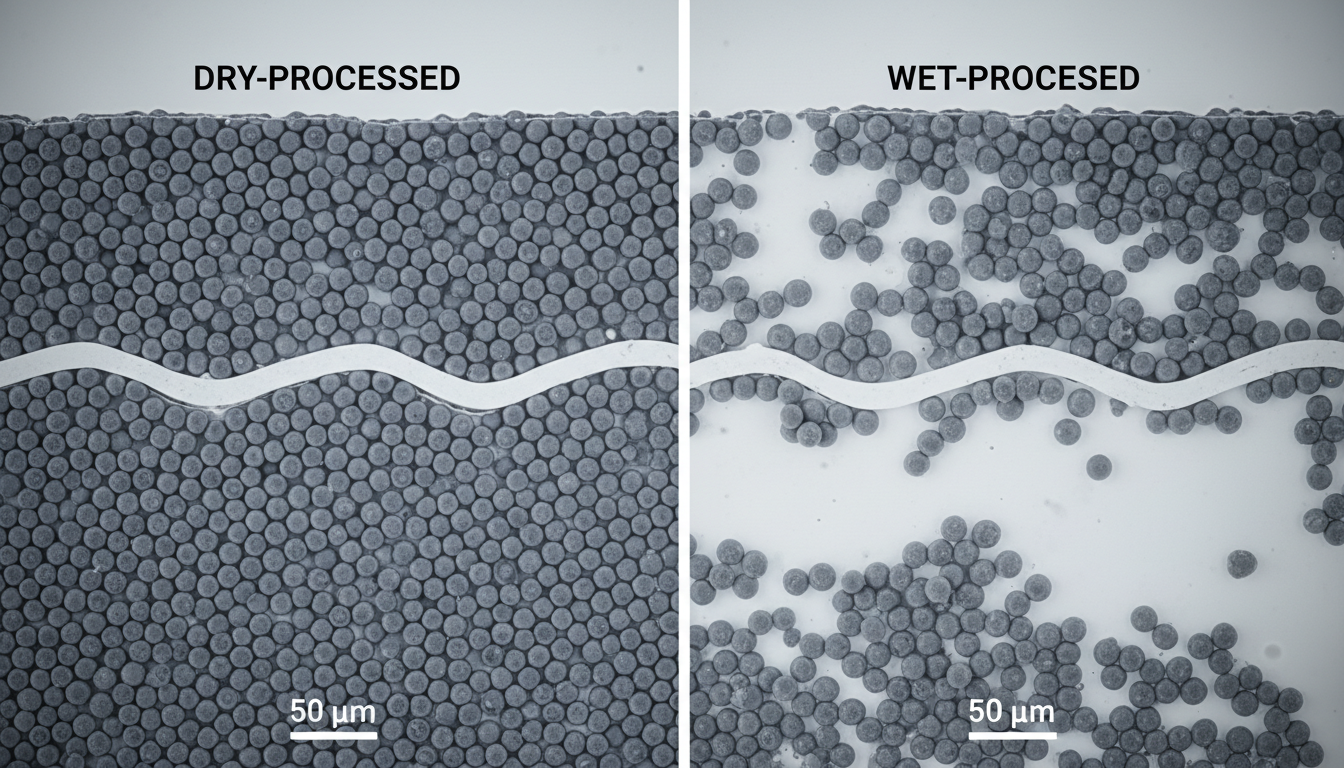
Battery performance improves with dry electrode processing. The technology allows manufacturers to create thicker electrodes with higher energy density. Wet processing struggles with thick electrodes because during drying, conductive agents and binders migrate to the upper layer—creating uneven distribution.
Dry processing avoids this migration problem. Active materials, binders, and conductive additives stay uniformly distributed throughout the electrode. This uniform structure means better electrical conductivity and more stable long-term cycling performance.
Dry-processed electrodes also show stronger mechanical properties. They're more flexible and less prone to cracking during battery assembly. This flexibility matters for mass production, especially for cylindrical cells that require winding capability.
The enhanced contact between particles in dry electrodes leads to better ionic conductivity. Research shows dry-processed batteries maintain capacity better after extended use. Some studies report "superb" capacity retention even after thousands of charge-discharge cycles.
Industry Adoption and Future Outlook
Right now, dry electrode processing makes up about 1% of global electrode production. But that's changing fast. Major manufacturers are building pilot lines and planning commercial-scale facilities.
Tesla plans to start producing battery cells using the dry process soon. Volkswagen claims significant progress in dry electrode technology. These aren't small players—their moves signal real confidence in the technology's viability.
Challenges remain, though. Controlling uniformity and consistency during dry film formation is trickier than with wet slurries. Process parameters need tight control, and the right binder formulation is key. Currently, PTFE (polytetrafluoroethylene) serves as the primary binder for many dry processes, but researchers are developing better alternatives.
The technology shows particular promise for ternary lithium batteries and solid-state batteries. As the industry pushes toward higher energy densities above 400 Wh/kg, dry processing becomes more attractive because it handles thick, high-loading electrodes better than wet methods.
Key Manufacturing Techniques
Several dry electrode deposition methods are gaining traction:
Electrostatic Spray Coating: Charges dry powder particles electrostatically, then deposits them onto grounded current collectors. This method offers precise thickness control and uniform distribution. It works well for research and specialty applications but faces scalability challenges for high-volume production.
Roll-to-Roll Dry Coating: The most commercially promising approach. Dry powder mixtures get continuously deposited onto moving metal foils. Heat and pressure from rollers bind particles together. This method scales well for mass production and integrates with existing battery manufacturing equipment.
Dry Pressing: Mixes dry materials into a powder blend, then applies pressure to compact particles onto current collectors. Simple and effective, but slower than continuous methods.
Each technique has trade-offs between uniformity, production speed, and equipment complexity. We're seeing manufacturers experiment with hybrid approaches that combine benefits from multiple methods.
Conclusion
The dry electrode process represents a real step forward in battery manufacturing. By eliminating solvents, cutting energy use by 25%, and reducing costs by up to 15%, this technology addresses major pain points in battery production. It makes manufacturing cleaner, faster, and more economical.
We're watching an industry transition unfold. While wet processing still dominates today, dry electrode technology is scaling rapidly. The combination of cost savings, environmental benefits, and performance improvements makes it compelling for next-generation battery production.
As electric vehicle adoption grows and energy storage demand increases, manufacturing efficiency becomes more important. Dry electrode processing offers a path to meet that demand sustainably. At Highstar, we're keeping close watch on these developments as they reshape battery technology and manufacturing standards.
FAQs
What is the main advantage of dry electrode processing over wet processing?
The biggest advantage is eliminating toxic NMP solvents and energy-intensive drying steps. This cuts production costs by 6-15%, reduces energy consumption by up to 25%, and decreases factory floor space requirements by 22-60%. It also removes environmental hazards associated with solvent handling and recovery.
Does dry electrode processing affect battery performance?
Actually, it often improves performance. Dry-processed electrodes show more uniform material distribution, better mechanical flexibility, and superior capacity retention during extended cycling. The process allows for thicker electrodes with higher energy density while maintaining good ionic conductivity.
Which battery manufacturers are using dry electrode technology?
Tesla and LG Energy Solution are leading commercial adoption. Tesla plans to produce battery cells using the dry process soon, while LG is commercializing the technology based on its research foundation. Volkswagen has also announced significant progress in dry electrode development.
Can dry electrode processing work with different battery chemistries?
Yes, the technology is chemistry-agnostic. All cathode materials currently used in commercial lithium-ion batteries—including high-nickel cathodes, LFP, and ternary lithium—work well with dry processing. It's also compatible with various anode materials, though silicon-dominant anodes require specialized binder formulation.
What are the main challenges for dry electrode manufacturing?
The biggest challenge is controlling uniformity and consistency during film formation. Dry powders behave differently than liquid slurries, requiring precise control over deposition processes. Finding optimal binder formulations for different materials also needs more development. Process equipment designed specifically for dry powder handling is still evolving.
Highstar attaches great importance to your personal privacy. When you visit our website, please agree to the use of all cookies. More information about the processing of personal data can be found at "Privacy Policy"


 Buy
Buy