How Electric Vehicles Are Classified by Battery Role: BEV, HEV, PHEV, and More
Related Topics
Discover how electric vehicles are classified based on battery function. Learn the key differences between BEV, HEV, PHEV, FCEV, and mild hybrids to find the right EV for your needs.
Follow us on
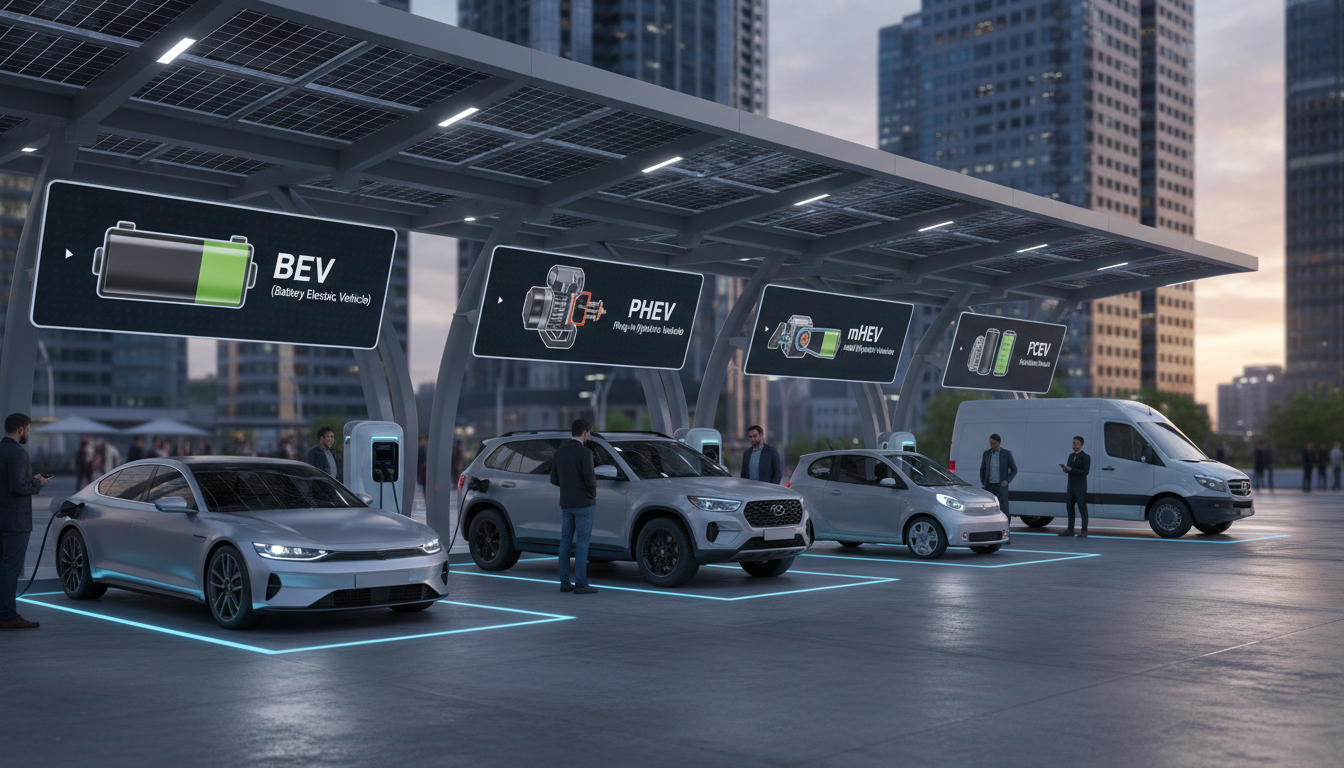
The electric vehicle market has grown beyond simple "electric or gas" choices. Today, we have multiple types of EVs, each classified by how the battery functions within the vehicle's powertrain. Understanding these classifications helps you make smarter decisions about which type fits your driving habits and lifestyle.
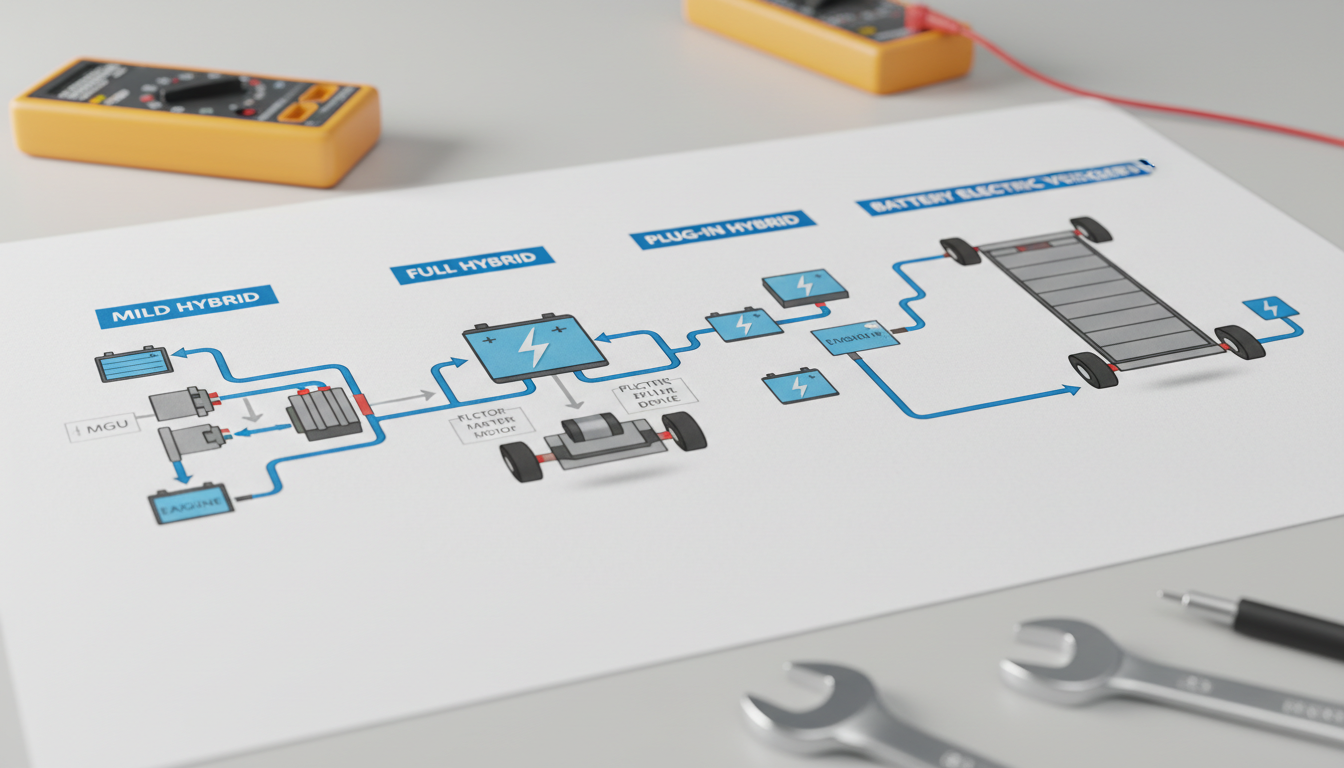
Think of battery role as the job description for the power source in your vehicle. Some batteries run the entire show. Others work alongside a gas engine. And some just assist during specific driving conditions. Let's break down what makes each type unique.
Battery Electric Vehicles: All-In on Electric Power
Battery Electric Vehicles (BEVs) run entirely on electricity stored in rechargeable batteries without any gasoline engine[2]. We're talking about vehicles like the Tesla Model 3, Nissan Leaf, and other fully electric cars you'll see on the road.
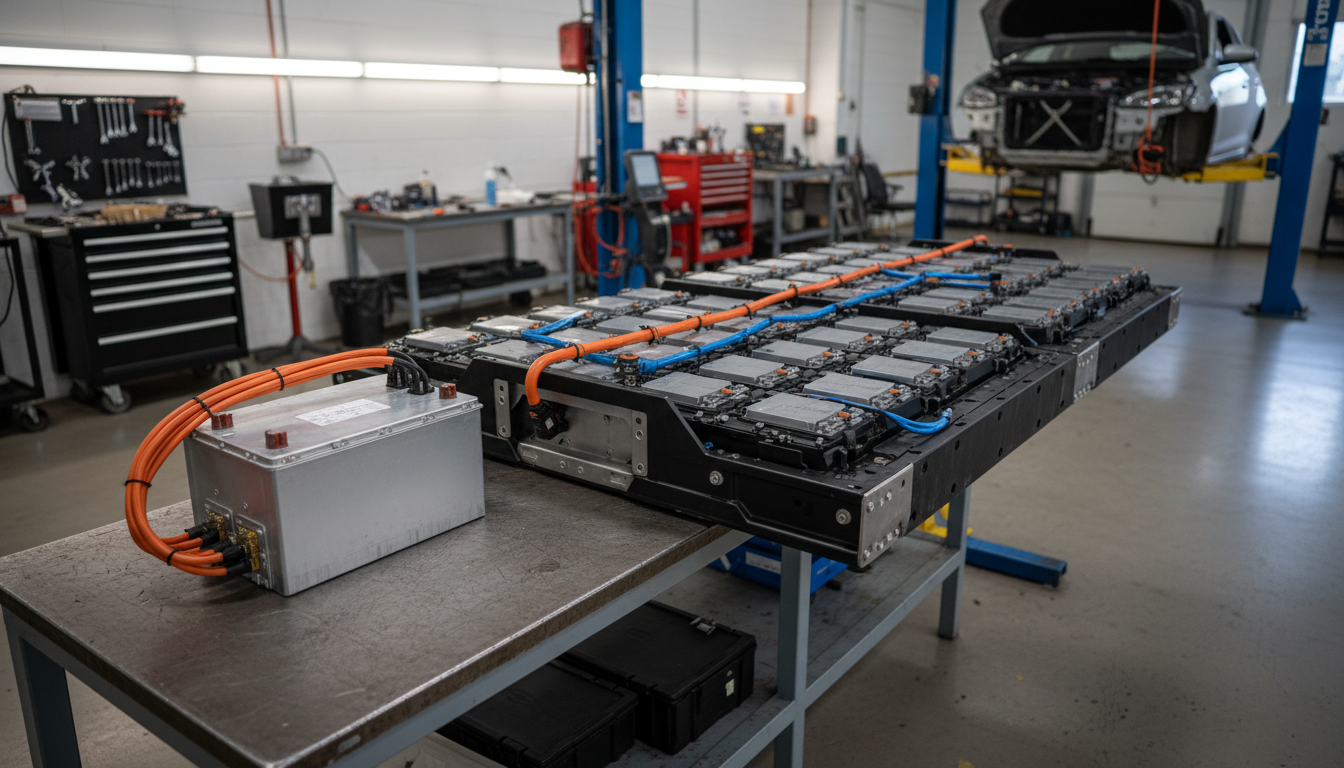
BEV battery capacities typically range from about 40 kWh to 80 kWh, though some now have batteries as large as 200 kWh[5]. This large battery pack powers everything—from the motor to the climate control—which is why BEVs need such hefty energy storage. BEVs produce zero tailpipe emissions or air pollution[2], making them the cleanest option for daily driving.
HEVs have both a gas-powered engine and an electric motor, with battery energy gained through regenerative braking to assist the gasoline engine during acceleration[2]. The Toyota Prius made this type famous back in 1997.
Here's the catch—you never plug in an HEV. Users don't plug in HEVs, as the electric battery recharges through regenerative braking[5]. The battery's role is strictly supportive. It helps during acceleration, reduces idling waste, and captures energy that would otherwise be lost when you brake.
While regular hybrids can travel 1-2 miles at low speed before the gasoline engine turns on, the battery is small compared to other EV types[2]. Battery capacity isn't the star here—fuel efficiency is.
Plug-In Hybrid Electric Vehicles: Best of Both Worlds
PHEVs have both an engine and electric motor, recharge through regenerative braking, and differ from regular hybrids by having a much larger battery that can plug into the grid[2]. This gives them significantly more electric-only range.
PHEVs can travel a decent distance on electric power alone—about 20 to 30 miles—due to their increased battery size and ability to recharge from the grid[5]. Some newer models push that range to 40-50 miles. For many people, that covers their daily commute entirely on electric power.
The battery's role shifts depending on your drive. Short trips? Pure electric. Long road trip? The gas engine kicks in once the battery depletes. It's flexibility without range anxiety.
Mild Hybrid Electric Vehicles: The Minimalists
Mild hybrids have the least amount of focus on electric power and cannot drive the vehicle on pure electric power alone[3]. Think of them as gas vehicles with an electric power boost.
Mild hybrids pair an ICE with a small battery that provides added electric power to help reduce the gas engine's workload, resulting in improved fuel economy, increased performance, and enhanced passenger comfort[1]. By having the starter motor assist the gasoline engine, mild hybrids produce fuel consumption savings of up to 15% in urban driving[8].
The battery's role here is minimal but meaningful. It powers accessories, smooths out engine restarts in stop-start systems, and provides a little torque assistance during acceleration.
Fuel Cell Electric Vehicles: Hydrogen's Promise
FCEVs use hydrogen gas as a fuel source to generate electricity, producing electricity on board using a chemical process in the fuel cell stack[1]. FCEVs emit only water vapor and heat, and refueling takes about 3-5 minutes[1].
The battery in an FCEV plays a different supporting role. It stores electricity generated by the fuel cell and provides power during peak demand. The Toyota Mirai rates at 66 mpg-e with a range of 312 miles, while the Hyundai Nexo rates at 61 mpg-e with a range of 380 miles[8].
FCEVs remain the least common type due to limited hydrogen infrastructure, but they show promise for certain applications where quick refueling and long range matter most.
Battery Requirements Across Different EV Types
The classification by battery role directly impacts battery specifications. BEVs require large-capacity batteries with high energy density and output, mainly using batteries over 60Ah[3].
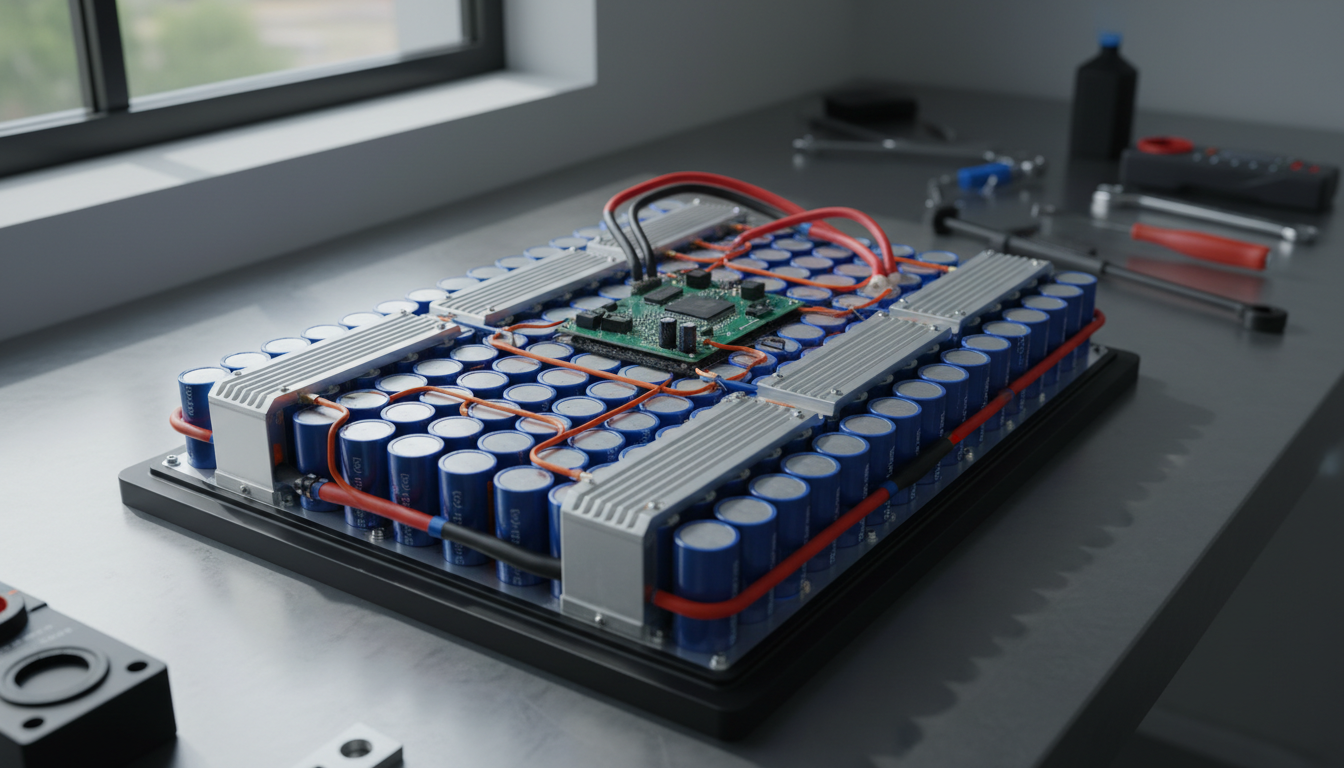
PHEV batteries are about 4 to 10 times larger than HEV batteries, with lithium-ion batteries as the primary power source since the engine is used only after electric energy is exhausted[3]. HEV batteries with excellent durability and performance support the engine, using high-output batteries such as nickel-hydrogen or NCA batteries[3].
This hierarchy makes sense when you consider each battery's job. BEVs need marathon-runner endurance. PHEVs need substantial capacity with grid-charging capability. HEVs need quick bursts of power and rock-solid reliability.
Our research at Highstar focuses on advancing battery chemistry to meet these diverse needs. We've explored innovative approaches like ATP ionic compounds in bio-inspired batteries to push the boundaries of energy storage.
How to Choose the Right Classification for Your Needs
Your driving patterns should guide your choice. Daily commute under 30 miles with home charging? A PHEV gives you mostly electric driving with gas backup. Want zero emissions and have charging access? BEV is your answer. Mainly highway driving without charging options? A traditional HEV might work better.
PHEVs have smaller batteries than BEVs, so conventional charging will likely be sufficient to charge them in a short amount of time[5]. But BEVs need more planning around charging infrastructure, especially for long trips.
Cost matters too. Mild hybrids typically cost less upfront than PHEVs or BEVs. But fuel savings over time can offset higher purchase prices for more electric-focused vehicles.
The Future of EV Classification
Battery technology continues advancing rapidly. Various studies including silicon anode materials are being conducted to improve BEV charging speed, with battery technology advancing daily to overcome driving range and charging time concerns[3].
As batteries improve, these classifications might blur. We may see BEVs with 500+ mile ranges that recharge in 10 minutes. Or PHEVs with 100-mile electric ranges. The role of the battery keeps expanding as technology progresses.
What won't change is the fundamental principle: how much the battery contributes to propulsion defines the vehicle type. Whether it's the main power source, a substantial partner, or a helpful assistant shapes everything from vehicle design to your daily driving experience.
Conclusion
Electric vehicle classification by battery role gives us five main categories: BEVs run entirely on batteries, HEVs use batteries to assist gas engines, PHEVs blend substantial electric range with gas backup, mild hybrids add minimal electric assistance, and FCEVs use batteries to store hydrogen-generated electricity. Each classification reflects a different balance between battery capacity, electric range, and reliance on alternative power sources. Understanding these roles helps you match vehicle type to your lifestyle, whether you're ready for all-electric driving or prefer the transition flexibility that hybrid systems offer.
Frequently Asked Questions
What's the main difference between HEV and PHEV batteries?
The main difference is size and charging method. PHEV batteries are 4-10 times larger than HEV batteries and must be plugged in to fully charge, while HEV batteries are smaller and charge only through regenerative braking and the gas engine. PHEVs can drive 20-50 miles on electric power alone, while HEVs typically manage only 1-2 miles at low speeds before the gas engine engages.
Do all electric vehicles need to be plugged in?
No, not all EVs need plugging in. Only BEVs, PHEVs, and FCEVs (using hydrogen instead of electricity) require external charging. HEVs and mild hybrids recharge their batteries automatically through regenerative braking and engine power, making them "self-charging" systems that never need a charging cable.
Why do BEVs need such large batteries compared to hybrids?
BEVs need large batteries because they're the sole power source for the entire vehicle with no gas engine backup. They must store enough energy to power the motor, climate control, electronics, and all vehicle systems for 200-400 miles of driving. Hybrids only use batteries for assistance, so they need much less capacity.
Can a PHEV run without ever charging the battery?
Yes, PHEVs can operate like regular hybrids if you never plug them in. However, you'll lose most of the efficiency benefits and essentially drive a heavier, more expensive hybrid. The whole point of a PHEV is maximizing electric-only driving for daily trips while having gas backup for longer journeys, which requires regular charging.
Which EV classification is best for someone new to electric vehicles?
PHEVs or HEVs are often best for newcomers since they eliminate range anxiety with their gas engine backup. PHEVs let you experience electric driving for daily commutes while HEVs require no behavior change from traditional cars. Once you're comfortable with electric driving and understand charging infrastructure, transitioning to a BEV becomes much easier.
Highstar attaches great importance to your personal privacy. When you visit our website, please agree to the use of all cookies. More information about the processing of personal data can be found at "Privacy Policy"


 Buy
Buy