LG Energy Solution's B.once: 5-Minute EV Battery Check Revolution
Related Topics
Discover B.once – LG Energy Solution's game-changing 5-minute EV battery diagnostic service. Learn how Quick Scan & Power Scan transform used EV transactions with instant battery health reports.
Follow us on
When we talk about buying or selling used electric vehicles, there's one question that keeps everyone up at night: What's the real condition of the battery? We've all been there, right? Looking at a used EV and wondering if that battery pack is still going strong or if it's about to leave you stranded. That's exactly why LG Energy Solution launched B.once – a battery evaluation service that's changing the game for everyone in the EV market.
LG Energy Solution took a radical step to transform how electric vehicle (EV) batteries are measured by launching its new service, B.once, a battery-diagnostic platform. Think of it as getting a health checkup for your car's heart – except this one only takes five minutes instead of sitting in a waiting room all afternoon. We're going to walk you through everything you need to know about this breakthrough service that's making waves across the used EV market.
What is B.once Battery Assessment Service?
So what exactly is B.once? In simple terms, B.once is a service that can determine the status of a vehicle's battery, including remaining capacity, voltage, and temperature, with just one diagnosis in 5 minutes. It's like having a crystal ball that tells you exactly what's going on inside that massive battery pack under your EV's floor.
Here's the thing – LG Energy Solution possesses industry-leading battery management system (BMS) design capabilities based on over 10,000 battery management and diagnostic patents, the largest number worldwide. That's not just talk. When you're dealing with batteries made by the same folks who've been powering EVs since 2009, you know they understand what makes these power packs tick. The service isn't some random diagnostic tool; it's built on decades of real-world data and expertise.
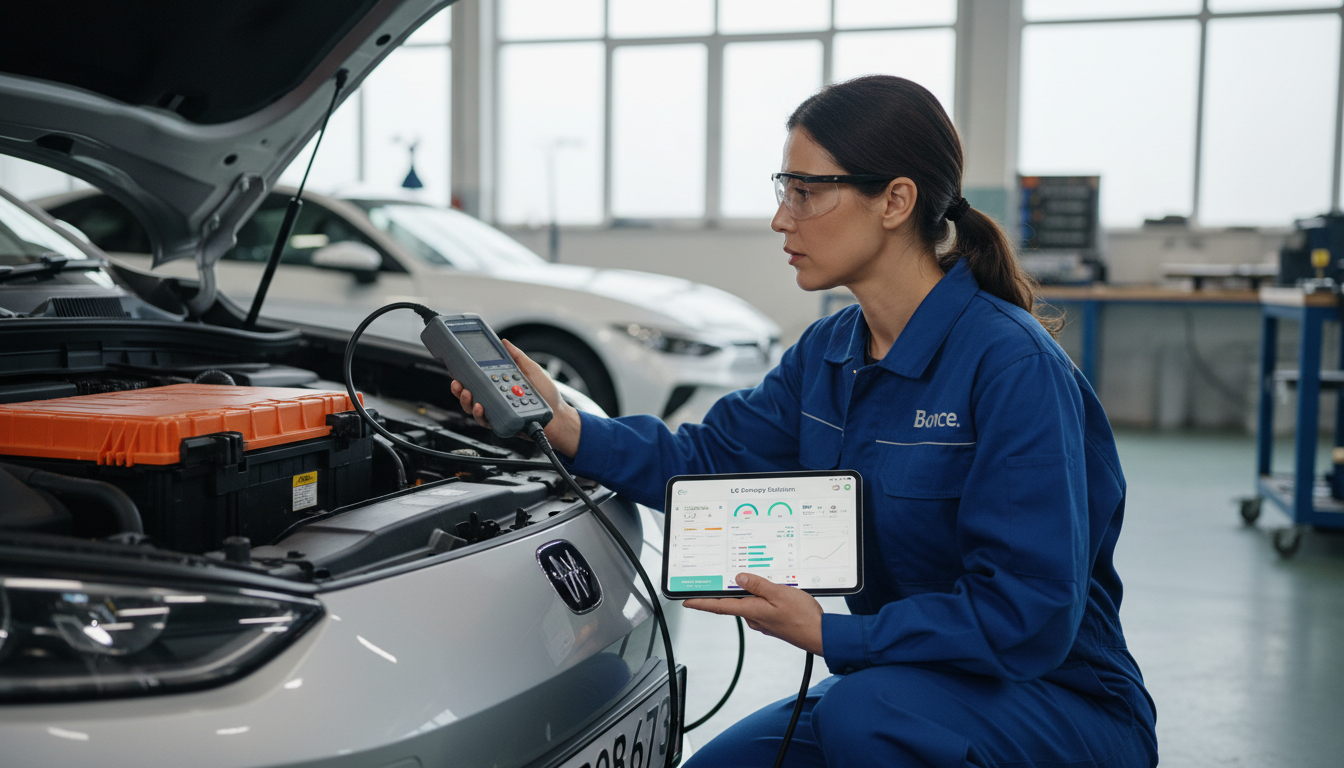
What makes B.once stand out is its speed and accuracy combo. We're not talking about those old-school battery tests that required days of driving data or complicated procedures. Quick Scan allows a battery check in a few minutes by simply connecting a diagnostic device to the vehicle's onboard system and turning on the engine. That's it. No rocket science, no lengthy wait times.
The service comes at a perfect time too. B.once helps overcome an endemic obstacle in the used-car market: battery health and battery degradation-related residual-value risk. Anyone who's tried to buy or sell a used EV knows this pain point all too well. Now we finally have a standardized way to put a number on battery health.
How B.once Works: Quick Scan and Power Scan
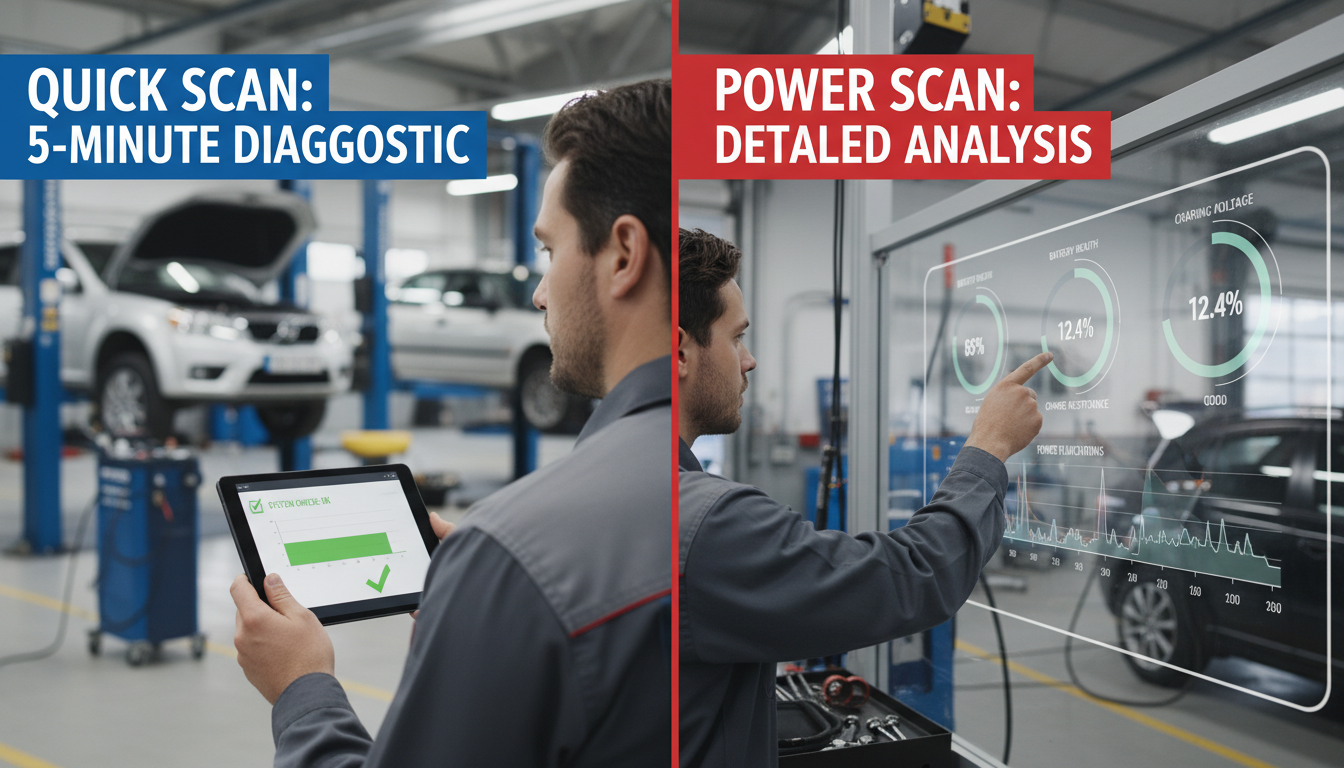
LG Energy Solution didn't just throw together one test and call it a day. They designed B.once with two distinct modes to fit different needs – and we think that's pretty smart. The B.once service consists of two modules, which include the Quick Scan and Power Scan.
Quick Scan is your go-to for fast evaluations. Quick Scan can determine battery status within 5 minutes by connecting an onboard diagnostic device to the electric vehicle and starting the engine. This mode is perfect for used car dealerships that need to quickly assess multiple vehicles, service centers doing routine checkups, or anyone who wants a rapid health snapshot before making a purchase decision. The Quick Test is "highly valuable for used car platforms and service centres that need to quickly inspect large numbers of vehicles," the company says.
What's really cool about Quick Scan is how it leverages big data. At the heart of the system is a big-data pool fed by data from over 30,000 electric vehicles. So when you run a test, you're not just getting raw numbers – you're getting results compared against thousands of real-world EVs. That context matters.
Power Scan takes things to the next level for situations that need more precision. Power Scan, intended for insurance-linked or warranty assessments, analyzes charging data between 50 percent and 80 percent state of charge to generate a detailed report within 30 minutes—far faster than systems requiring days of driving data. This deeper dive is especially useful when you're dealing with warranty claims, insurance products, or buyers who want the full picture before dropping serious cash on a used EV.
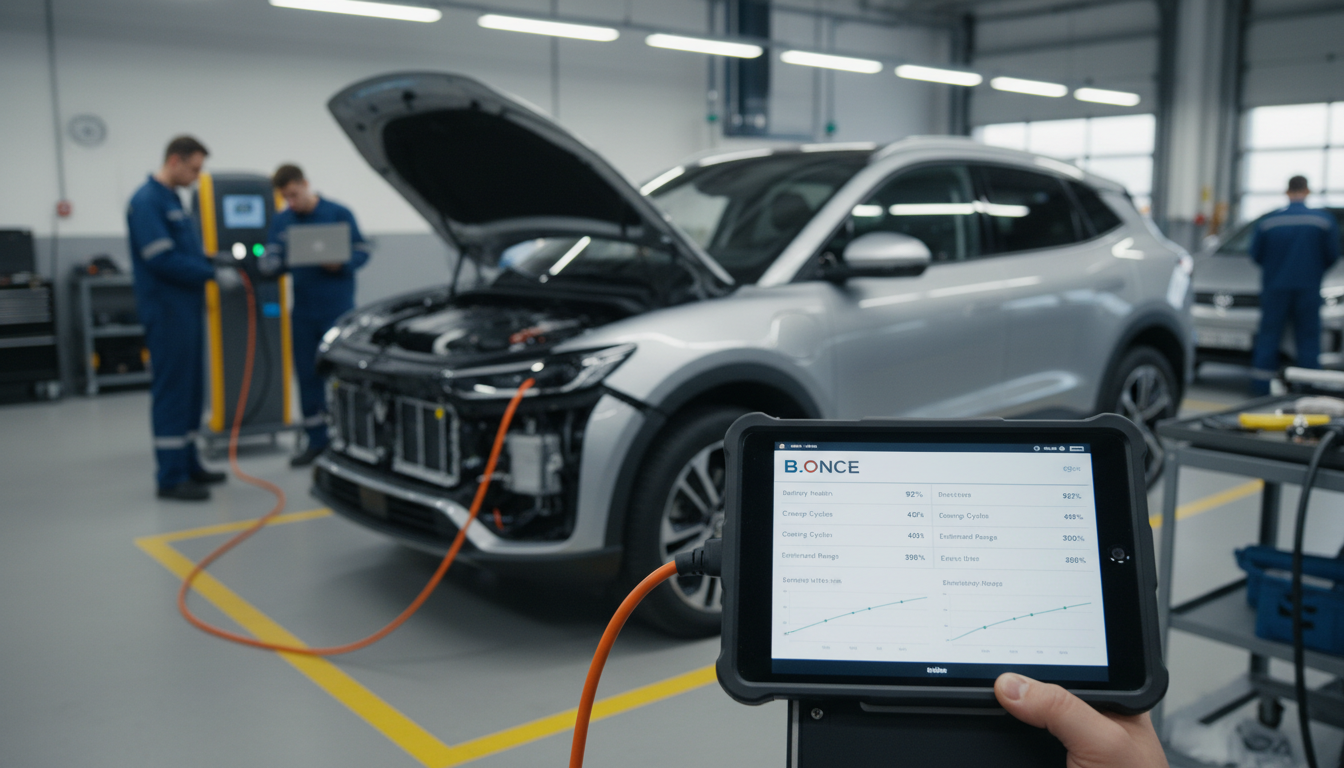
Both diagnostic processes feed into a dedicated mobile app where everything happens in real-time. All diagnostic processes of B.once can be monitored in real-time through a dedicated app, and assessment results are provided in an intuitive report for customers. No confusing technical jargon or engineer-speak – just straightforward information that anyone can understand.
LG Energy Solution Launches 5-Minute EV Battery Check
The launch of B.once marks a major shift in how we approach used EV transactions. LG Energy Solution (LGES) announced on October 27 the launch of B.once, a new diagnostic service that assesses the health of electric vehicle (EV) batteries by analyzing capacity, voltage, and temperature in real time. The timing couldn't be better – as more EVs hit the used market, buyers and sellers desperately need reliable ways to evaluate battery condition.
Why does this matter so much? Because battery health directly impacts everything about an EV's value and usability. A car with 90% battery health is a completely different purchase than one sitting at 70%. Before B.once, figuring out that difference was like playing a guessing game.
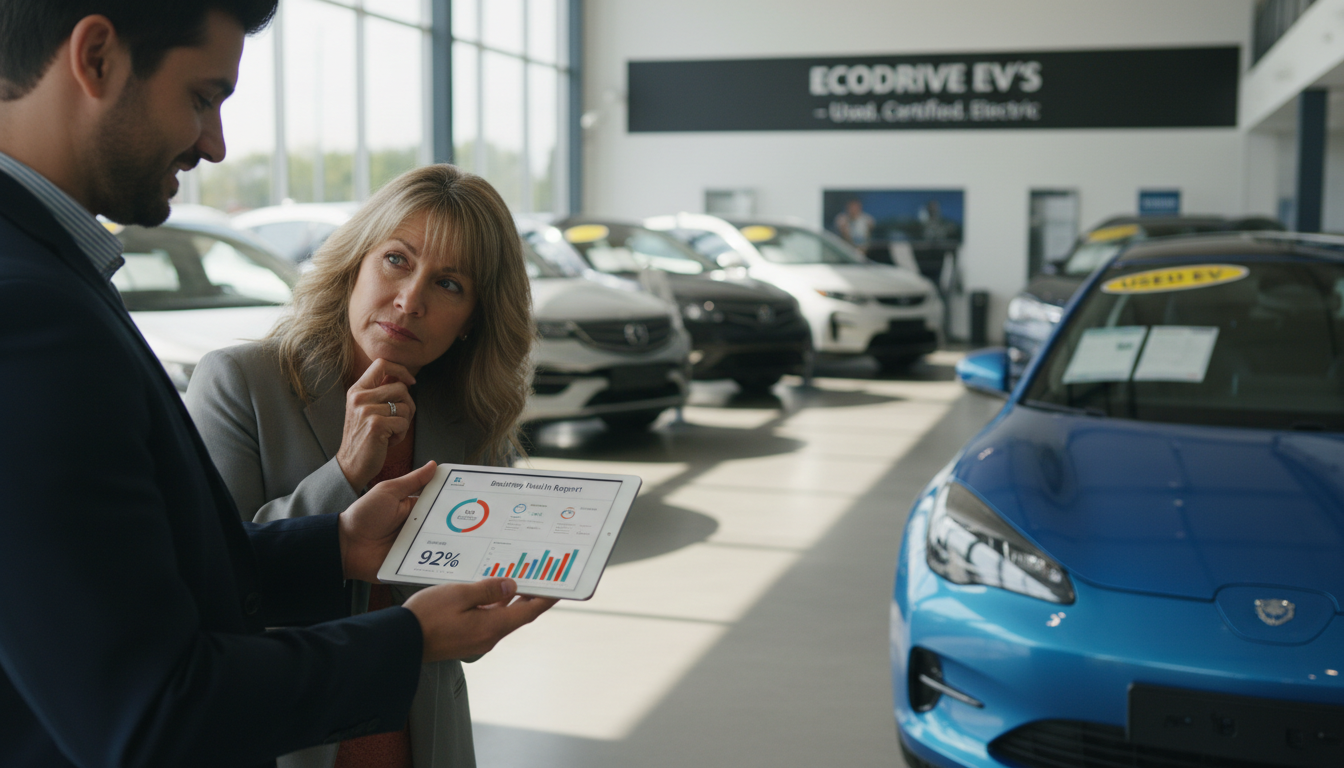
The service is designed to improve transparency and trust in used-EV transactions and auctions by providing reliable battery-health data. Trust is huge in the used car market, and even bigger when you're talking about EVs where the battery represents the most expensive component. When dealerships can hand buyers an objective, third-party battery report, it changes the whole conversation.
LG Energy Solution isn't just dipping their toes in this market either. Backed by proven real-world performance, LG Energy Solution has supplied more than 8 billion battery cells to roughly 15 million electric vehicles since 2009. That's not a small sample size. That's a massive pool of data showing how batteries actually age in the real world, across different climates, driving styles, and usage patterns.
The reception has been solid too. Revolt, a major South Korean platform for used electric vehicles, has already been confirmed as the first user of the new service. When major players in the used EV market jump on board right away, you know there's real value here.
Benefits of B.once for Used EV Market
Let's talk about who wins when B.once becomes standard practice in the used EV world. Spoiler alert: pretty much everyone.
For buyers, the benefits are obvious. From the consumer's perspective, this enables safer electric vehicle purchases. Instead of crossing your fingers and hoping the battery is in good shape, you get concrete data. No more relying on seller promises or vague "runs great" descriptions. You see the actual capacity, voltage readings, temperature data, and degradation levels in black and white.
The reports themselves are designed for normal humans, not just engineers. The report alone allows easy understanding of battery capacity, average power consumption, predicted driving information, and deterioration level. You don't need a PhD to figure out if the EV you're eyeing is a good deal or a money pit waiting to happen.
Sellers and dealerships benefit big time too. Vehicle sales companies can diagnose batteries through LG Energy Solution's diagnostic device and dedicated B.once app, increasing transaction reliability through the issued battery assessment report. When you can back up your asking price with objective battery data, negotiations get a lot simpler. No more arguments about whether the battery is "fine" or "like new" – the numbers speak for themselves.
Here's something we find really interesting: "B.once will contribute to activating the electric vehicle transaction market and expanding the electric vehicle ecosystem by linking with new products such as insurance and finance," said Kim Hyun-jun, head of the BaaS business at LG Energy Solution. This opens doors we haven't even fully explored yet. Imagine insurance rates based on actual battery health, or financing options that factor in verified battery condition. The whole used EV ecosystem could level up.
The broader market benefits too. This step by LG not only makes the company more competitive but also matures the EV ecosystem as a whole. When buyers feel confident about battery health, more people will consider used EVs. That increases demand, which stabilizes values, which makes the whole EV market healthier. It's a win-win-win situation.
B.once vs Traditional Battery Testing Methods
So how does B.once stack up against the old ways of checking EV battery health? Let's break it down.
Traditional methods usually involve one of these approaches: visual inspection (basically useless for battery internals), checking the dashboard battery health indicator (if the car even has one), using generic OBD-II scanners (hit or miss depending on the vehicle), or doing real-world range tests that take hours and depend heavily on driving conditions and weather.
Some folks try third-party apps that require you to drive the car for several days to gather enough data. Others pay dealerships to run manufacturer-specific diagnostics, which can be expensive and aren't always available for all brands. The problem with all these methods? They're either too slow, too unreliable, too expensive, or some combination of all three.
B.once changes the equation in several key ways:
Aspect
Traditional Methods
B.once
Speed
Hours to days
5-30 minutes
Data Source
Limited or generic
30,000+ EV database
Expertise Required
Often needs specialists
User-friendly app
Report Quality
Varies widely
Standardized format
Real-time Monitoring
Usually not available
Built into app
According to South Korean media, B.once can "can determine the status of a vehicle's battery, including remaining capacity, voltage, and temperature, with just one diagnosis in 5 minutes." Both tests were developed, according to company representatives, based on LGES's more than 10,000 patents in battery management and testing.
The patent portfolio matters because it means B.once isn't just repackaging existing technology – it's using proprietary methods developed specifically for EV batteries. That's the difference between a generic health app and going to a specialist who's seen thousands of cases just like yours.
Another huge advantage? It promises fast and transparent analysis coupled with greater data accuracy. When we talk about data accuracy in battery diagnostics, we're talking about the difference between a rough estimate and knowing exactly what you're getting. In a market where battery replacement can cost $8,000-$15,000, that accuracy is worth its weight in lithium.
Battery Health Reports from B.once
When you run a B.once diagnostic, what exactly do you get? Let's decode what shows up in these reports and what it all means.
The reports cover several key metrics that paint a complete picture of battery health. This identifies vital battery health parameters, such as remaining capacity, voltage, and temperature, at 5-minute intervals. Each of these tells you something different about how the battery is performing.
Remaining capacity is probably the most straightforward metric. If an EV started life with a 75 kWh battery and now shows 68 kWh, that's about 91% capacity remaining. Most experts consider anything above 80% to be good health for a used EV. Between 70-80% is okay but starting to show age. Below 70% means you're looking at noticeably reduced range and potentially approaching the end of the battery's useful life.
Voltage readings tell you about the battery's current state and whether cells are balanced properly. Uneven voltage across cell groups can indicate problems even if overall capacity looks decent. B.once checks this automatically and flags any issues.
Temperature data matters more than most people realize. Batteries that consistently run hot degrade faster. If the report shows temperature spikes or poor thermal management, that's a red flag for future degradation even if current capacity looks fine.
Beyond the raw numbers, B.once reports also include practical information. Results are visualized in a report format showing key information such as capacity, energy efficiency, cell deviation, charging history and degradation levels. This stuff is gold when you're trying to decide whether to buy a used EV or figuring out a fair price.
The charging history especially can reveal a lot. If previous owners constantly fast-charged to 100% in extreme heat, that battery probably aged faster than one that was gently charged at home to 80%. B.once gives you this context instead of just a snapshot of current condition.
Why Battery Diagnostics Matter for EV Adoption
Let's zoom out for a second and talk about why services like B.once matter for the bigger picture of EV adoption.
One of the biggest barriers keeping people from going electric – especially in the used market – is uncertainty about batteries. Gas cars are familiar. We understand that engines wear out, transmissions eventually fail, and mileage gives you a rough idea of remaining life. But EV batteries? For most buyers, they're still a mysterious black box.
This uncertainty creates what economists call "information asymmetry" – sellers know more than buyers, which depresses prices and makes transactions harder. B.once aims to close that gap. Consistent, verifiable battery reports could raise buyer trust. When both sides have access to the same objective data, markets work better.
Think about how much this matters for resale values. If you're hesitant to buy an EV because you're worried it won't hold value, you probably won't buy one new either. But if you know that when you sell in five years, buyers will be able to verify your battery is in excellent shape because you took care of it, that changes the equation. B.once creates accountability and rewards good battery stewardship.
For the EV market to really take off and replace internal combustion engines, we need a robust used market. Most car buyers purchase used vehicles, not new ones. If the used EV market stays sketchy and uncertain, EV adoption will hit a ceiling. Services like B.once that bring transparency and trust help push past that ceiling.
There's also an environmental angle here. Better battery diagnostics mean batteries stay in vehicles longer instead of being prematurely replaced due to uncertainty. They also enable better matching of batteries to second-life applications when they do eventually come out of vehicles. A battery at 70% health might not work for a car anymore, but it's perfect for home energy storage. B.once helps identify those opportunities.
Frequently Asked Questions
How much does a B.once battery diagnostic cost?
LG Energy Solution hasn't publicly announced standardized pricing for B.once services yet, as costs will likely vary by region and service provider. The Quick Scan is expected to be affordable for routine use by dealerships and service centers, while Power Scan may carry a premium for its more detailed analysis. Some used EV platforms and dealerships may offer B.once reports free as part of their sales process to build buyer confidence.
Can B.once test batteries from all EV manufacturers?
B.once is designed to work with multiple EV brands, though specific compatibility depends on the vehicle's battery management system and diagnostic protocols. LG Energy Solution supplies batteries to numerous automakers worldwide, giving them extensive knowledge of different systems. However, buyers should verify whether B.once supports their specific make and model, especially for vehicles using proprietary battery systems.
How accurate is B.once compared to dealer diagnostics?
B.once leverages data from over 30,000 electric vehicles and is built on more than 10,000 battery management patents held by LG Energy Solution. This extensive database and expertise often provides more comprehensive analysis than generic dealer diagnostics. The service is designed to match or exceed manufacturer diagnostic capabilities while offering faster results and standardized reporting across different brands.
Will B.once affect my EV warranty if I use it?
Using B.once for battery diagnostics should not void or affect your EV warranty, as it's a non-invasive diagnostic service that simply reads data from your vehicle's battery management system. It works similarly to using an OBD-II scanner for engine diagnostics on gas cars. However, always check your specific warranty terms if you have concerns, especially for lease vehicles or those with aftermarket modifications.
Can B.once predict exactly when my EV battery will fail?
While B.once provides detailed health metrics and degradation data, it cannot predict exact battery failure dates. Instead, it offers a snapshot of current battery condition and identifies trends that suggest how the battery is aging. Power Scan's detailed analysis can help estimate remaining useful life based on current degradation rates, but many variables affect battery longevity including future driving patterns, charging habits, and climate conditions.
Highstar attaches great importance to your personal privacy. When you visit our website, please agree to the use of all cookies. More information about the processing of personal data can be found at "Privacy Policy"


 Buy
Buy