LiPF6 Lithium Salt: The Powerhouse Behind Modern Battery Technology
Related Topics
Discover how LiPF6 lithium salt enables high-performance lithium-ion batteries for EVs and electronics. Learn about its properties, applications, and handling requirements.
Follow us on
When you charge your smartphone or drive an electric vehicle, there's a good chance you're relying on LiPF6 lithium salt. This white crystalline compound serves as the backbone of commercial lithium-ion batteries, quietly powering billions of devices worldwide. We'll walk you through what makes this electrolyte salt so special and why it's become the industry standard.
What Is LiPF6 Lithium Salt?
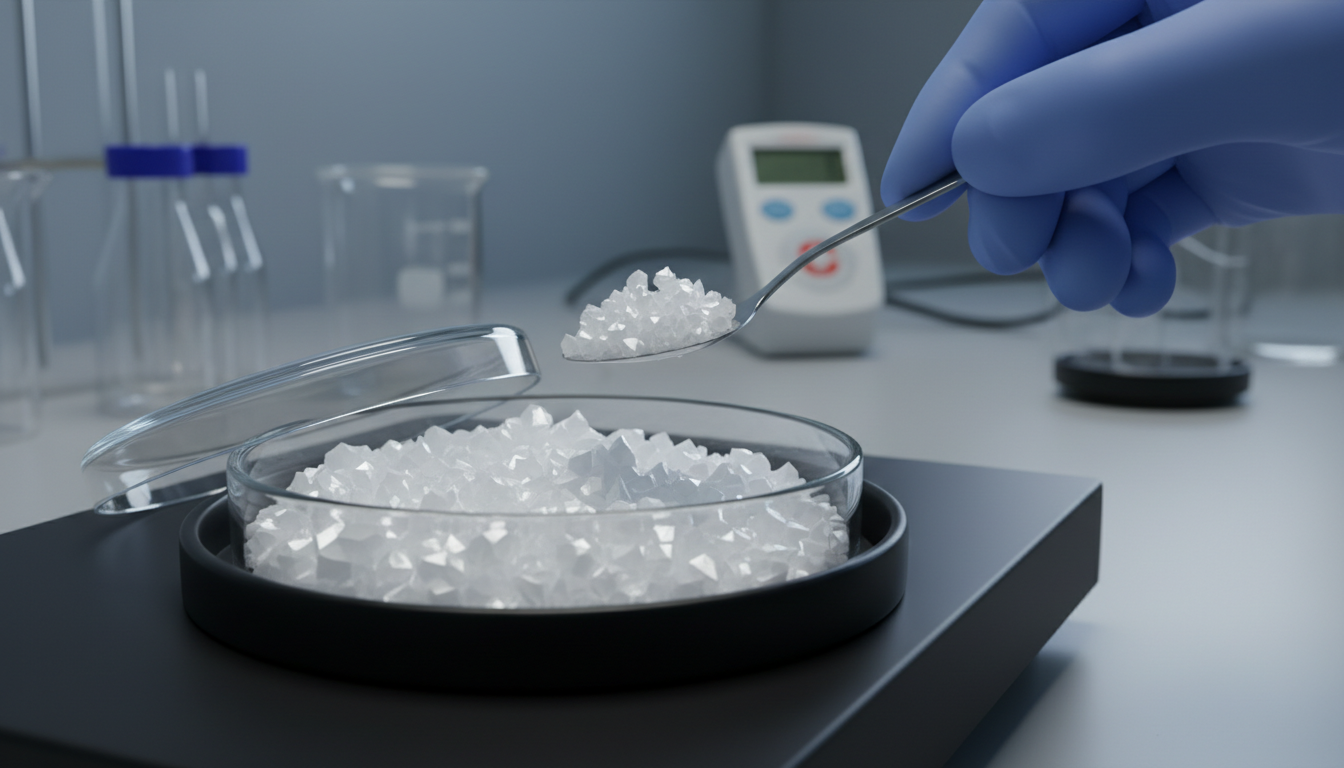
LiPF6 is an inorganic compound with the formula LiPF6.[1] It appears as a white crystalline powder.[1] At Highstar, we work extensively with ternary lithium systems where this salt plays a central role in electrolyte formulations.
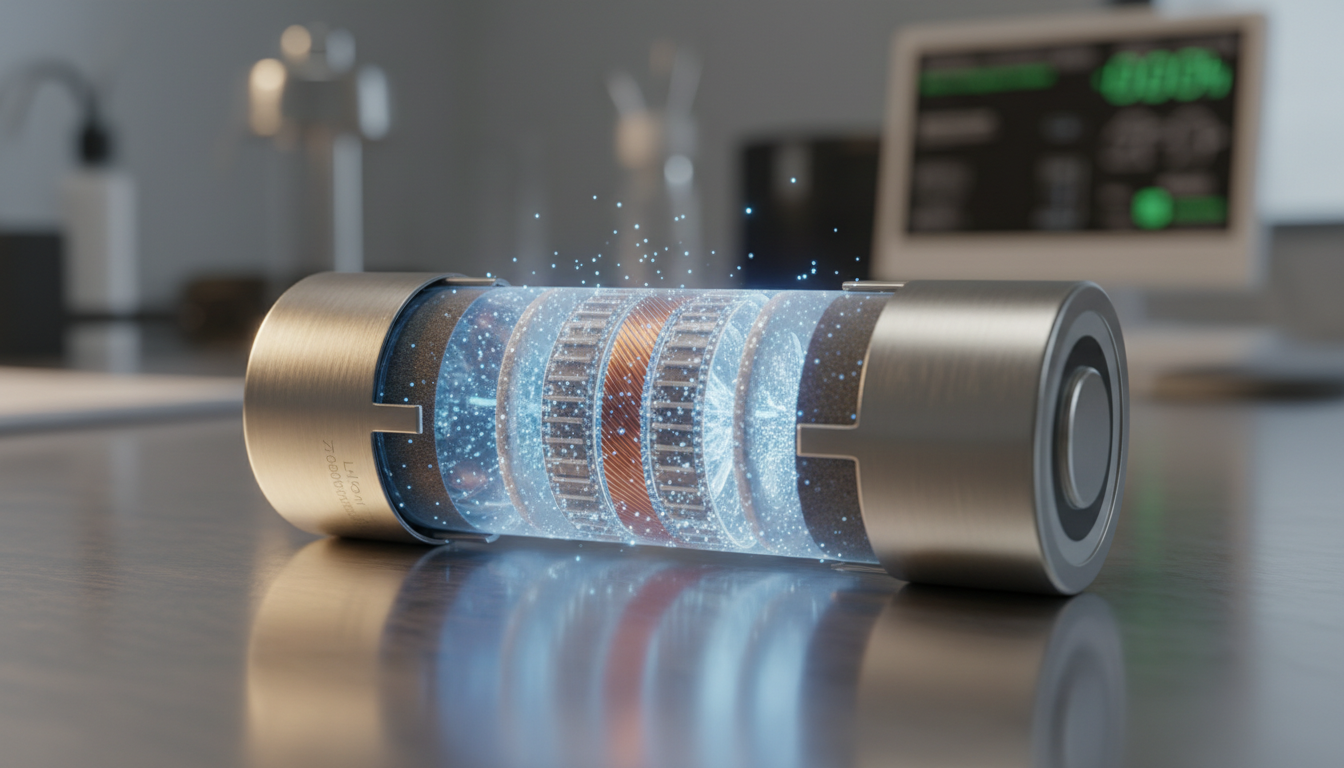
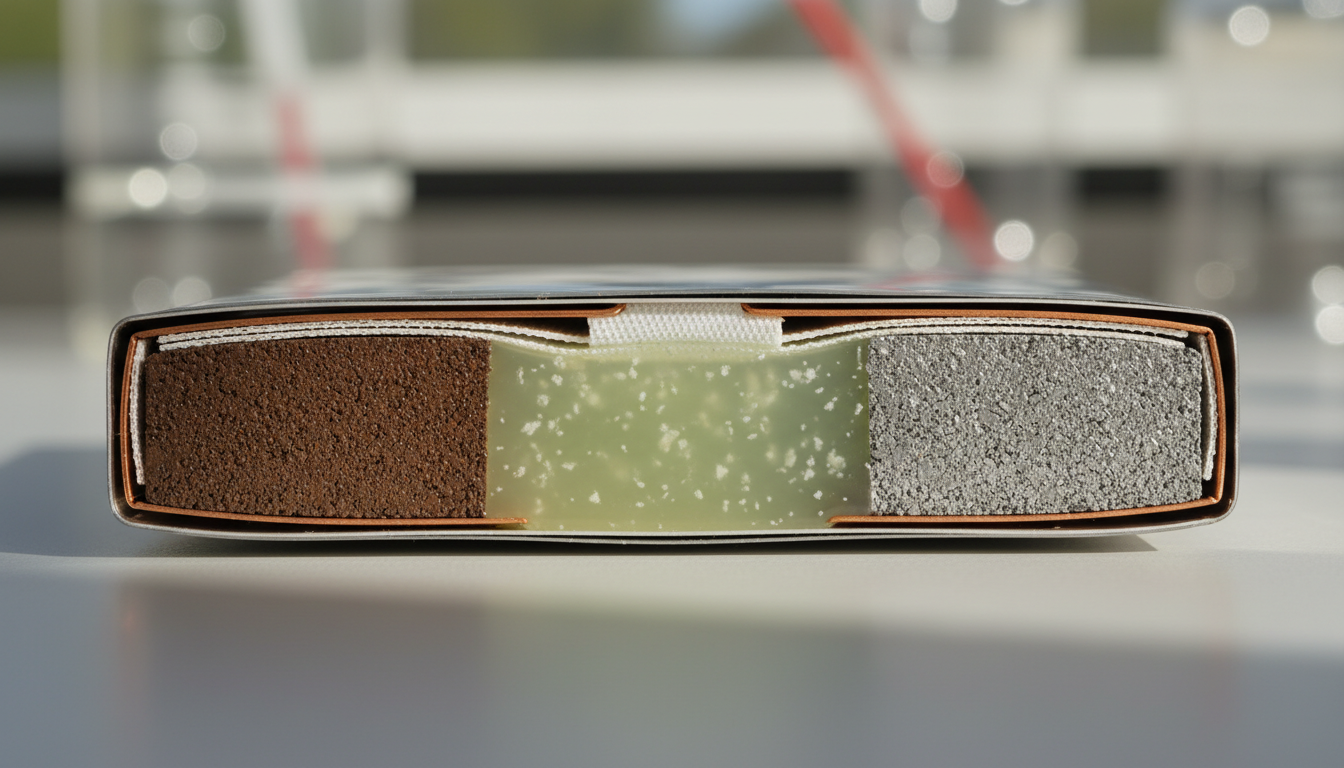
Lithium hexafluorophosphate (LiPF6) is a lithium salt commonly used in commercial lithium-ion batteries (LIBs) as an electrolyte component.[3] When dissolved in organic solvents, it breaks down into lithium cations (Li+) and hexafluorophosphate anions (PF6-). These mobile lithium ions shuttle between the cathode and anode during charging and discharging, making energy storage possible.
The compound is manufactured through specific chemical processes. LiPF6 is manufactured by reacting phosphorus pentachloride with hydrogen fluoride and lithium fluoride[1]. This production method requires strict controls to maintain purity levels needed for battery applications.
Why LiPF6 Dominates Battery Electrolytes
You might wonder why LiPF6 has become the go-to choice when other lithium salts exist. The answer lies in its balanced performance across multiple parameters.
The success of LiPF6 does not only lie in its single outstanding performance in all aspects, but it also owns the majority of the fundamental and mutually exclusive properties that are required for durable cells. It exhibits characteristics such as moderate ion migration number, dissociation constant, and aluminum foil passivation ability.[3]
It is one of the most commonly used electrolyte salts in lithium-ion batteries, primarily due to its good solubility in organic solvents and high ionic conductivity.[8] When formulated properly, LiPF6 solutions can achieve conductivity levels around 10 mS/cm in carbonate solvents.
Most of the commercialized LIBs use organic liquid electrolytes with lithium hexafluorophosphate (LiPF6) as the conducting salt dissolved in various mixtures of carbonate solvents. The most commonly-used carbonate solvents are ethylene carbonate (EC), diethyl carbonate (DEC), dimethyl carbonate (DMC) and ethylmethyl carbonate (EMC).[3]
Our high-energy lithium-ion battery cells rely on carefully optimized electrolyte formulations that leverage these properties for maximum performance.
Key Properties That Matter
High Ionic Conductivity
The mobility of lithium ions through the electrolyte directly affects battery performance. LiPF6 excels here because of how it dissociates in solution. Its effectiveness as an electrolyte salt stems from its ability to dissociate in polar aprotic solvents, commonly organic carbonates like ethylene carbonate (EC), dimethyl carbonate (DMC), and diethyl carbonate (DEC). Upon dissolution, it yields lithium cations (Li+) and hexafluorophosphate anions (PF6-).[5]
This dissociation enables fast charge and discharge cycles—something you've probably noticed when your devices charge quickly.
Electrochemical Stability
LiPF6 exhibits excellent electrochemical stability. It can withstand a wide range of operating voltages without undergoing significant decomposition, which is crucial for enabling high-voltage lithium-ion batteries. This stability ensures that the electrolyte remains functional and effective throughout the battery's lifecycle, contributing to longer cycle life and better overall performance.[5]
The PF6- anion exhibits good passivation properties on the aluminum current collector, preventing its corrosion at high potentials.[5] This protective quality helps maintain battery integrity over thousands of cycles.
Real-World Applications
Consumer Electronics
From laptops to smartphones, LiPF6-based batteries have conquered the portable electronics market. Li-ion battery has been widely applied to portable electronic devices, such as cameras, camcorders, and laptops, due to its relative high energy density and power[7]. Our cylindrical cells serve many of these applications.
Electric Vehicles
High-energy applications: EVs, drones, and smartphones require the high energy density of lithium-ion batteries.[2] The automotive industry demands batteries that can deliver consistent performance across various temperatures and charging rates—requirements that LiPF6 electrolytes help meet.
Energy Storage Systems
They are used by battery manufacturers and research centers alike to produce li-ion cells for a variety of applications, from consumer electronics to electric vehicles.[3]
The Moisture Challenge
Here's something you need to know: LiPF6 has a significant weakness. Lithium hexafluorophosphate (LiPF6) has been the dominant conducting salt in lithium-ion battery (LIB) electrolytes for decades; however, it is extremely unstable in even trace water (ppm level).[10]
The chemical structure of LiPF6, while providing these benefits, also dictates its sensitivity to moisture. Even trace amounts of water can lead to hydrolysis, breaking down LiPF6 into LiF and generating hydrofluoric acid (HF) and phosphorus oxyfluorides.[5]
LiPF6 has relatively high stability in dry inert environments up to 107 °C, but degrades rapidly when exposed to water or moisture.[6]
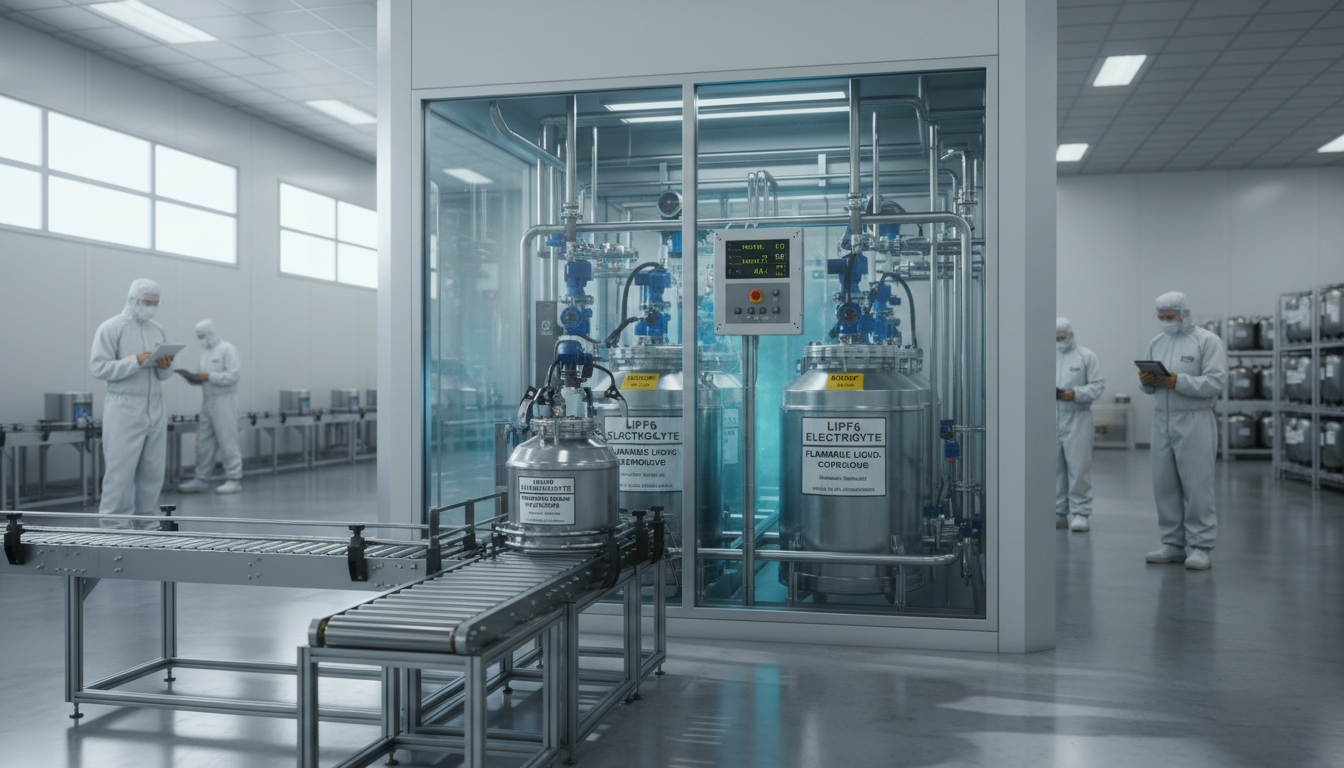
Battery manufacturers must maintain extremely low moisture levels—typically below 10 ppm—during production. This requires controlled environments and careful handling procedures.
Thermal Stability Considerations
Temperature affects LiPF6 behavior significantly. The salt is relatively stable thermally, but loses 50% weight at 200 °C (392 °F). It hydrolyzes near 70 °C (158 °F)[1] when exposed to moisture or reactive species.
For most operating conditions, LiPF6 remains stable. Although LiPF6 decomposes at high temperatures, it remains relatively stable at room temperature, making it suitable for most lithium-ion battery operating environments.[8]
However, in extreme conditions or safety events, thermal decomposition becomes a concern. Researchers continue developing additives and alternative formulations to improve thermal performance while maintaining LiPF6's beneficial properties.
Handling and Storage Requirements
If you work with LiPF6, proper handling is non-negotiable. The material is both moisture-sensitive and air-sensitive. Hygroscopic and sensitive to moisture; must be stored in an inert atmosphere (e.g., argon or nitrogen). Typically supplied in sealed containers to prevent moisture absorption.[3]
Best practices include:
Store in sealed containers under inert atmosphere
Handle in dry rooms or gloveboxes
Minimize air exposure during processing
Use moisture-free solvents and components
Implement quality control testing for water content
Alternatives and Future Directions
While LiPF6 dominates today, researchers are exploring alternatives. Lithium bis(trifluoromethane sulfonyl)imide (LiTFSI) offers higher thermal stability (>100°C) and moisture tolerance. However, it corrodes aluminum current collectors at voltages above 3.8V, limiting use in high-voltage systems.[2]
No alternative matches its cost-performance balance. For instance, LiTFSI costs ~5x more than LiPF6, making it impractical for consumer electronics.[2]
Some approaches combine LiPF6 with other salts or additives. Hexamethyldisilazane (HMDS) scavenges trace water and HF, improving thermal stability. Fluoroethylene carbonate (FEC) strengthens the SEI layer on silicon anodes, enabling higher-capacity batteries.[2]
At Highstar, we continuously evaluate new formulations and additives to enhance battery performance while maintaining manufacturing feasibility at scale.
Optimizing Electrolyte Formulations
The ratio of LiPF6 to solvents matters. From the view point of operation at low temperatures, 1 M LiPF6 3:7 EC–EMC is recommended for Li-ion cells.[7] Different applications require different optimization strategies.
The conductivity had a maximum of 9.5 mS/cm at 1.0 mol/dm3.[7] Finding the right concentration balances ionic conductivity against viscosity and other transport properties.
Typical formulations combine:
LiPF6 salt at 1.0-1.2 M concentration
Cyclic carbonates like EC for high dielectric constant
Linear carbonates like DMC or EMC for lower viscosity
Functional additives for SEI formation and protection
The specific blend depends on cathode materials, operating temperature range, power requirements, and cycle life targets.
Quality Control and Purity Standards
Battery-grade LiPF6 requires high purity levels. High purity and battery grade electrolyte solutions are thus crucial for lithium ion battery performance.[8]
Key quality parameters include:
Water content (typically <20 ppm)
Free HF levels
Transition metal impurities
Particle size distribution for solid form
Color and appearance
Manufacturers use techniques like Karl Fischer titration for water analysis and various chromatography methods to verify purity. Each batch undergoes rigorous testing before use in battery production.
Conclusion
LiPF6 lithium salt remains the gold standard for lithium-ion battery electrolytes, and for good reason. Its combination of high ionic conductivity, electrochemical stability, and aluminum passivation properties makes it uniquely suited for commercial applications. Yes, it requires careful handling due to moisture sensitivity, and thermal stability presents challenges. But decades of research, optimization, and manufacturing experience have established robust processes for working with this material safely and effectively.
As battery technology advances—pushing toward higher voltages, faster charging, and longer cycle life—LiPF6 continues evolving through improved formulations, additives, and co-salt strategies. We're excited about innovations that build on this proven foundation while addressing its limitations. Whether you're developing next-generation electric vehicles or improving consumer electronics, understanding LiPF6's properties and proper application helps unlock better battery performance.
FAQs
What does LiPF6 do in a lithium-ion battery?
LiPF6 serves as the conducting salt in the electrolyte solution. When dissolved in organic solvents, it dissociates into lithium ions (Li+) and hexafluorophosphate anions (PF6-). These lithium ions carry charge between the cathode and anode during battery operation, enabling energy storage and release. Without LiPF6, the electrochemical reactions that power your devices couldn't occur efficiently.
Why is LiPF6 sensitive to moisture?
LiPF6 reacts with water through hydrolysis, breaking down into lithium fluoride (LiF) and generating hydrofluoric acid (HF) and phosphorus oxyfluorides. Even trace amounts of water—at the parts-per-million level—can trigger this decomposition. The HF produced is corrosive and damages battery components, degrading performance and safety. This sensitivity requires manufacturing and storage in strictly controlled, dry environments.
What temperature range can LiPF6 handle?
LiPF6 remains relatively stable at room temperature and normal battery operating conditions. It maintains reasonable stability up to about 107°C in dry environments. However, it begins to hydrolyze near 70°C when moisture is present, and loses significant mass at 200°C through thermal decomposition. Most commercial batteries operate well within the safe temperature range for LiPF6-based electrolytes.
Are there alternatives to LiPF6 for battery electrolytes?
Several alternatives exist, including LiTFSI, LiBOB, and LiDFOB. LiTFSI offers better thermal stability and moisture tolerance but corrodes aluminum current collectors at high voltages and costs about 5 times more than LiPF6. Other alternatives face similar trade-offs in cost, performance, or compatibility. Currently, no single alternative matches LiPF6's balance of properties at a competitive price point for mass production.
How is battery-grade LiPF6 manufactured?
LiPF6 is produced by reacting phosphorus pentachloride with hydrogen fluoride and lithium fluoride under controlled conditions. The process requires careful management of reaction parameters to achieve the high purity levels needed for battery applications—typically with water content below 20 ppm. Manufacturing occurs in dry, inert atmospheres to prevent moisture contamination, and the final product is sealed in moisture-resistant containers before shipping to battery manufacturers.
Highstar attaches great importance to your personal privacy. When you visit our website, please agree to the use of all cookies. More information about the processing of personal data can be found at "Privacy Policy"


 Buy
Buy