How Lithium-Ion Batteries Work: Structure and Operating Principle Explained
Related Topics
Discover the structure and operating principle of lithium-ion batteries. Learn how these power sources work, from key components to charging and discharging cycles.
Follow us on
Lithium-ion batteries power millions of devices we use every day. From smartphones and laptops to electric vehicles and energy storage systems, these rechargeable batteries have changed the way we live and work. But how do these small powerhouses actually work? We're breaking down the structure and operating principle of lithium-ion batteries in a way that makes sense, so you can get what's happening inside these energy storage systems.
These batteries aren't just about storing power—they're about storing it efficiently, safely, and in a compact form. Whether you're using a ternary lithium battery in your electric vehicle or an LFP battery for energy storage, the basic principles remain the same. At Highstar, we know that getting the science right means better performance and longer life for your battery systems.
Key Components of a Lithium-Ion Battery
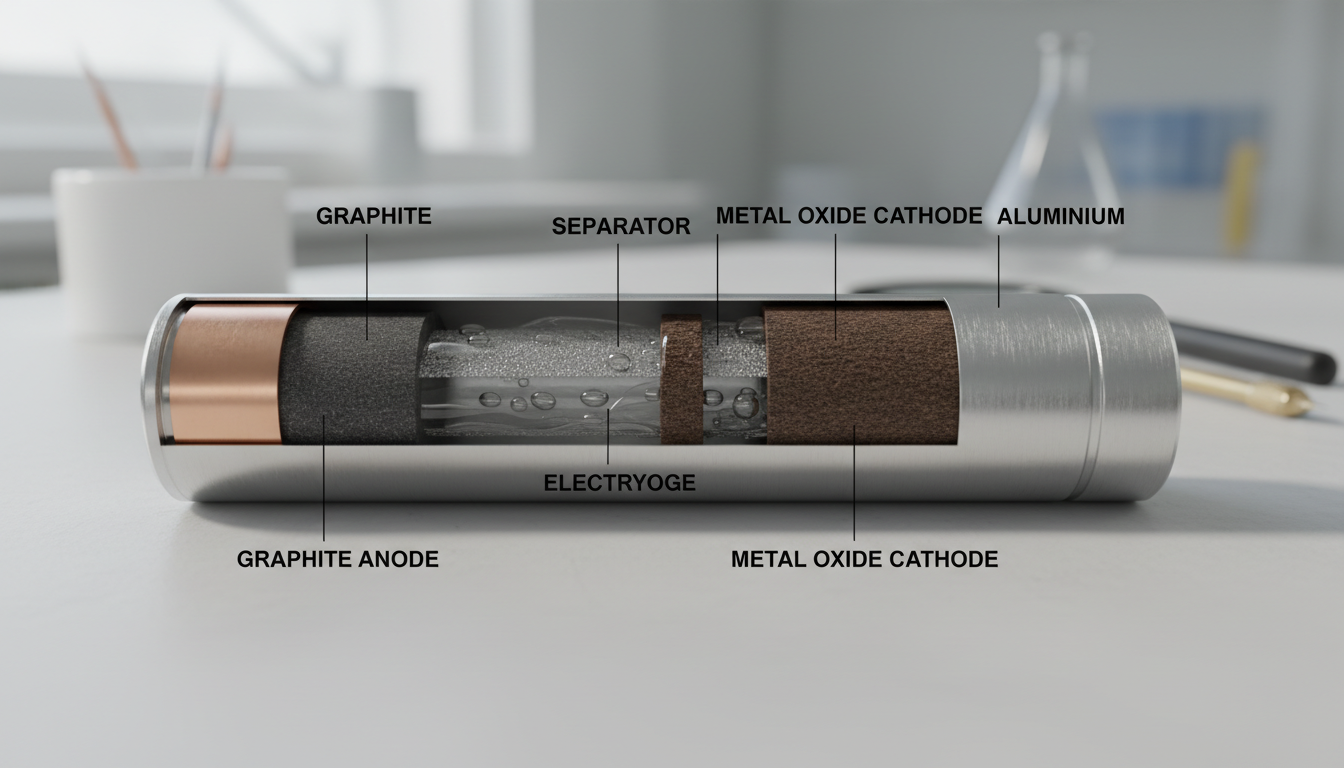
A battery is made up of an anode, cathode, separator, electrolyte, and two current collectors (positive and negative), with the cathode, anode, separator, and electrolyte making up the four major components of a lithium-ion battery. Each of these parts plays a specific role in making sure your battery works smoothly and safely. Let's look at what each component does and why it matters.
The anode and cathode store the lithium. Think of them as the two main players in the energy storage game. The cathode is typically made from metal oxides, while the anode is usually graphite or carbon-based material. The most common cathode materials used in lithium-ion batteries include lithium cobalt oxide (LiCoO2), lithium manganese oxide (LiMn2O4), lithium iron phosphate (LiFePO4 or LFP), and lithium nickel manganese cobalt oxide (LiNiMnCoO2 or NMC).
The electrolyte serves as the highway for lithium ions to travel between the anode and cathode. The electrolyte carries positively charged lithium ions from the anode to the cathode and vice versa through the separator. Without this ionic conductor, the battery wouldn't function. The separator keeps the anode and cathode from touching each other, which would cause a short circuit. It's a thin, porous material that allows ions to pass through while blocking electron flow.
Current collectors are metallic foils attached to both electrodes. The cathode typically uses aluminum foil, while the anode uses copper foil. These collectors gather and distribute the electrical current to the external circuit, powering your devices.
How Lithium-Ion Batteries Work
The magic of lithium-ion batteries happens through a process called intercalation. During operation, lithium ions intercalate into the electrode materials, depending on whether the battery is charging or discharging, with intercalation referring to the insertion of lithium ions into the crystal or molecular structure of the electrode material. This back-and-forth movement of lithium ions is what makes these batteries rechargeable.
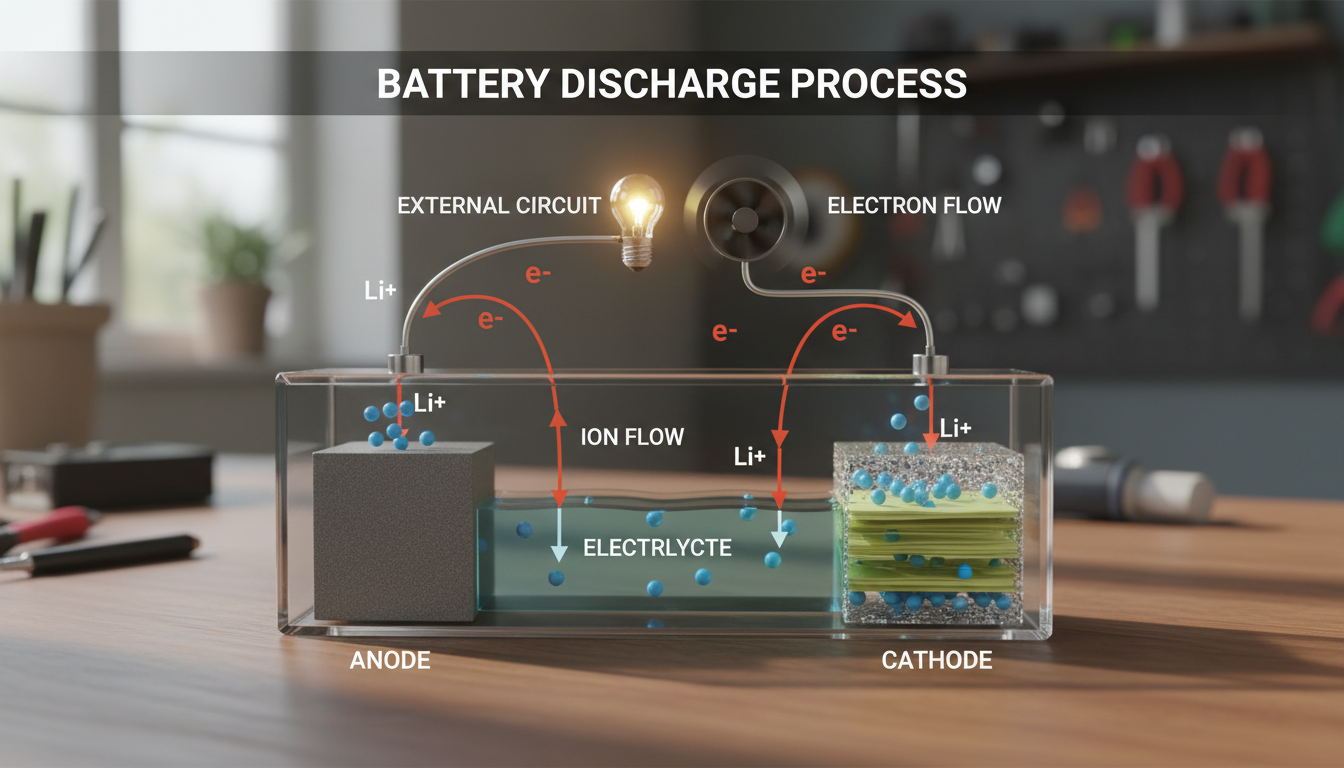
Lithium-ion batteries operate based on electrochemical reactions, specifically redox reactions involving lithium and sometimes other redox-active elements, resulting in the movement of lithium ions between the electrodes and the flow of electrons through an external circuit. When you use your phone or laptop, electrons flow from the anode to the cathode through your device, creating the electrical current that powers it. At the same time, lithium ions move through the electrolyte in the same direction.
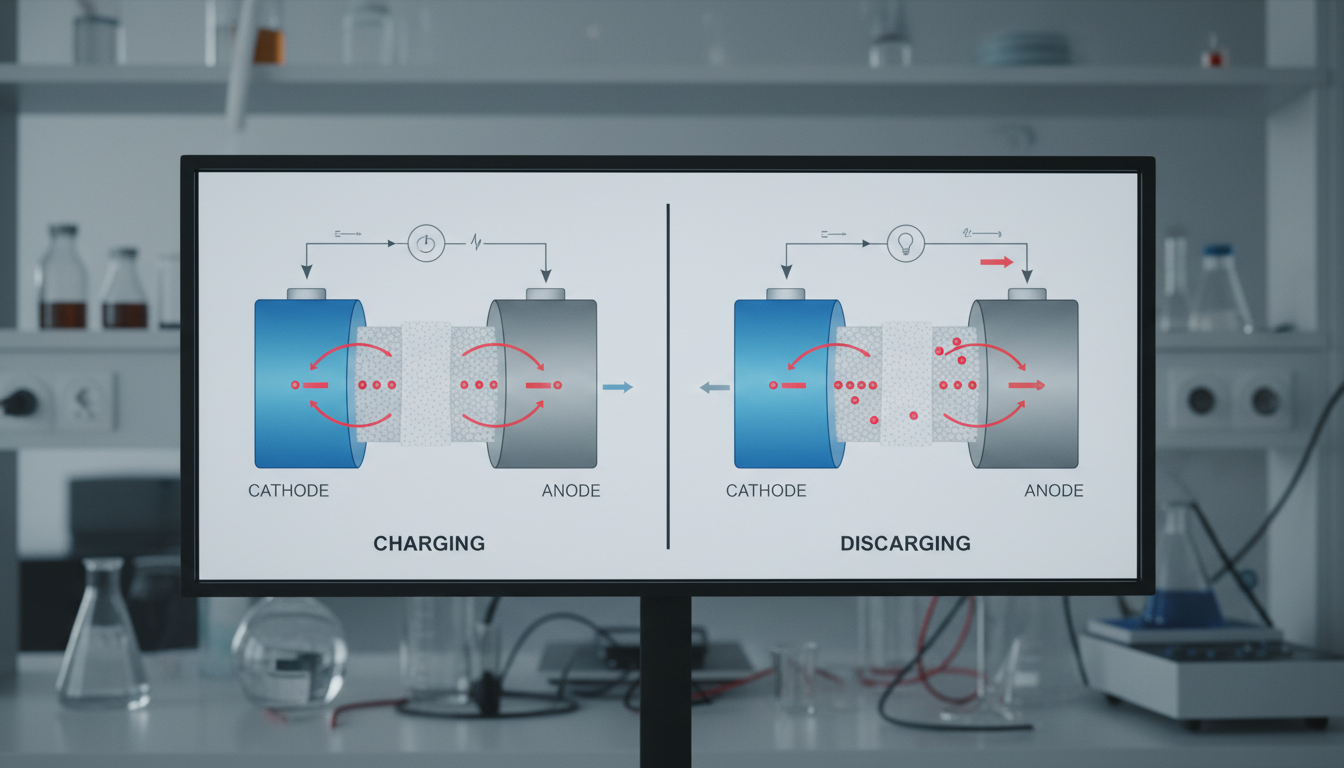
The beauty of this system is its reversibility. When you plug in your charger, you reverse the process. Lithium ions move back to the anode, and the battery stores energy again. This cycle can happen hundreds or even thousands of times, depending on the battery chemistry and how you use it.
Discharging Process: How Batteries Power Your Devices
While the battery is discharging and providing an electric current, the anode releases lithium ions to the cathode, generating a flow of electrons from one side to the other. This is what happens when you're scrolling through social media, driving your electric car, or using any battery-powered device.
Discharging a lithium cell is the process of using the stored energy to power a device, during which lithium ions move from the anode back to the cathode, and this movement generates an electric current, which powers your device. The electrons can't travel through the electrolyte, so they have to take the external route—through your device—creating the power you need.
As the battery discharges, its voltage gradually decreases. The battery management system monitors this voltage to make sure you don't over-discharge the battery, which could cause permanent damage. Most lithium-ion batteries have a minimum voltage threshold, typically around 2.5 to 3.0 volts per cell, below which discharge should stop.
Charging and Discharging Principle of Lithium-Ion Battery
When plugging in the device, the opposite happens: Lithium ions are released by the cathode and received by the anode. The charging process requires careful control to make sure the battery doesn't overheat or get damaged. Most lithium-ion batteries use a charging method called CCCV, which stands for constant current/constant voltage.
During the first phase, the charger applies a constant current to the battery. When charging the battery, lithium ions are generated at the positive electrode of the battery, and the generated lithium ions move through the electrolyte to the negative electrode. As more lithium ions pack into the anode, the battery voltage rises.
Once the battery reaches its maximum voltage (usually 4.2V per cell for most lithium-ion batteries), the charger switches to constant voltage mode. The current gradually decreases as the battery fills up, similar to how water flow slows when filling a bottle. The charge is complete when the current drops to a very low level, typically 3-5% of the initial charging current.
Proper charging and discharging practices extend battery life. Keeping your battery between 20% and 80% charge, avoiding extreme temperatures, and using the right charger all help your battery last longer and perform better.
The Role of the Cathode in Battery Performance
The cathode determines the capacity and voltage of a battery, which are the critical components of battery performance. Different cathode materials offer different trade-offs between energy density, safety, cost, and lifespan. This is why you'll find different types of lithium-ion batteries for different applications.
For electric vehicles and high-power applications, manufacturers often use nickel-cobalt-manganese (NCM) or nickel-cobalt-aluminum (NCA) cathodes. These materials provide high energy density, meaning more power in a smaller, lighter package. For applications where safety and long life matter more than maximum energy density, lithium iron phosphate (LFP) cathodes are popular choices.
Battery capacity improves as the lithium proportion increases. However, this also affects the cost and sometimes the safety characteristics of the battery. Battery makers constantly work to optimize these materials, finding the right balance for each application.
How to Understand the Anode's Function
Anode materials store and release lithium ions from the cathode, allowing current to flow through an external circuit. The anode's job is to host lithium ions when the battery is charged and release them when you need power. Most commercial lithium-ion batteries use graphite as the anode material.
Graphite works well because it has a layered structure that easily accommodates lithium ions. Graphite can store many ions and is mainly used for anode materials, however, as the process of storing and releasing lithium ions is repeated, the structure of graphite changes, and the number of ions that can be stored decreases, reducing battery life.
To address these limitations, researchers are developing next-generation anode materials. Silicon anodes can store much more lithium than graphite, potentially offering batteries with significantly higher capacity. However, silicon expands dramatically when it absorbs lithium, which creates challenges for battery durability. Scientists are working on solutions like silicon-graphite blends and nanostructured silicon to overcome these issues.
Energy Density and Power Density Explained
The two most common concepts associated with batteries are energy density and power density, with energy density measured in watt-hours per kilogram (Wh/kg) as the amount of energy the battery can store with respect to its mass, and power density measured in watts per kilogram (W/kg) as the amount of power that can be generated by the battery with respect to its mass.
To draw a clearer picture, think of draining a pool—energy density is similar to the size of the pool, while power density is comparable to draining the pool as quickly as possible. A battery with high energy density can store a lot of energy for its weight, which is great for applications like electric vehicles where you want maximum range. High power density means the battery can deliver that energy quickly, which matters for acceleration in electric cars or power tools.
Different battery chemistries excel in different areas. Some prioritize energy density for longer runtime, while others focus on power density for high-performance applications. The best choice depends on what you need the battery to do.
Safety Features and Battery Management
Safety is a big deal when it comes to lithium-ion batteries. These batteries store a lot of energy in a small space, and if something goes wrong, it can lead to overheating or even thermal runaway. That's why modern lithium-ion batteries include multiple safety features.
The separator material provides structural integrity and acts as an inbuilt safety feature to moderate ion travel, and if ions move through the electrolyte too fast there is potential for thermal runaway, so the separator is designed to close or open their pores depending on temperature. This thermal shutdown feature helps prevent dangerous situations.
Battery management systems (BMS) monitor the voltage, current, and temperature of each cell in a battery pack. They balance the charge across all cells, prevent overcharging and over-discharging, and shut down the battery if conditions become unsafe. This smart technology is what makes lithium-ion batteries safe enough for everyday use in everything from your pocket to your garage.
Frequently Asked Questions
What makes lithium-ion batteries rechargeable?
Lithium-ion batteries are rechargeable because the chemical reactions that occur during discharge can be reversed during charging. Lithium ions move back and forth between the anode and cathode through a process called intercalation, where ions insert into and extract from the electrode materials without permanently changing their structure. This allows the battery to be charged and discharged hundreds to thousands of times.
How long do lithium-ion batteries last?
The lifespan of a lithium-ion battery depends on several factors including chemistry type, usage patterns, and operating conditions. Most lithium-ion batteries can handle 500-1000 full charge-discharge cycles before their capacity drops to about 80% of the original. In real-world use with partial charging cycles, batteries can last several years. Keeping the battery between 20-80% charge and avoiding extreme temperatures helps extend its life.
Why do lithium-ion batteries lose capacity over time?
Battery capacity fades due to several factors. During charge and discharge cycles, some lithium ions can get trapped and become unavailable for future cycles. The solid electrolyte interface (SEI) layer that forms on the anode can grow thicker over time, increasing internal resistance. Chemical degradation of the electrode materials and electrolyte also occurs gradually. High temperatures, deep discharges, and high charge rates can accelerate these aging processes.
Can you overcharge a lithium-ion battery?
Modern lithium-ion batteries have built-in protection circuits and battery management systems that prevent overcharging. When the battery reaches its maximum voltage (typically 4.2V per cell), the charger automatically stops or switches to a maintenance mode. However, continuously keeping a battery at 100% charge, especially at high temperatures, can stress the battery and reduce its lifespan. This is why some manufacturers recommend charging to 80% for daily use.
What's the difference between lithium-ion and lithium metal batteries?
Lithium-ion batteries use lithium compounds in both electrodes and rely on lithium ions moving between them. The anode is typically graphite, not pure lithium metal. Early lithium metal batteries used metallic lithium as the anode, which offered higher energy density but suffered from safety issues due to dendrite formation that could cause short circuits. Modern lithium-ion batteries solved this problem by using intercalation materials, making them much safer for commercial use.
Highstar attaches great importance to your personal privacy. When you visit our website, please agree to the use of all cookies. More information about the processing of personal data can be found at "Privacy Policy"


 Buy
Buy