Next-Gen Anode Material to Succeed Graphite: Silicon Takes the Lead
Related Topics
Discover how silicon is replacing graphite as the next-generation anode material for lithium-ion batteries, offering 10x higher capacity and faster charging for EVs.
Follow us on
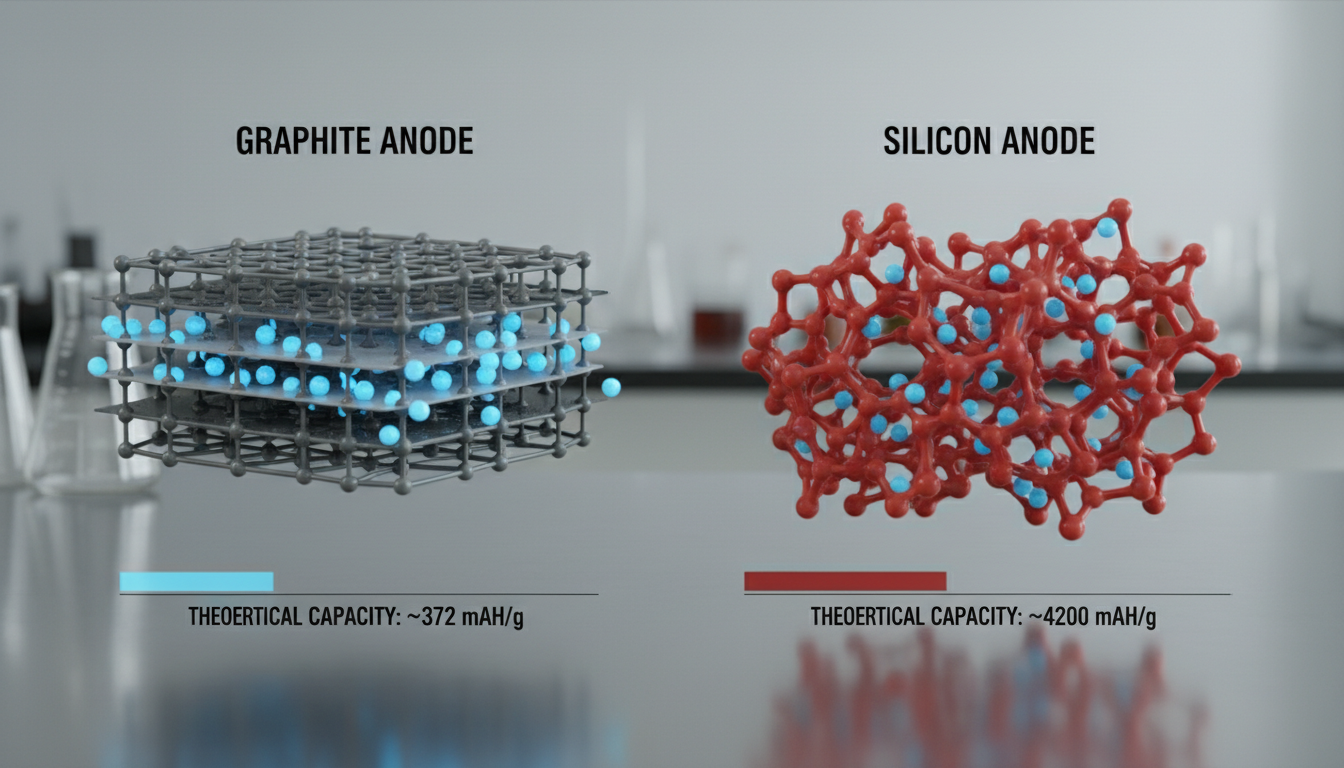
The battery world is going through a massive shift. For decades, graphite has been the go-to material for lithium-ion battery anodes, powering everything from smartphones to electric vehicles. But graphite has hit its limits. With its theoretical capacity maxing out at 372 mAh/g, it simply can't keep up with the growing demand for longer-range EVs, faster-charging devices, and higher energy density batteries.
Enter silicon—the next-generation anode material that's set to change the game. Silicon is considered to be the most promising anode material to replace graphite due to its higher theoretical capacity. We're talking about a material that can store 4.4 lithium ions for every silicon atom, giving it four times more capacity per gram than graphite. That's a game-changer for anyone who's tired of waiting hours for their phone to charge or EVs that run out of juice too quickly.
But here's the catch: silicon isn't perfect. It expands and contracts dramatically during charging cycles, which can cause the anode to crack and degrade. That's why researchers are working on battery electrode binder auxiliary materials and silicon-carbon composites to solve these issues. Let's break down what makes silicon the future of battery technology, how it stacks up against graphite, and what challenges still need fixing.
The Next-Generation Anode Material – Silicon
Silicon has been on researchers' radar for years, but only recently has it started to make its way into commercial batteries. Silicon-based materials have a much larger specific energy capacity of 3600 mAh/g for pristine silicon, while the standard anode material graphite is limited to a maximum theoretical capacity of 372 mAh/g. That's nearly 10 times the capacity, which means batteries can hold way more energy in the same amount of space.
But it's not just about capacity. Silicon promises longer-range, faster-charging and more-affordable EVs than those whose batteries feature today's graphite anodes, as it shuttles lithium ions across the battery's membrane faster. Plus, silicon is super abundant—it's literally the second most common element in the Earth's crust. This means no supply chain nightmares like we've seen with lithium and cobalt.
Companies like Group14 Technologies, Sila Nanotechnologies, and Amprius are already shipping silicon anode materials to battery manufacturers. Group14 Technologies has patented a silicon-carbon composite SCC55, which enables 50% more in fully lithiated volumetric energy density than graphite, and has been tested by battery manufacturers including StoreDot, which found that SCC55 could be charged to 80% capacity in 10 minutes.
Why Silicon Outperforms Graphite
Let's get real: graphite has served us well, but it's maxed out. The problem is simple—graphite can only store one lithium ion for every six carbon atoms. Silicon, on the other hand, can store way more lithium per atom, which translates to higher energy density and longer battery life.
Here's a quick comparison:
Property
Graphite
Silicon
Theoretical Capacity
372 mAh/g
3600-4200 mAh/g
Volume Expansion
~10%
~300%
Abundance
Moderate
Very High
Cost
Low
Moderate (decreasing)
Charging Speed
Standard
Faster
For the anode, the conventional commercial graphite (372 mAh/g) is far from meeting the demand for high energy density, while silicon is one of the most promising candidates due to its high gravimetric capacities (4,200 mAh/g in the form of Li22Si5).
The catch? Silicon's massive volume expansion during charging—up to 300%—causes the material to crack and lose electrical contact. That's where silicon-carbon composites come in.
Silicon-Carbon Composites: The Practical Solution
The use of graphite combined with silicon particles is an effective orientation to improve the electrochemical performance of the Si-based anode, as graphite can be used not only to have a stable solid electrolyte interphase (SEI) but also to provide pores for silicon particles between graphite flakes. This hybrid approach takes the best of both worlds—silicon's high capacity and graphite's stability.
Researchers have found that mixing 5-20% silicon with graphite creates a composite that delivers way better performance than pure graphite, without the severe degradation issues of pure silicon. To achieve high specific capacity, area capacity, and volume capacity, silicon is added to the graphite negative electrode to buffer volume changes and increase conductivity, and the co-utilization of silicon and graphite can be achieved using the same commercial production line, thus translating into high manufacturability and minimal investment.
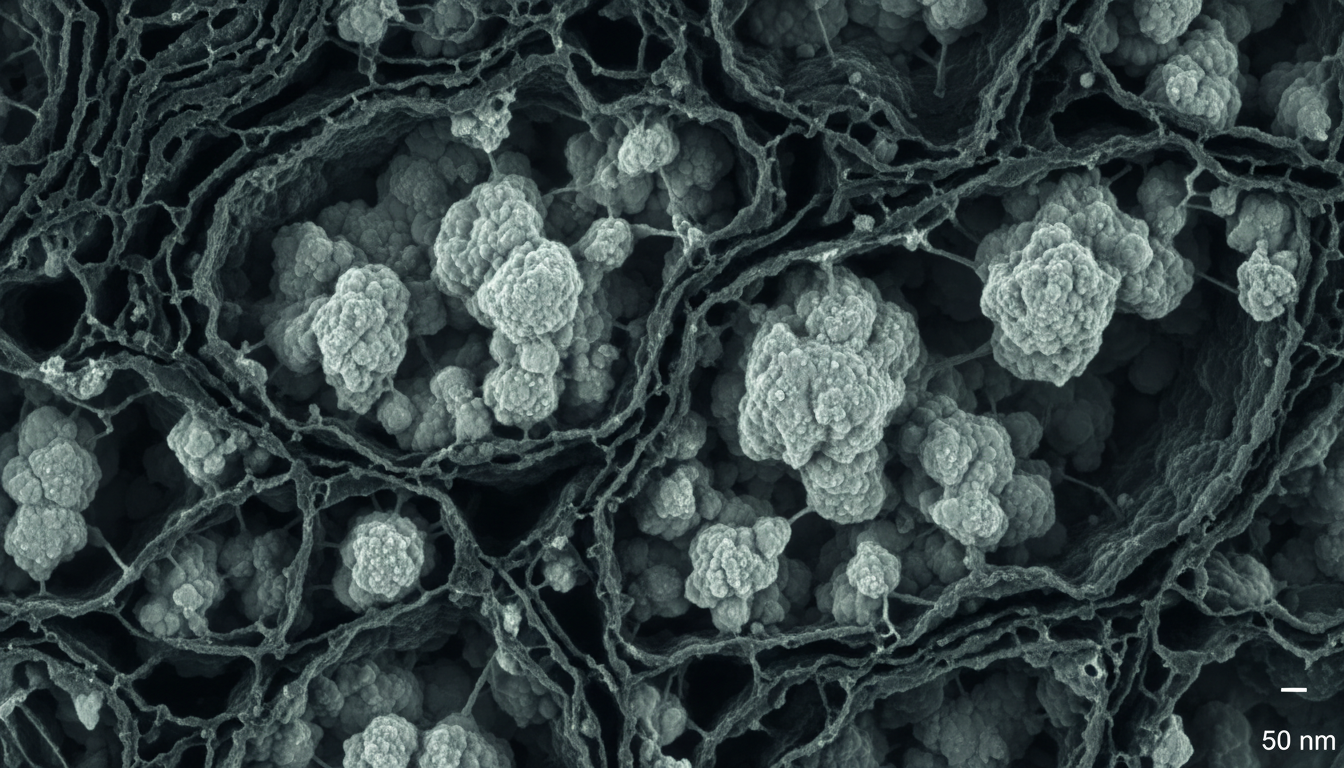
Some companies are going even further. Current commercial implementations use silicon-graphite composites (5-15% silicon), with next-gen designs targeting 80%+ silicon content through nanostructuring and carbon scaffolding. The key is creating nano-sized silicon particles or coating them with carbon layers that act as a buffer during expansion.
Challenges and Solutions for Silicon Anodes
Okay, so silicon sounds amazing, but it's not without its problems. The biggest issue is that volume expansion thing we keep mentioning. When silicon absorbs lithium ions during charging, it swells up like a sponge. Then, when it releases those ions during discharge, it shrinks back down. This constant swelling and shrinking cracks the material and destroys the battery over time.
Here's what researchers are doing to fix it:
Nanostructuring: By making silicon particles super tiny (nano-sized), the stress from expansion is spread out more evenly, reducing cracking.
Carbon Coatings: A workable solution to the problems associated with using silicon as an anode material is to combine silicon derived from agro-waste with carbon-based materials, as the addition of carbon improves the total conductivity of the composite, enabling more effective electron movement throughout the charge-discharge cycle.
Advanced Binders: Traditional binders like PVDF don't hold up well with silicon. Newer binders like CMC (carboxymethyl cellulose) and alginate create stronger bonds and help maintain the anode's structure over many cycles.
Electrolyte Additives: The use of FEC as an electrolyte additive is greatly contributing to a stabilized cycling by creating a more robust SEI layer.
Companies Leading the Silicon Anode Revolution
The race to commercialize silicon anodes is heating up. Several companies are already shipping products or gearing up for mass production:
Group14 Technologies: The company began constructing its BAM-2 facility in Moses Lake, Washington, aiming to produce commercial quantities of its SCC55™ silicon-carbon composite anode material by 2024, which offers up to a 50% increase in energy density compared to traditional graphite anodes, and in September 2024, started delivering SCC55™ to over 100 EV and battery manufacturers worldwide.
Sila Nanotechnologies: Partnered with BMW and has already incorporated its silicon anode tech into consumer products like the Whoop 4.0 fitness tracker.
Amprius Technologies: In 2023, the company expanded its Fremont facility's production capacity tenfold, and in early 2024, introduced its SiCore™ platform, featuring a 6.3Ah 21700 cell with an energy density of 315 Wh/kg, delivering 25% more capacity than standard 5.0Ah cells.
These companies aren't just making lab samples—they're scaling up production to meet real-world demand. Highstar's ternary lithium battery technology is also evolving to accommodate these new anode materials.
Hard Carbon: The Alternative for Sodium-Ion Batteries
While silicon is taking over lithium-ion batteries, there's another player in the anode game: hard carbon for sodium-ion batteries. Since graphite doesn't work well with sodium ions, hard carbon has become the go-to material. Because of its abundant resources, low cost and high reversible specific capacity, hard carbon is considered as the most likely commercial anode material for sodium-ion batteries.
Sodium-ion batteries are gaining traction for large-scale energy storage because sodium is way cheaper and more abundant than lithium. Low-cost sodium-ion batteries are expected to replace lithium-ion batteries and become the most likely energy storage system for large-scale applications, with hard carbon having obvious advantages and great commercial potential.
Hard carbon offers decent capacity (around 300-350 mAh/g) and excellent cycling stability, making it perfect for grid storage and other applications where cost matters more than absolute performance.
Frequently Asked Questions
What makes silicon better than graphite for battery anodes?
Silicon can store up to 10 times more lithium ions than graphite, offering significantly higher energy density. This means longer battery life and faster charging times for devices and electric vehicles.
Why hasn't silicon replaced graphite already if it's so much better?
The main challenge is silicon's massive volume expansion (up to 300%) during charging, which causes the material to crack and degrade. Researchers are solving this through silicon-carbon composites, nanostructuring, and advanced binders.
Are silicon anode batteries more expensive than graphite batteries?
Currently, yes, but the cost gap is narrowing. Silicon anode production runs around $15-20/kWh compared to graphite's $5/kWh, but industry projections suggest cost parity by 2027-2028 as manufacturing scales up.
Can I buy a device with a silicon anode battery right now?
Yes! Several consumer products already use silicon anodes, including the Whoop 4.0 fitness tracker and the Honor Magic7 Pro smartphone. More products are expected to hit the market in 2025 and beyond.
What role does hard carbon play in next-gen batteries?
Hard carbon is the preferred anode material for sodium-ion batteries, which are emerging as a cheaper alternative to lithium-ion batteries for large-scale energy storage. It offers good capacity and excellent cycling stability at a lower cost.
Highstar attaches great importance to your personal privacy. When you visit our website, please agree to the use of all cookies. More information about the processing of personal data can be found at "Privacy Policy"


 Buy
Buy