Next-Generation Batteries We Will Encounter: What's Coming in 2026 and Beyond
Related Topics
From sodium-ion to solid-state and lithium-sulfur batteries, discover the next-generation battery technologies hitting the market and what they mean for EVs and energy storage.
Follow us on
Battery technology is moving faster than most of us realize. We're seeing new chemistries that promise safer, cheaper, and more powerful energy storage solutions. These aren't distant concepts anymore—some are already making their way into vehicles and grid systems right now.
The batteries we'll encounter in the coming years look different from what powers most devices today. They're built with more abundant materials, work better in extreme weather, and address the limitations we've lived with for decades. Let's look at what's actually ready or close to hitting the market.
Sodium-Ion Batteries Are Here
Researchers made the breakthrough while developing solid-state sodium-ion (Na-ion) batteries, which could one day supplement and replace the lithium-ion (Li-ion) batteries used in many everyday devices today. Unlike lithium, a somewhat rare element that is currently mined in only a handful of countries, sodium is cheap and found everywhere.
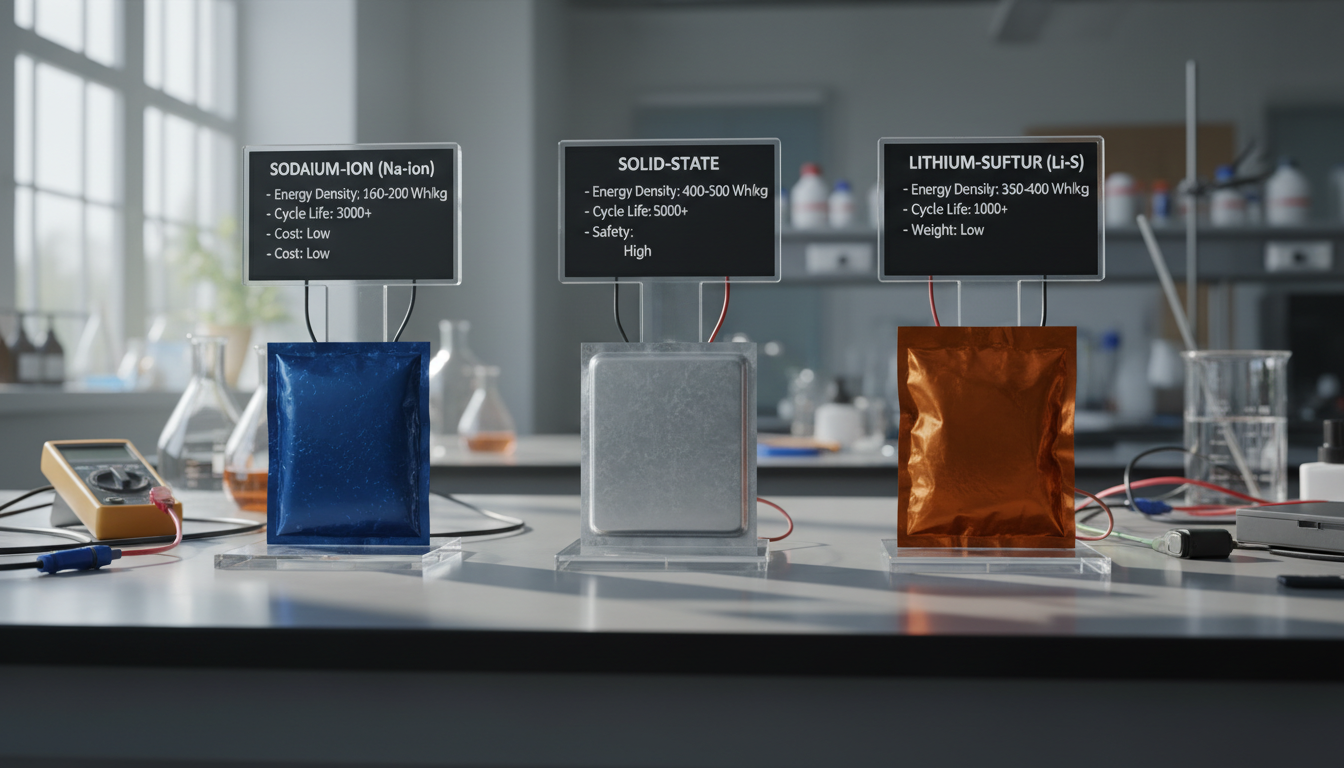
We're already seeing commercial deployment. The world's largest battery manufacturer, Contemporary Amperex Technology Co., Limited (CATL), announced that it is mass-producing Na-ion batteries using its new "Naxtra" battery platform. The product is expected to be used in cars from 2026. CATL's next-generation sodium-ion battery supports a pure-electric driving range of more than 500 kilometers in passenger-vehicle applications and is ready for mass production, aligned with a 2026 timeline. CATL stated that the battery achieves an energy density of up to 175 Wh/kg and has passed China's latest national safety standard for electric-vehicle traction batteries.
The appeal goes beyond just availability. Na-ion batteries could be a safer alternative because they contain more stable cathode materials and sodium ions have less electrochemical potential than lithium ions, making them less prone to thermal runaway. Na-ion batteries also come with the added benefit of being easier to recycle than Li-ion batteries because they contain fewer hazardous materials and no heavy metals. We're talking about batteries you can ship more safely and handle with less environmental risk. At Highstar, we track these developments closely as they reshape the entire battery supply chain.
Solid-State Batteries Move Toward Production
Solid-state batteries have been the "next big thing" for years, but 2027-2028 looks like when we'll actually see them. Major automakers including Toyota, Honda, and Mercedes-Benz have committed to solid state battery deployment between 2027-2030, with Toyota's aggressive 2027-2028 target representing the most ambitious commercial timeline in the industry.
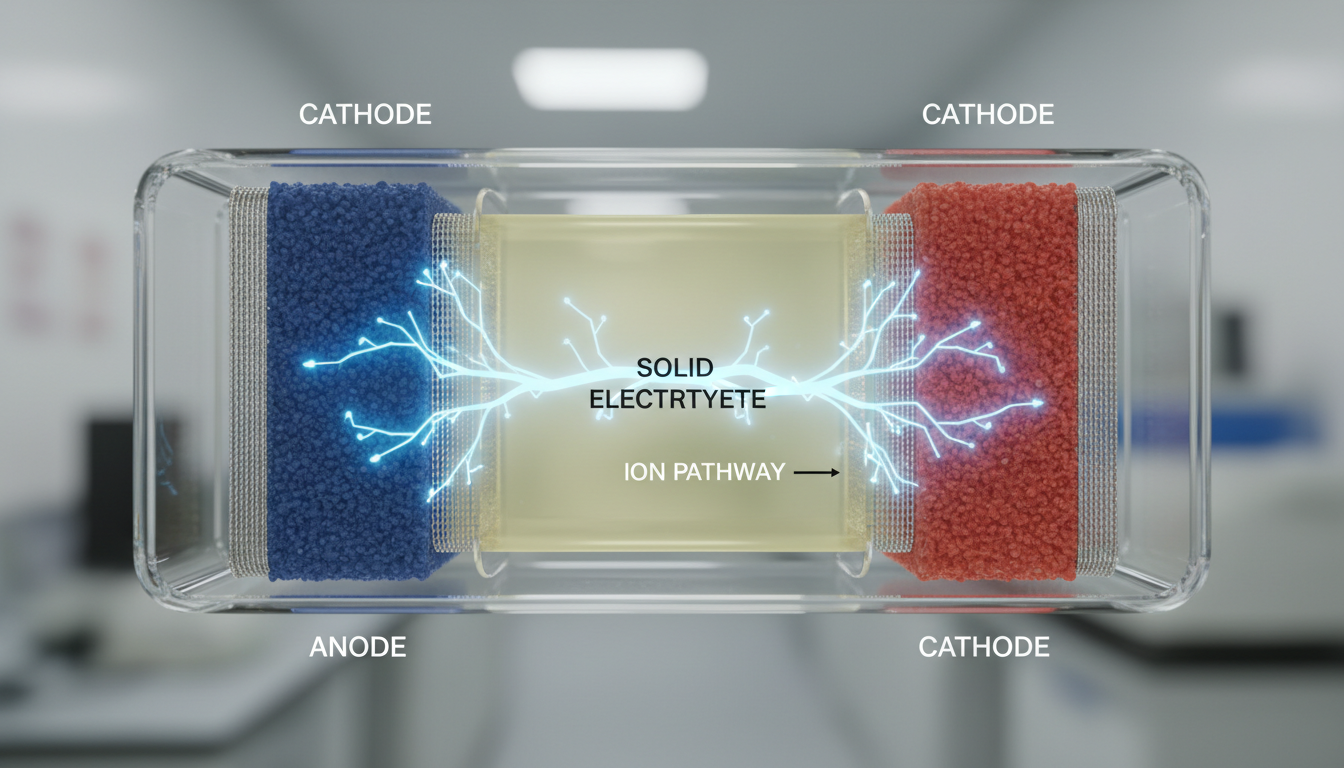
What makes them different? A solid-state battery (SSB) is an electrical battery that uses a solid electrolyte to conduct ions between the electrodes, instead of the liquid or gel polymer electrolytes found in conventional batteries. Because the liquid electrolyte in lithium-ion batteries is flammable, switching to a solid-state battery comes with a lower fire risk. Solid-state batteries also have the potential for higher energy densities than lithium-ion batteries, meaning they could power a car for longer with the same size battery.
Estonia-based Verge Motorcycles claims to have become the first motorcycle maker to deploy all-solid-state batteries on production motorcycles that will be available to customers starting in the first quarter of 2026. The company is using all-solid-state batteries made by Finnish start-up Donut Labs with an energy density of 400 watt-hours per kilogram and a lifespan of about 100,000 cycles. The company said the battery can be charged to a 100% regularly and is practically unaffected by extreme cold and heat.
But the road to mass production isn't smooth. Despite promising laboratory results, solid state batteries face "production hell" similar to early lithium-ion commercialization, with interfacial resistance, dendrite formation, and mechanical failure risks requiring 5-7 years of production validation before achieving commercial viability. The timeline matters because companies investing in ternary lithium batteries and other current technologies need to plan their transitions carefully.
Lithium-Sulfur Technology Gains Ground
Lithium–sulfur batteries could displace lithium-ion cells because of their higher energy density and lower cost. Li–S batteries have a high theoretical specific energy (≈2600 Wh/kg for the Li/S redox chemistry), but practical cell-level specific energies in pouch-cell formats are typically ~300–450 Wh/kg today.
One of the most significant advantages of lithium-sulfur (Li-S) batteries is their cost-effectiveness, driven by the abundance of sulfur, which is a readily available and low-cost material. One of its key advantages lies in the abundance of sulfur, a naturally occurring element that reduces dependence on scarce and expensive materials like nickel and cobalt. This directly addresses supply chain vulnerabilities we face with traditional chemistries.
Real progress is happening. An Argonne research team has built and tested a new interlayer to prevent dissolution of the sulfur cathode in lithium-sulfur batteries. This new interlayer increases Li-S cell capacity and maintains it over hundreds of cycles. In December 2024, automaker Stellantis and Zeta Energy announced a joint development agreement to advance lithium–sulfur EV batteries, targeting commercial use around 2030. In October 2024, Lyten announced plans to build a lithium–sulfur gigafactory near Reno, Nevada, designed for up to ~10 GWh annual capacity.
As the nation transitions to a clean, renewables-powered electric grid, batteries will need to evolve to handle increased demand and provide improved performance in a sustainable way. We're seeing this play out across multiple applications.
Sodium-ion batteries are finding their initial applications in energy storage, where lifetime operating cost, rather than weight or volume, is the key factor. China is leading the way with the world's largest sodium-ion energy storage systems. Meanwhile, solid-state technology targets premium EVs first before scaling to broader markets.
The growing number of battery fire incidents highlights the need for safer solutions. Additionally, the cost of lithium-ion batteries is significantly influenced by the cost of key materials like lithium, cobalt, and nickel. Fluctuations in their supply chain pose a threat to the reliable and cost-effective manufacturing of batteries. This is why diversification matters—we need multiple battery types serving different purposes.
The performance metrics are getting real. Recent breakthroughs in silicon-based anodes, solid-state electrolytes, and advanced cell designs promise to push energy densities beyond 400 Wh/kg and extend cycle lives to over 5000 cycles. Alternative battery technologies, such as solid-state, sodium-ion, and metal-air systems, are explored for their potential to complement or surpass lithium-ion batteries in specific applications.
The Timeline and What to Watch
Research firm BloombergNEF projects solid-state batteries to account for just 10% of global EV and battery storage demand by 2035. That's a measured forecast that reflects both the promise and the manufacturing challenges ahead.
Battery leaders like CATL and BYD, which together supply more than half of the world's EV batteries, are targeting limited solid-state production around 2027, with broader deployment expected later in the decade. The competitive field points to pilots and first commercialization from 2027–2028, with mass production in mainstream automotive applications largely clustered around 2030.
For sodium-ion, the picture looks different. Analysts cited by Car News China described the global sodium-ion battery industry as shifting from early commercialization toward scaled deployment, with current market use concentrated in energy storage and low-range vehicles, and predicted substantial growth in the sodium-ion market through 2030.
Conclusion
We're at a transition point where multiple battery technologies will coexist rather than one replacing all others. Sodium-ion batteries are already in production and heading to vehicles in 2026. Solid-state batteries will start appearing in premium applications around 2027-2028, with mass production likely by 2030. Lithium-sulfur technology is targeting commercial deployment around 2030 as well.
The batteries we encounter in the next few years will be safer, more sustainable, and better suited to specific applications. This isn't about waiting for one perfect solution—it's about matching the right battery chemistry to each use case. Whether you're watching the EV market, planning energy storage projects, or just curious about where technology is heading, these are the batteries that will power that future.
FAQs
When will sodium-ion batteries be available in electric vehicles?
Sodium-ion batteries are entering the EV market now. CATL, the world's largest battery manufacturer, is mass-producing sodium-ion batteries and expects them to be used in passenger vehicles starting in 2026. Their latest batteries achieve 175 Wh/kg energy density and can support a driving range of over 500 kilometers. Chinese automakers are already testing sodium-ion technology in demonstration vehicles and scooters.
Are solid-state batteries actually coming soon or is it just hype?
Solid-state batteries are moving from labs to production, but with realistic timelines. Toyota plans to launch vehicles with solid-state batteries by 2027-2028, and other major automakers like Mercedes-Benz and Honda have similar targets in the 2027-2030 range. A Finnish company, Donut Labs, claims production is already starting in motorcycles in early 2026. Mass production for mainstream cars will likely arrive around 2030, not sooner.
What are the main benefits of lithium-sulfur batteries?
Lithium-sulfur batteries offer higher energy density than current lithium-ion batteries—potentially up to 2600 Wh/kg theoretically, with practical cells reaching 300-450 Wh/kg today. Sulfur is abundant and inexpensive compared to nickel and cobalt, reducing costs and supply chain risks. They also offer better safety characteristics because their conversion reaction reduces the risk of thermal runaway. The main drawbacks are shorter cycle life compared to lithium-ion, currently around 200-500 cycles.
Will sodium-ion batteries replace lithium-ion completely?
No, sodium-ion batteries will complement rather than replace lithium-ion. They work best in applications where cost and safety matter more than maximum energy density—like energy storage systems, battery swap stations, and budget-friendly EVs. CATL describes the future as a "dual-star" approach where sodium and lithium batteries coexist, serving different market segments. Lithium-ion will likely remain dominant in applications demanding the highest energy density.
Why have solid-state batteries taken so long to commercialize?
Solid-state batteries face significant manufacturing challenges. Creating stable interfaces between solid materials is difficult, and issues like dendrite formation, interfacial resistance, and mechanical stress during charging cycles need solving. Manufacturing these batteries at scale without defects requires 5-7 years of production validation, similar to what lithium-ion batteries went through decades ago. The chemistry works in labs, but making millions of units reliably and affordably takes time.
Highstar attaches great importance to your personal privacy. When you visit our website, please agree to the use of all cookies. More information about the processing of personal data can be found at "Privacy Policy"


 Buy
Buy