BMS (Battery Management System): What It Does and Why It Matters
Related Topics
Discover how a Battery Management System (BMS) protects lithium batteries from damage, extends lifespan, and keeps your devices running safely and efficiently.
Follow us on
Think of batteries as the workhorses of modern technology—they power everything from electric vehicles to smartphones. But here's the thing: lithium-ion batteries pack a lot of energy into a small space, which means they need careful supervision. That's where a Battery Management System comes in. We'll walk you through what a BMS does, how it works, and why it's become non-negotiable for battery-powered applications.
What Is a Battery Management System?
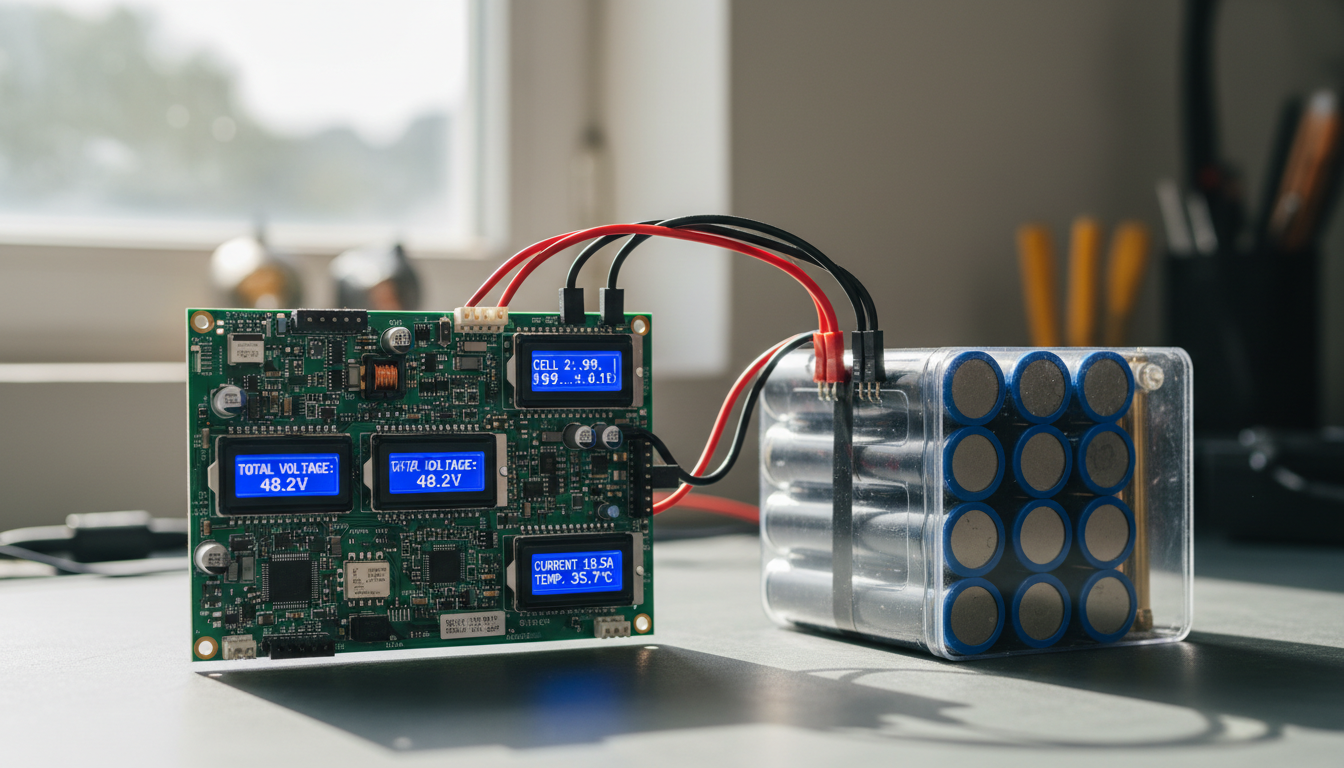
A BMS is the electronic brain that monitors and controls rechargeable battery packs. It watches over individual cells within the pack, tracking voltage, temperature, and current to make sure everything stays within safe limits. Without this oversight, batteries can overheat, degrade faster, or even become fire hazards.
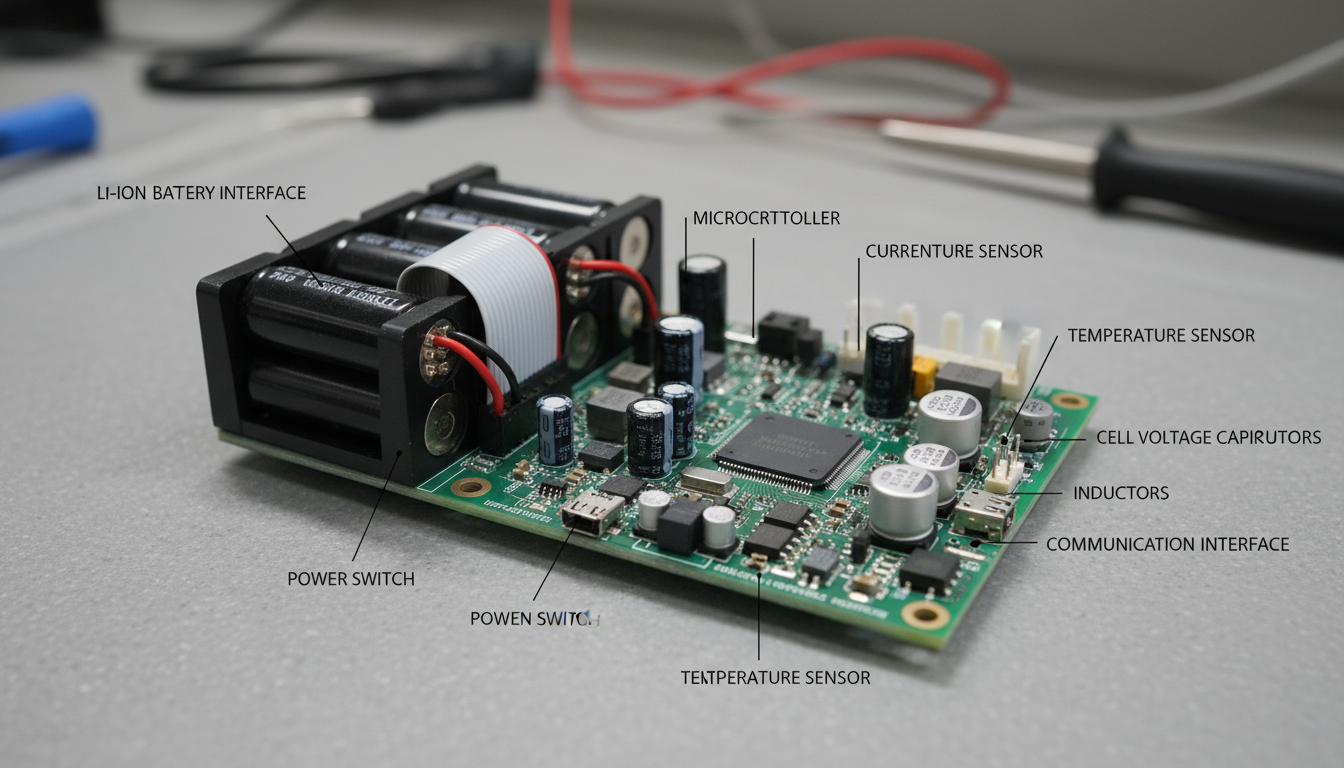
The system works by gathering data from sensors placed throughout the battery pack. It then uses that data to make real-time decisions—like cutting off charging when a cell gets too hot or balancing energy distribution across cells. Most modern lithium-ion batteries, especially ternary lithium batteries, rely on a BMS to deliver safe, consistent performance.
Core Functions of a BMS
Battery management systems handle several jobs at once. Voltage monitoring prevents cells from being charged too high or drained too low—both of which can permanently damage the battery. Temperature control stops overheating by activating cooling systems or shutting down charging when temps climb beyond safe levels.
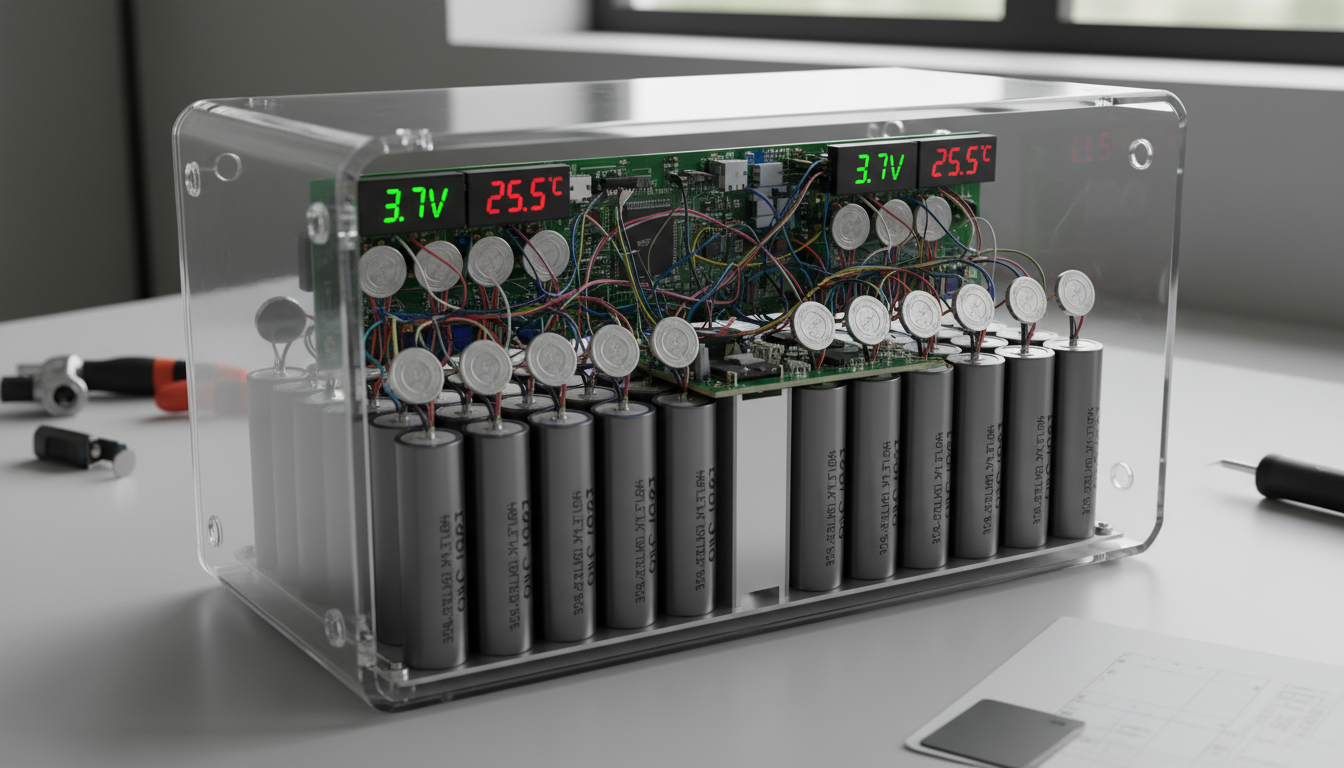
Cell balancing is another big one. Over time, individual cells in a pack can develop different charge levels. A BMS redistributes energy to keep all cells at roughly the same voltage, which maximizes usable capacity and extends the pack's lifespan. It also calculates state of charge (SOC)—basically a fuel gauge showing how much energy is left—and state of health (SOH), which tracks overall battery condition compared to when it was new.
How BMS Protects Your Battery
Lithium-ion batteries are sensitive. Push them outside their safe operating area and you risk thermal runaway, a chain reaction that can lead to fires. A BMS acts as a safety net by constantly checking for dangerous conditions.
If voltage spikes too high during charging, the system tells the charger to back off or shut down completely. If current draw exceeds safe limits—say, during rapid acceleration in an electric vehicle—the BMS can limit power output to protect the cells. It also monitors for short circuits, loose connections, and other faults that could cause damage. When something goes wrong, the BMS either corrects it or shuts the battery down to prevent worse outcomes.
For applications like lithium-ion cells and battery modules, protection features aren't optional—they're what make high-density energy storage practical and safe.
Types of BMS Architectures
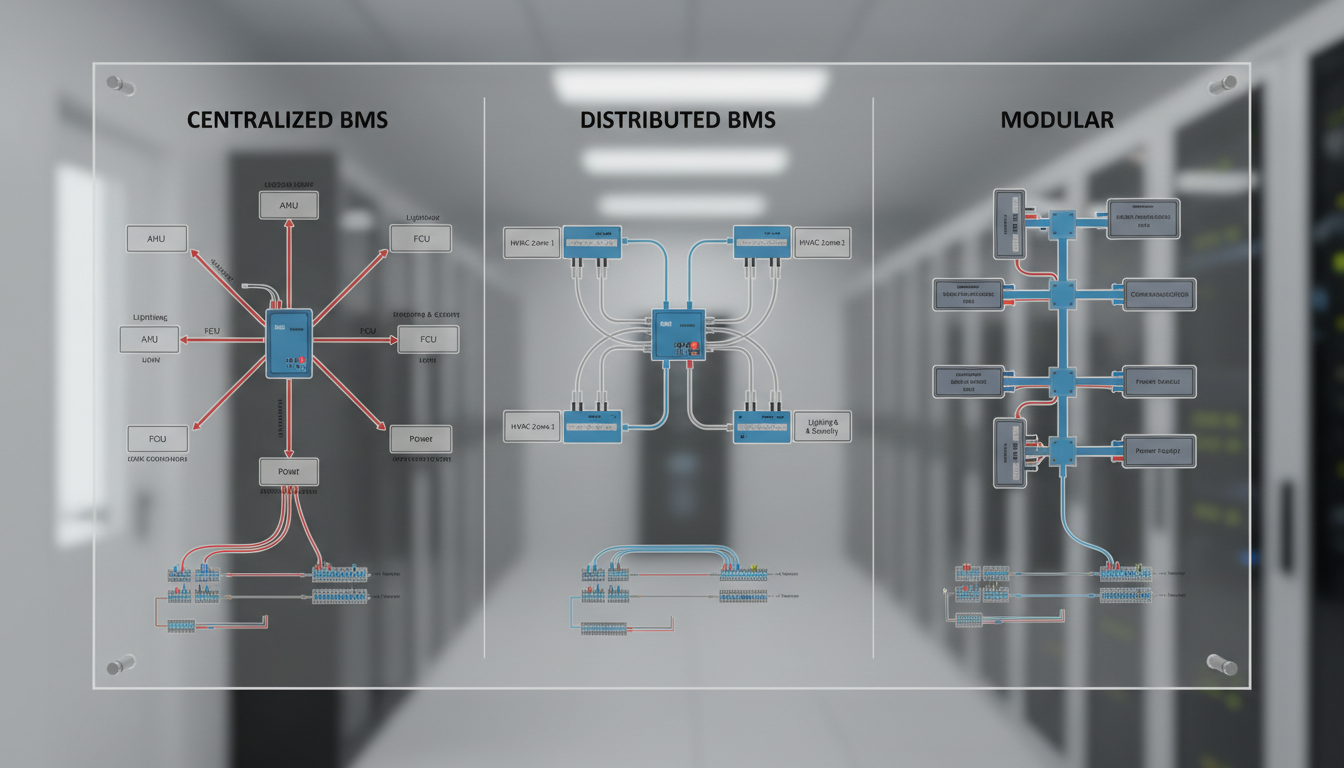
Not all battery systems are built the same, so BMS designs vary based on application needs. Centralized BMS uses a single controller to manage all cells in the pack. It's simple, compact, and cost-effective, but it comes with a lot of wiring and can become a single point of failure.
Distributed BMS spreads control across multiple boards, each attached to specific cells or modules. This design is more scalable and reliable—if one board fails, the rest keep working. But it costs more and takes up extra space. Modular BMS sits somewhere in between, grouping cells into modules that each have their own controller, all coordinated by a main unit.
Choosing the right architecture depends on factors like battery size, application type, and budget. Electric vehicles often use distributed or modular designs for their large, high-voltage packs, while smaller systems like portable electronics stick with centralized setups.
BMS in Electric Vehicles
Electric vehicles put huge demands on their batteries—high power output, frequent charging, and years of daily use. A BMS is what makes all that possible. It monitors hundreds of cells at once, balances them during charging, and coordinates with the vehicle's powertrain to deliver smooth acceleration and regenerative braking.
BMS also plays a big role in extending EV battery life. By preventing overcharge, over-discharge, and temperature extremes, it helps the pack last 8 to 10 years or more. And because the battery is the most expensive component in an EV, keeping it healthy translates directly into lower ownership costs. Range estimation—how far you can drive on the remaining charge—comes from BMS calculations, making it a key part of the driver experience.
Why BMS Matters for Battery Longevity
Batteries degrade over time. Every charge cycle wears them down a little. But a good BMS can slow that process significantly. By keeping cells balanced, avoiding extreme temperatures, and preventing deep discharges, the system minimizes stress on the battery chemistry.
Cell balancing is especially effective here. When cells drift out of sync, the weakest one limits the entire pack's capacity. Balancing ensures all cells age at the same rate, which means you get more usable energy for longer. Temperature management also makes a big difference—lithium-ion batteries perform best between 15°C and 35°C, and a BMS works to maintain that range no matter the environment.
There are two main ways to integrate a BMS: inside the battery casing or as a separate external unit. Internal BMS is built directly into the battery pack. It's compact, requires no extra wiring, and works right out of the box. Most consumer electronics and pre-built battery systems use this approach.
External BMS sits outside the battery and connects through dedicated cables. It's more complex to install and takes up space, but it offers advanced features like remote monitoring, data logging, and easier customization. External systems are common in large installations like renewable energy storage or custom EV builds.
For most applications—RVs, boats, home solar setups—an internal BMS is the safer, simpler choice. External systems make sense when you need flexibility or are managing multiple battery packs.
Conclusion
A Battery Management System isn't just a nice-to-have—it's what makes modern lithium-ion batteries viable. It protects against dangerous failures, extends battery life, and makes sure you get the performance you paid for. From electric vehicles to portable power stations, BMS technology is the invisible safety net keeping our devices running smoothly. As batteries become more powerful and applications more demanding, the role of BMS will only grow in importance.
For more information about advanced battery solutions, visit Highstar.
FAQs
What does BMS stand for in batteries? BMS stands for Battery Management System. It's an electronic control unit that monitors and manages rechargeable battery packs, tracking voltage, current, and temperature to keep cells operating safely and efficiently.
Can you use a lithium battery without a BMS? Technically yes, but it's risky. Without a BMS, lithium batteries are prone to overcharging, overheating, and thermal runaway. Running them without protection is impractical and dangerous in most real-world applications.
How does a BMS extend battery life? A BMS extends battery life by preventing overcharge and over-discharge, balancing cells to keep them aging uniformly, and managing temperature to avoid stress on the battery chemistry. These protections reduce degradation over thousands of charge cycles.
What's the difference between centralized and distributed BMS? Centralized BMS uses one controller to manage all cells, making it simple and affordable but harder to scale. Distributed BMS uses multiple controllers spread across the pack, offering better reliability and scalability at a higher cost.
Do all electric vehicles use a BMS? Yes. Every modern electric vehicle relies on a BMS to manage its high-voltage battery pack. The system monitors hundreds of cells, coordinates with charging infrastructure, and makes sure the battery operates safely under demanding conditions.
Highstar attaches great importance to your personal privacy. When you visit our website, please agree to the use of all cookies. More information about the processing of personal data can be found at "Privacy Policy"


 Buy
Buy