Cathode Material Structure: Breaking Down the Building Blocks of Battery Performance
Related Topics
Discover how cathode material structures—layered, spinel, and olivine—shape battery performance, energy density, and safety in lithium-ion batteries.
Follow us on
Batteries power our lives. From smartphones to electric vehicles, they're everywhere. But what makes one battery better than another? The answer often lies in something you can't see with the naked eye: cathode material structure.
We're talking about how atoms arrange themselves at the microscopic level. These atomic patterns decide how well a battery stores energy, how long it lasts, and even how safe it is. Let's break down the three main types of structures you'll find in modern lithium-ion batteries.
What Makes Cathode Structure Matter
The cathode sits at the heart of battery performance. Among battery components, the cathode usually has the highest weight fraction and often plays a dominant role in attainable cost and many cell performance characteristics, especially those related to battery weight, safety, and calendar life.
Think of the cathode structure like a hotel for lithium ions. Some structures have wide hallways and big rooms—these let ions move quickly and store lots of energy. Others have narrow passages but stronger walls, making them safer but slower. The structure you pick changes everything about how your battery behaves.
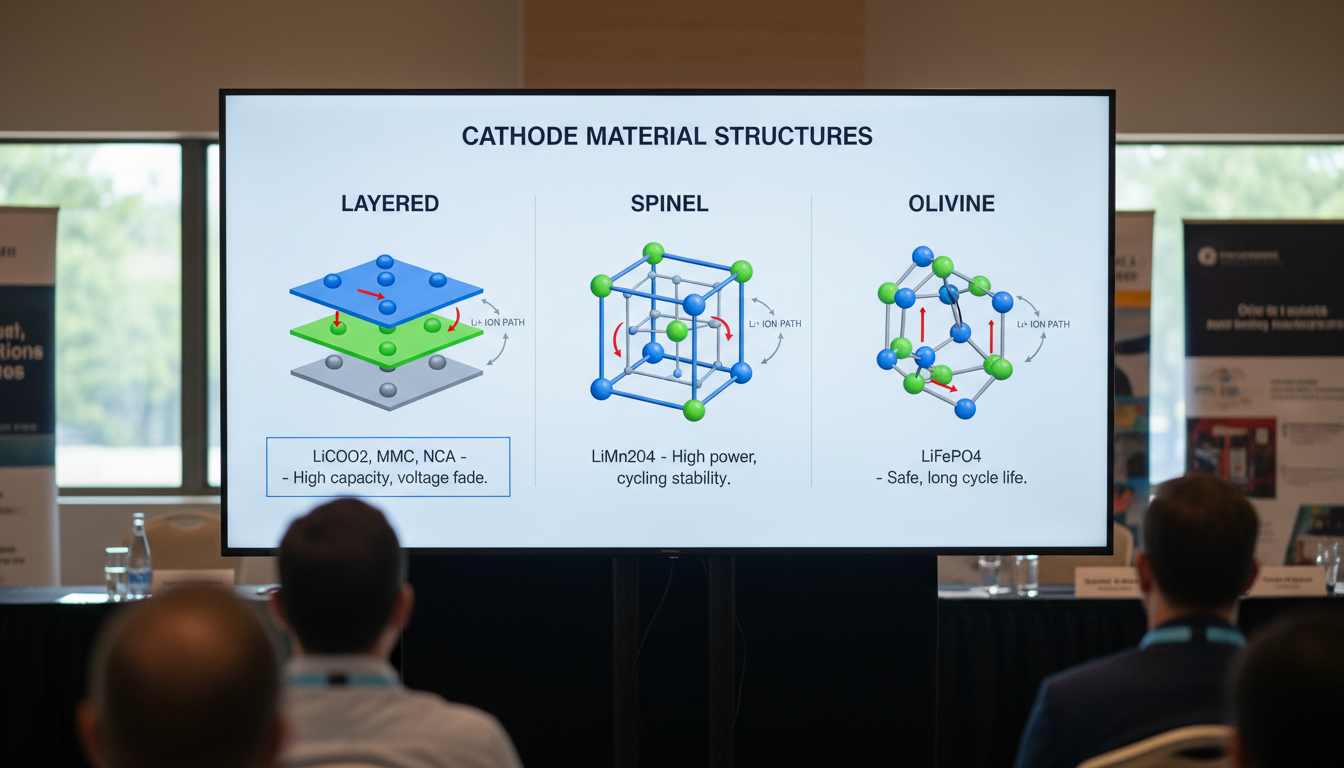
Three classes of cathode materials in lithium-ion batteries have been commercialized: layered oxides, spinel oxides, and oxoanion complexes. Each one brings different strengths to the table. We've been working with these materials at Highstar to develop better battery performance across different applications.
Layered Structure: The Energy Champion
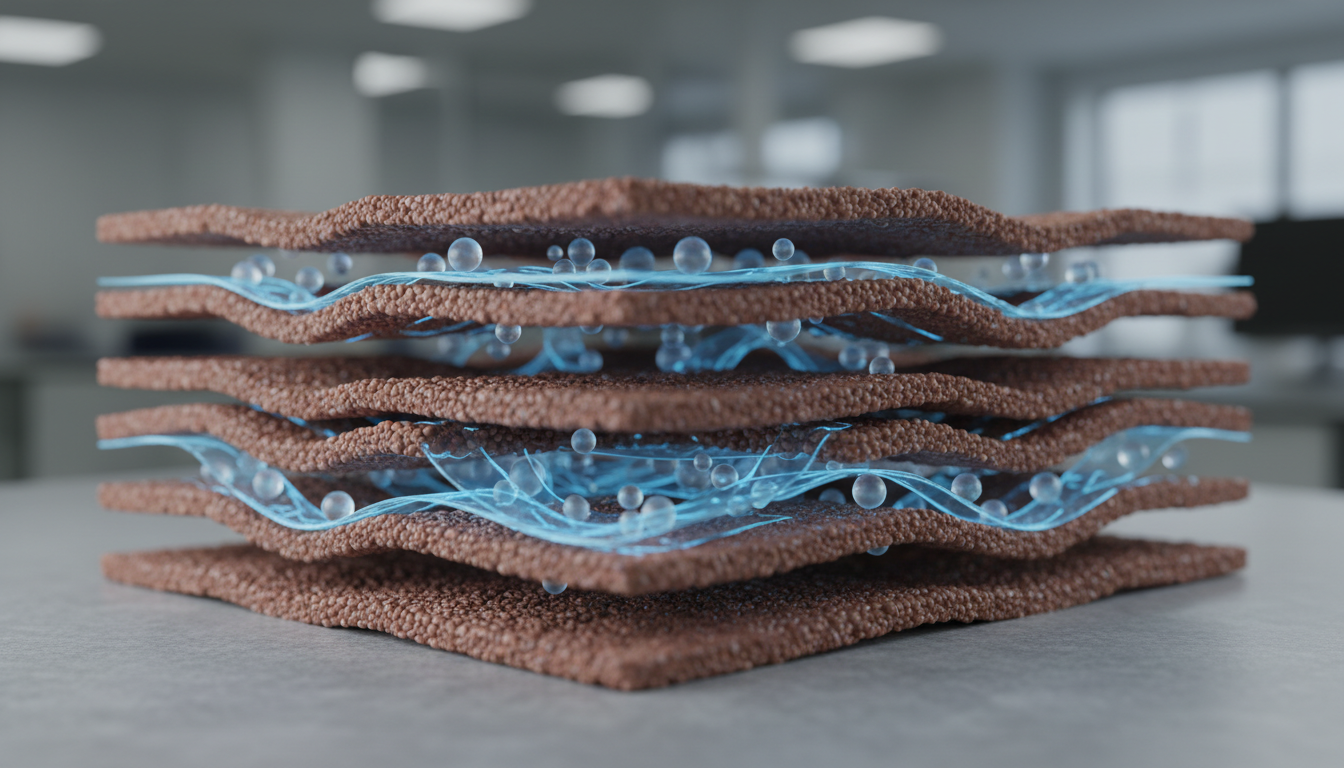
In the layered structure, octahedral layers made of oxygen are stacked up in a regular pattern with large and flat spaces between the layers, enough to store a lot of lithium-ions.
Picture a stack of pancakes with syrup between each layer. The lithium ions sit in those syrup-filled gaps, and they can slide in and out pretty easily. This setup gives you high energy density—meaning more power packed into less space.
The most practical and promising Li-ion cathode materials today are layered oxide materials, particularly LiNi1–x–yCoxMnyO2 (NCM) and LiNi1–x–yCoxAlyO2 (NCA). These are the materials you'll find in high-performance applications like Tesla electric vehicles. Our ternary lithium cells use this layered structure to deliver the high capacity that modern applications demand.
The lithium transition-metal oxide LiMO2 has a layered structure with closely packed oxygen anions in a cubic arrangement and crystallizes in the α-NaFeO2 structure. But there's a trade-off. Higher energy density can mean less stability during charging and discharging cycles.
Spinel Structure: The Fast Performer
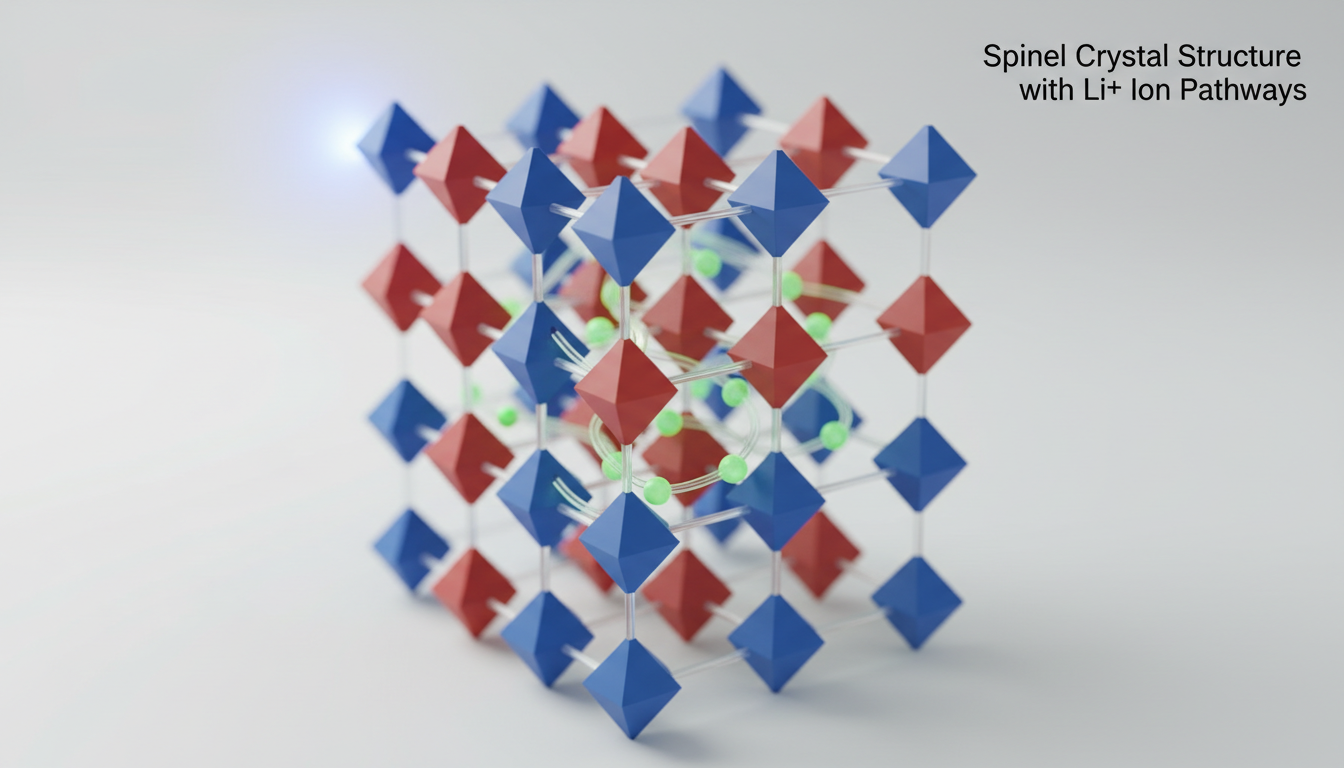
The spinel structure takes a different approach. Instead of flat layers, it creates a three-dimensional framework. Imagine a jungle gym instead of a ladder—lithium ions can move in any direction, not just up and down.
Such features provide the spinel structure with high stability, high output, and a variety of channels through which lithium ions are inserted. This 3D pathway system is what makes spinel materials shine when you need fast charging or high power output.
Spinel LNMO is an extremely attractive cathode material that promotes fast-charging LIBs due to its unique three-dimensional path that can quickly transport lithium ions in all directions and offers high energy density with a theoretical capacity of 147 mAh g−1 and high-working voltage of 4.7 V.
The downside? Spinel materials like LiMn2O4 can struggle with capacity retention over time, especially at higher temperatures. But for applications where you need quick bursts of power, this structure delivers.
Olivine Structure: The Safety Specialist
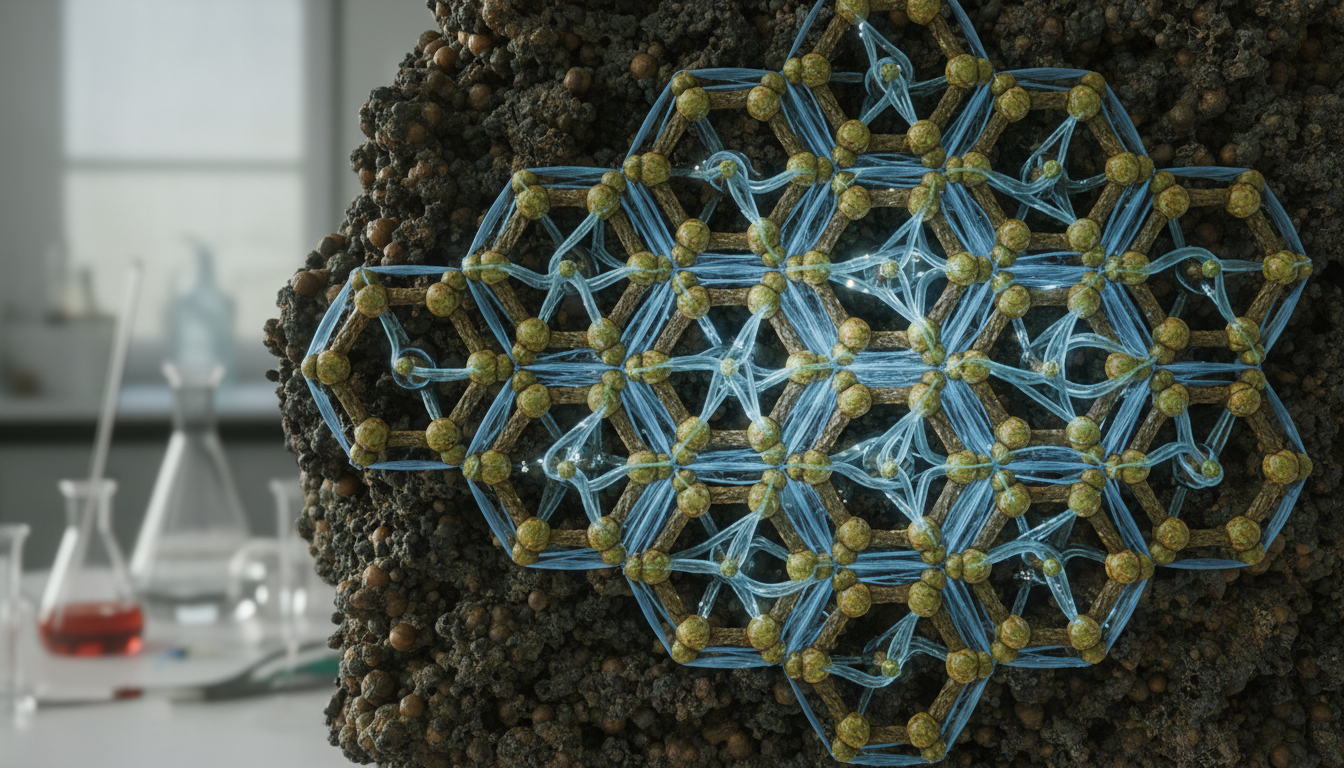
The olivine structure has a hexagonal shape with high stability since the strong P-O (phosphate – oxygen) bond allows it to maintain the structure even if all active lithium ions are diffused. This is what makes olivine-based materials the safety champions of the battery world.
Olivine-based cathode materials, such as lithium iron phosphate (LiFePO4), prioritize safety and stability but exhibit lower energy density. LFP batteries won't pack as much punch as their layered cousins, but they're much less likely to overheat or catch fire.
The trade-off here is conductivity. Olivine structured LiFePO4 materials are stable, "green" and of high energy density, but with serious drawback-insulating properties (∼ 10− 9 S/cm at 300 K). Researchers work around this by coating the particles with conductive carbon or making them really small to shorten the distance lithium ions need to travel.
How Structure Affects Real-World Performance
So how do these structures play out when you're actually using a battery? It comes down to what you need.
Layered structures dominate in electric vehicles where range matters most. Our cylindrical cells and prismatic cells leverage layered cathode materials to maximize energy storage. You get 200+ Wh/kg of energy density with NMC materials.
Spinel structures work well for power tools and applications needing rapid discharge. That 3D ion pathway means you can pull lots of current quickly without damaging the battery.
Olivine structures show up in stationary storage and applications where safety outweighs everything else. LFP batteries can handle 2,000+ charge cycles, way more than most layered materials.
Key Performance Factors:
Energy density: Layered > Olivine > Spinel
Safety: Olivine > Spinel > Layered
Cost: Olivine (LFP) typically costs less than layered materials due to abundant iron vs. expensive cobalt
Cycle life: Olivine > Spinel > Layered
The Chemistry Behind the Structure
Transition metal oxides are widely used as cathode materials in lithium-ion batteries as the variable oxidation state of transition metal cations allows oxides of these metals to reversibly host lithium ions, while their layered or framework structures allow Li+ insertion/extraction during charging/discharging.
Each metal brings something different. Nickel provides high capacity. Cobalt adds stability. Manganese keeps costs down and improves safety. Aluminum helps with thermal stability. Mix them in different ratios and you change how the whole structure behaves.
For NMC111, the ideal oxidation states for charge distribution are Mn4+, Co3+, and Ni2+, with cobalt and nickel oxidizing partially to Co4+ and Ni4+ during charging, while Mn4+ remains inactive and maintains structural stability.
The atomic arrangement determines how these ions move around. Tighter packing means better energy density but slower ion movement. Looser arrangements let ions zip through faster but store less energy per gram.
What's Coming Next
Researchers are pushing all three structures to do more. For layered materials, the trend is toward higher nickel content—some experimental cathodes use 90% nickel or more. This boosts capacity but creates stability challenges that need clever solutions like surface coatings or doping with other elements.
Spinel materials are getting attention for sodium-ion batteries, not just lithium. The same 3D structure that works well for lithium can accommodate sodium ions too, opening doors for cheaper, more abundant materials.
Olivine structures are being enhanced through nanostructuring and composite designs. Make the particles small enough, and you can overcome some of those conductivity limitations while keeping all the safety benefits.
Some next-gen batteries are even mixing structures—creating layered-spinel hybrids that try to grab the best of both worlds. Layered-layered-spinel structures synthesized via ball-milling assisted solid-state methods show better and more stable electrochemical performances with initial Coulombic efficiency of 76%, capacity retention of 86.5%, and improved rate capability at high C-rates.
Conclusion
Cathode material structure isn't just academic chemistry—it's what determines whether your phone dies before lunch or your electric car makes it across town. Layered structures give you maximum energy in minimum space. Spinel structures deliver speed and power. Olivine structures prioritize safety and longevity.
No single structure wins at everything. The "best" cathode depends entirely on what you're trying to do. We're seeing batteries get better every year as researchers figure out new ways to optimize these structures, mix them together, or build entirely new arrangements.
At Highstar, we work with these different structures to match the right chemistry to your specific needs. Whether you need maximum range, fastest charging, or longest life, the atomic structure of the cathode makes all the difference.
FAQs
What's the main difference between layered and spinel cathode structures?
Layered structures stack atoms in flat sheets with gaps between them where lithium ions can slide in and out horizontally. Spinel structures create a 3D framework where ions can move in all directions. Layered materials typically offer higher energy density, while spinel materials provide better power output and faster ion transport through multiple pathways.
Why do olivine cathodes like LFP have lower energy density?
The strong phosphate-oxygen bonds in olivine structures make them incredibly stable and safe, but they also create a rigid framework that stores less lithium per unit weight compared to layered materials. The olivine structure also suffers from very low electronic conductivity, requiring additives like carbon coating which adds weight without adding capacity. You're trading maximum energy for safety and longevity.
Can you mix different cathode structures in one battery?
Yes, researchers are developing hybrid materials that combine layered and spinel structures within the same cathode particle. These composites try to capture benefits from both structures—like the high capacity of layered materials with the structural stability of spinels. Some commercial batteries also use blended cathodes with different structure types mixed together to balance performance characteristics.
How does cathode structure affect battery safety?
Cathode structure directly impacts thermal stability and oxygen release during charging. Olivine structures maintain their framework even when fully delithiated, preventing oxygen release that can cause thermal runaway. Layered structures can collapse at high states of charge, potentially releasing oxygen that reacts with the electrolyte. Spinel structures fall somewhere in between, offering better stability than layered but not quite matching olivine's safety profile.
Which cathode structure lasts longest through charge-discharge cycles?
Olivine structures like LiFePO4 typically deliver the longest cycle life, often exceeding 2,000 cycles with minimal capacity fade. The strong phosphate bonds resist structural degradation during repeated lithium insertion and removal. Layered materials usually manage 500-1,000 cycles, though this varies widely based on composition and operating conditions. Spinel materials fall in a similar range but can suffer from manganese dissolution at elevated temperatures.
Highstar attaches great importance to your personal privacy. When you visit our website, please agree to the use of all cookies. More information about the processing of personal data can be found at "Privacy Policy"


 Buy
Buy