Transportation Means for Lithium Ions: How Battery Ions Move and Power Our Devices
Related Topics
Discover how lithium ions travel through battery components during charging and discharge. Learn about electrolytes, separators, and the science behind lithium-ion transport.
Follow us on
Ever wonder how your phone battery actually works? The secret lies in how lithium ions travel back and forth inside the battery. We're talking about a precisely controlled transportation system happening at the molecular level—one that powers everything from smartphones to electric vehicles.
Lithium-ion batteries don't just store energy; they move it around through an internal transportation network. Lithium ions move in and out of battery structures through a process called intercalation or deintercalation. Think of it like a shuttle service where ions constantly travel between two stations, carrying energy with them. Let's break down exactly how this works and why it matters for battery performance.
The Core Components: Electrolyte as Ion Highway
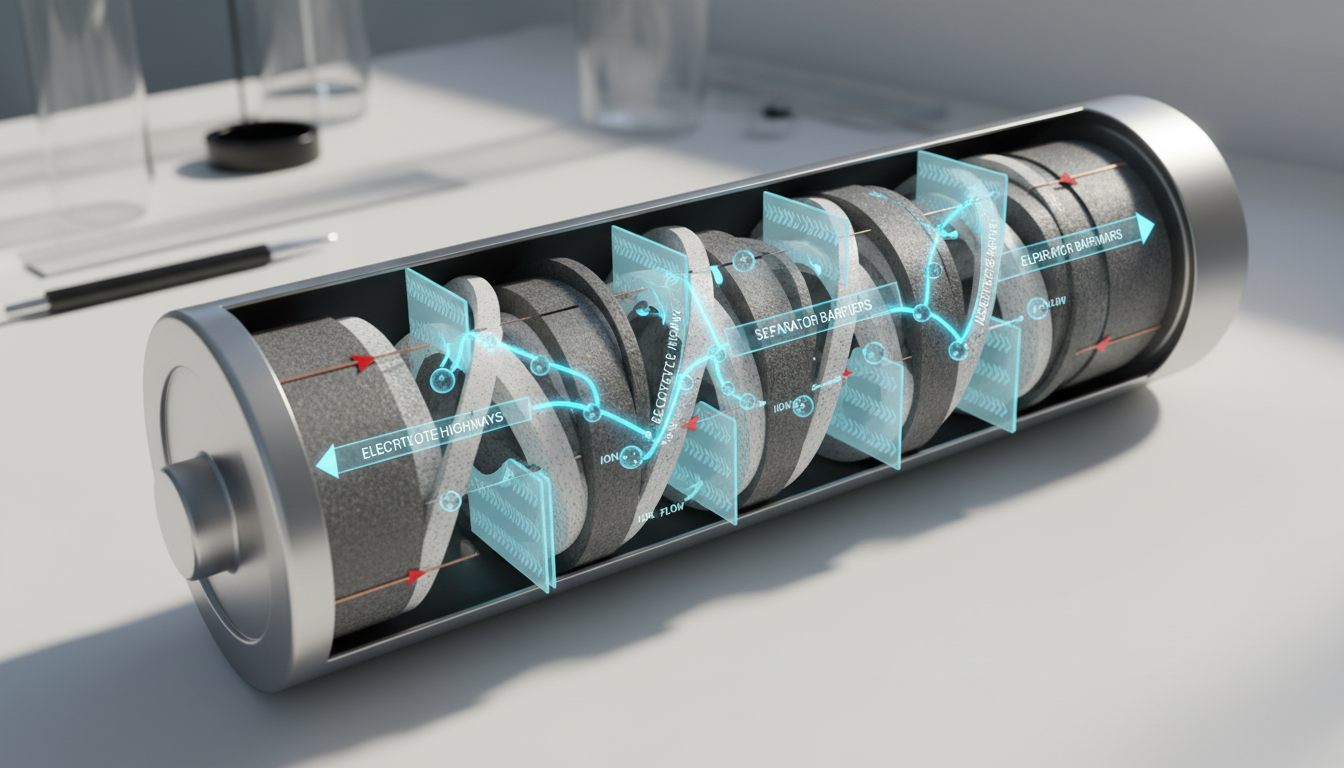
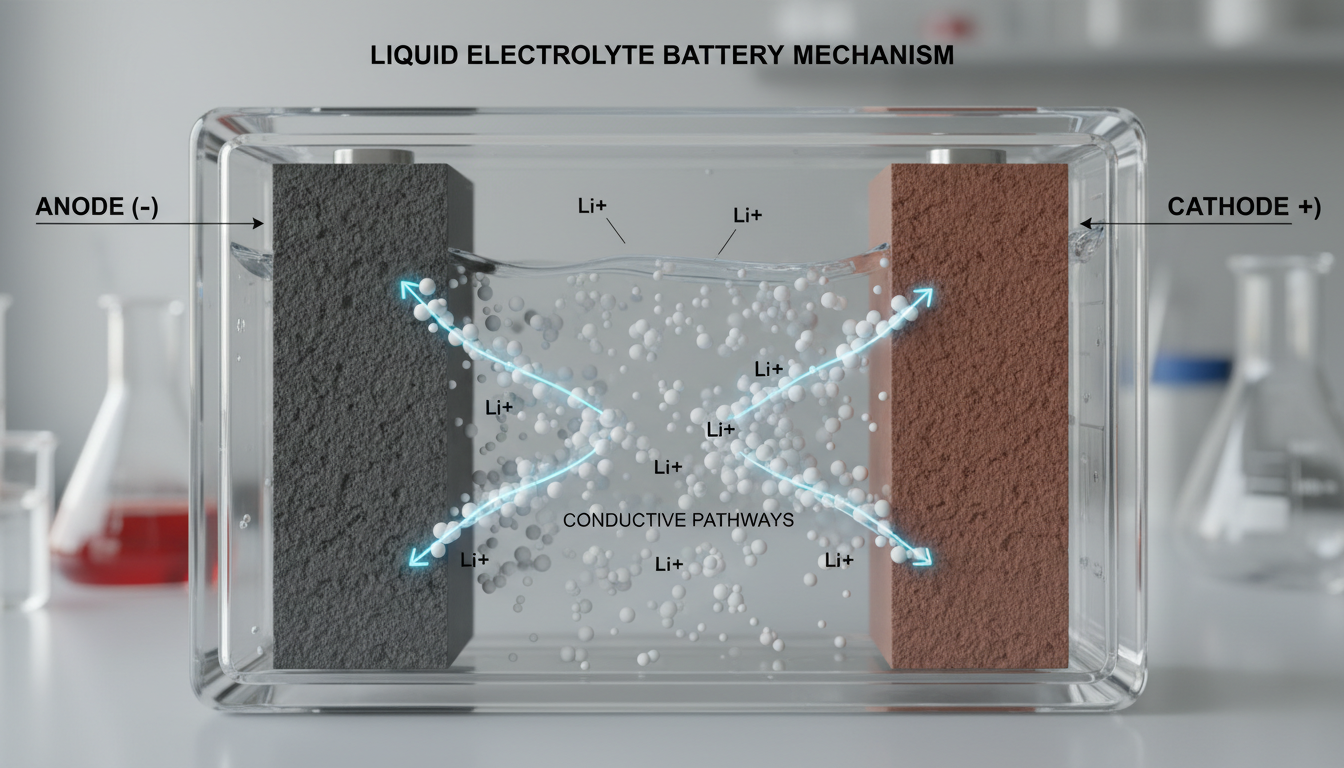
The electrolyte carries positively charged lithium ions from the anode to the cathode and vice versa through the separator. Picture the electrolyte as a highway system designed specifically for ion traffic. Liquid electrolytes in lithium-ion batteries consist of lithium salts such as LiPF6, LiBF4, or LiClO4 in an organic solvent.
The electrolyte's job is simple but critical: create a path for ions to travel while blocking electron flow. A liquid electrolyte acts as a conductive pathway for the movement of cations passing from the negative to the positive electrodes during discharge. Typical conductivities of liquid electrolyte at room temperature are in the range of 10 mS/cm, which directly impacts how fast your battery can charge or discharge.
For ternary lithium batteries, the electrolyte formulation becomes even more specialized to handle the specific chemistry of nickel-manganese-cobalt cathodes.
Separator: The Traffic Controller
The separator sits between the positive and negative electrodes, acting like a highly selective traffic controller. The main function of a separator is to keep the two electrodes apart to prevent electrical short circuits while also allowing the transport of ionic charge carriers.
The separator is moistened with electrolyte and forms a catalyst that promotes the movement of ions from cathode to anode on charge and in reverse on discharge. Without this component, your battery would short-circuit immediately. Separators maintain electrical insulation while allowing lithium ions to pass through them.
The separator's porous structure is carefully engineered. The Li-ion separator must be permeable with pore sizes ranging from 30 to 100nm, and the recommended porosity is 30–50 percent. These microscopic channels create pathways for ions while keeping the electrodes safely separated.
How Ions Move During Discharge
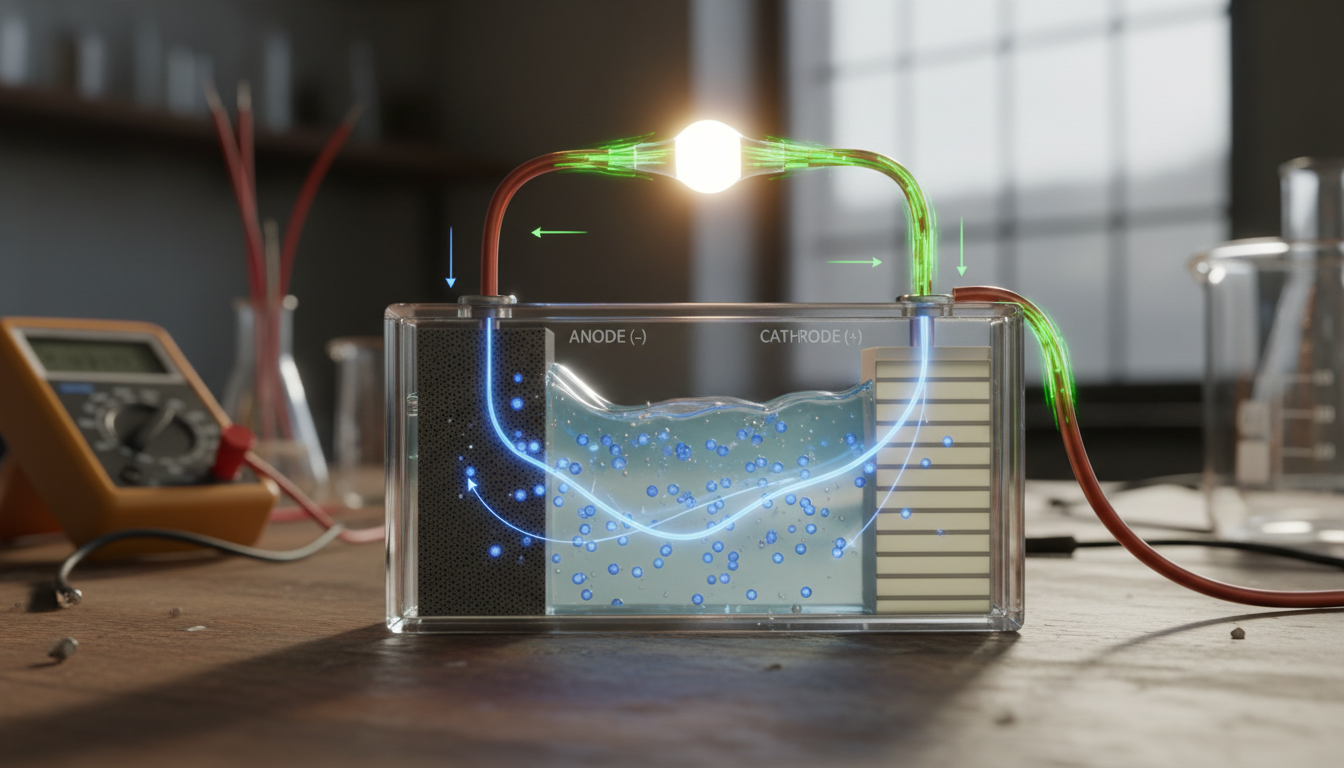
While the battery is discharging and providing an electric current, the anode releases lithium ions to the cathode, generating a flow of electrons from one side to the other. This is when your device draws power.
When the battery is discharging, the lithium ions move back across the electrolyte to the positive electrode, producing the energy that powers the battery. Meanwhile, electrons take the long route through your device's circuitry, doing the actual work of powering your screen, processor, or motor.
In both cases, electrons flow in the opposite direction to the ions around the outer circuit, and electrons do not flow through the electrolyte. The ions and electrons are teammates working in sync—if one stops, so does the other.
Charging: Reversing the Flow
When charging the battery, lithium ions are generated at the positive electrode and move through the electrolyte to the negative electrode. It's essentially the discharge process in reverse.
When a lithium-ion battery charges, lithium ions move from the cathode to the anode because an external electrical energy source applies a voltage across the battery's terminals, driving the lithium ions through the electrolyte and into the anode where they are stored.
The charging process typically happens in stages. During the constant current phase, a steady current is supplied causing voltage to gradually increase; once the battery reaches its maximum voltage limit, the charger switches to the constant voltage phase where voltage is held constant and current gradually decreases. This controlled approach protects the battery and extends its life.
Transport Mechanisms in Different Electrolyte Types
In solid-state electrolytes, lithium-ion transport relies entirely on bulk and interfacial conduction, which differs from the solvation-based mechanisms in liquid electrolytes. Solid electrolytes are gaining attention for their safety benefits, but they work differently.
In ceramic electrolytes, ion transport is accomplished with mobile point defects in a crystal, and Li+ ions migrate mainly via the vacancy mechanism, interstitial mechanism, or interstitial-substitutional exchange mechanism. These mechanisms sound complex, but they're just different ways ions hop from one position to another in the crystal structure.
Ion-conducting phases in polymer electrolytes are formed by dissolving salts into ion-coordinating macromolecules, and ion transport is directly dependent on the segmental mobility of polymer chains. Each electrolyte type has trade-offs between safety, performance, and cost.
Why Ion Transport Speed Matters
The speed at which ions move directly affects your battery's performance. Faster ion transport means quicker charging times and better power delivery. High ionic conductivity enables efficient ion transport, allowing the battery to charge and discharge quickly.
Temperature plays a huge role here. Operating lithium-ion batteries in low-temperature conditions poses significant challenges because carbonate-based electrolytes become viscous and lose ionic conductivity in the cold. That's why your phone battery drains faster in winter—the ions literally move slower.
The plating and stripping behaviors of lithium metal anodes are mainly dictated by the transport mechanism of lithium ions in the solid electrolyte interphase, and this transport mechanism is complicated by various inorganic and organic components. Getting ion transport right isn't just about speed—it's about battery longevity and safety.
Solid-state batteries may still display homogeneous lithium-ion transportation owing to the chemical potential force to achieve an ionic-electronic equilibrium, even with imperfect contact between components. The battery's internal chemistry works to balance itself out.
Conclusion
Lithium-ion transportation is the beating heart of battery technology. The electrolyte serves as the highway, the separator acts as the traffic controller, and the ions themselves are the vehicles carrying energy back and forth. All lithium-ion batteries work in broadly the same way: during charging, lithium ions move to the negative electrode and the battery stores energy; during discharging, lithium ions move back to the positive electrode, producing the energy that powers the battery.
Understanding these transportation mechanisms helps us appreciate the engineering marvel in our pockets. From the molecular structure of the electrolyte to the microscopic pores in the separator, every component works together to move ions efficiently and safely. As battery technology continues evolving, improvements in ion transport will unlock faster charging, longer life, and better performance for all our devices.
Want to learn more about battery innovation? Visit Highstar to explore cutting-edge battery solutions.
FAQs
What carries lithium ions through a battery?
The electrolyte carries lithium ions between electrodes. It's typically made of lithium salts dissolved in organic solvents that create a conductive pathway for ions while blocking electron flow. The separator also plays a role by maintaining electrolyte channels and preventing short circuits.
Do lithium ions move during charging or discharging?
Both. During discharge, lithium ions move from the anode to the cathode through the electrolyte, powering your device. During charging, the process reverses—ions travel from cathode back to anode, storing energy for later use. This back-and-forth movement is why they're called "rocking-chair batteries."
Why does cold weather slow down battery performance?
Low temperatures make the electrolyte more viscous, slowing down lithium-ion movement. When ions can't travel as quickly between electrodes, the battery can't deliver power as efficiently. This results in reduced capacity and slower charging in cold conditions.
What's the difference between ion transport in liquid vs. solid electrolytes?
Liquid electrolytes use solvation-based mechanisms where ions move through liquid medium. Solid electrolytes rely on bulk and interfacial conduction—ions hop through crystal lattice defects or polymer chain movements. Solid electrolytes are safer but currently offer lower conductivity than liquids.
How fast do lithium ions actually move in a battery?
Lithium-ion conductivity in liquid electrolytes typically reaches around 10 mS/cm at room temperature. The actual speed depends on electrolyte composition, temperature, and separator properties. Higher conductivity means faster charging and better power delivery for your devices.
Highstar attaches great importance to your personal privacy. When you visit our website, please agree to the use of all cookies. More information about the processing of personal data can be found at "Privacy Policy"


 Buy
Buy