Discover how NCM cathode material balances energy density, cost, and performance in lithium-ion batteries for EVs and energy storage—plus the latest on NCM 811, 622, and 523 variants.
Follow us on
Lithium-ion batteries power everything from smartphones to electric vehicles, and the cathode material plays a huge role in how well they perform. NCM cathode material is a mixed metal oxide of lithium, nickel, manganese and cobalt with the general formula LiNixMnyCo1-x-yO2. We see these batteries dominating the market because they offer a smart balance between energy density, power, and cost.
These materials are commonly used in lithium-ion batteries for mobile devices and electric vehicles, acting as the positively charged electrode. Each metal in the mix brings something different to the table, working together to deliver performance that's hard to beat.
NCM is a ternary cathode material whose efficacy is a testament to the intricate synergistic interplay of its three constituent transition metal elements: nickel (Ni), cobalt (Co), and manganese (Mn). Nickel, cobalt, and manganese each play distinct roles in enhancing the performance of NCM batteries. Nickel increases the energy storage capacity, enabling higher energy density.
Cobalt stabilizes the structure and improves battery life, though manufacturers are working to reduce its content because it's expensive and has supply chain challenges. Manganese is the third key element, primarily contributing to the safety and long-term stability of NCM cathode materials. Manganese typically exists in the +4 valence state and plays a vital role in forming a stable octahedral framework within the material's crystal structure.
This three-way combination lets battery makers adjust the ratios to optimize for different needs—whether that's more range, better safety, or lower cost.
NCM Ratios: 523, 622, and 811
Three numbers immediately following the NMC or NCM abbreviation indicate the relative stoichiometry of the three defining metals. For example, an NMC molar composition of 33% nickel, 33% manganese, and 33% cobalt would be abbreviated as NMC111. The ratios get more interesting as nickel content increases.
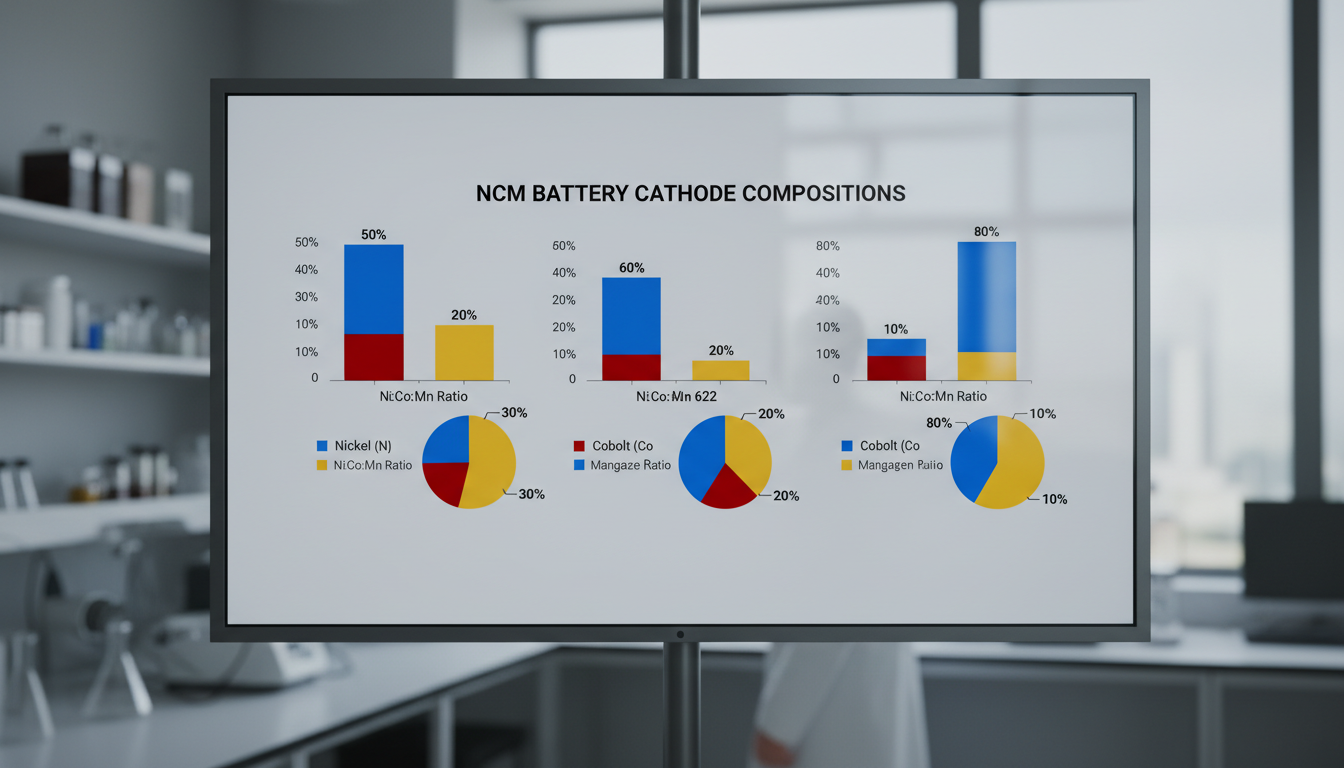
NCM523 refers to a cathode material composed of nickel, cobalt, and manganese in a specific ratio of 5:2:3. The NCM 523 offers a balanced combination of high energy density, improved thermal stability, and acceptable cycle life. It's become a go-to choice for many electric vehicle manufacturers looking for proven reliability.
NCM622 denotes a cathode material that contains nickel, cobalt, and manganese in a ratio of 6:2:2. This cathode composition offers improved energy density compared to NCM523 due to the higher nickel content. We're seeing more EVs adopt 622 as automakers push for longer driving ranges.
The 811 has the cathode comprised of 80% of nickel, 10% of cobalt and 10% of manganese. The most significant feature of the NMC 811 battery is its high energy density. Using the NMC 811 battery actually reduces the weight by 15%, resulting in an additional 30% operating time—a game-changer for drones and high-performance EVs.
Real-World Applications of NCM Batteries
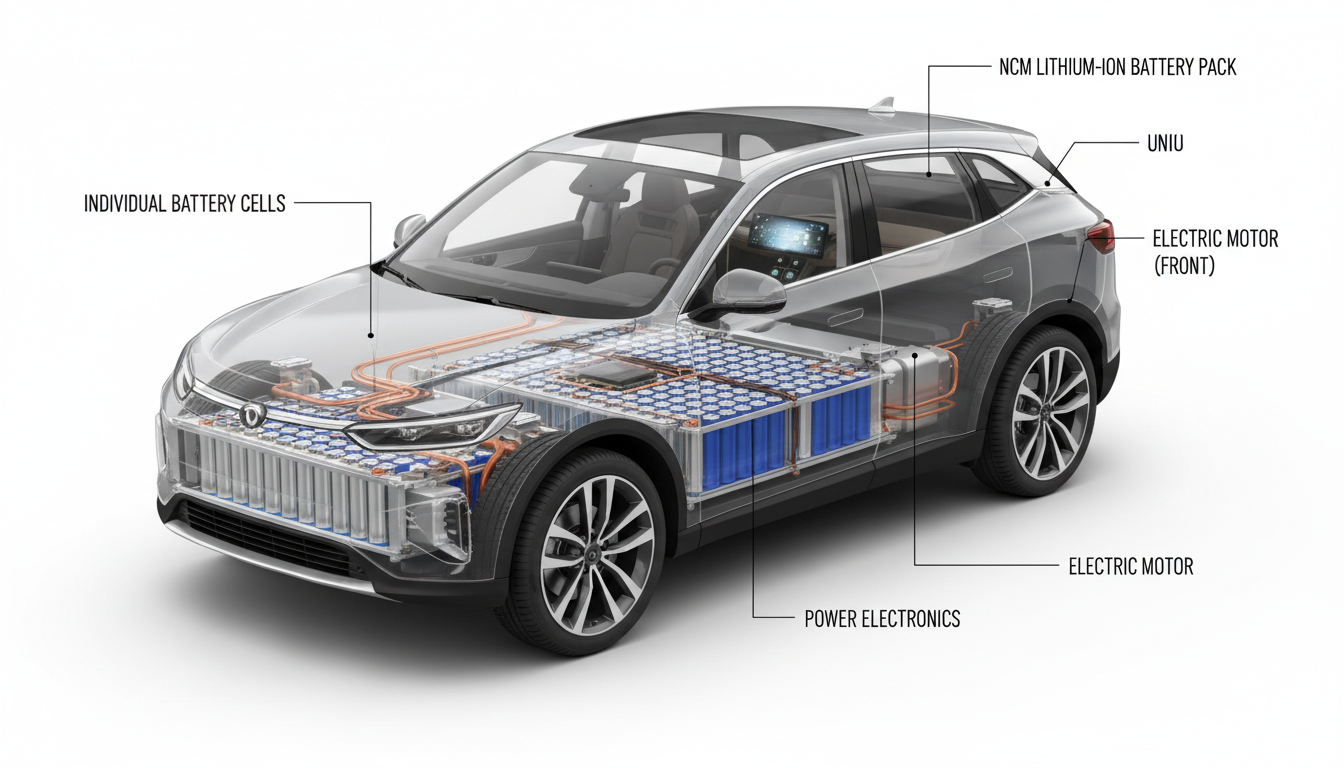
Many electric cars use NMC cathode batteries. Other electric cars with NMC batteries include Audi e-tron GE, BMW i3, BMW i4, Chevrolet Bolt, Hyundai Kona Electric, Jaguar I-Pace, Nissan Leaf S Plus, and VW ID.3. The technology has proven itself across different vehicle types and price points.
Beyond EVs, NCM batteries power e-bikes, power tools, and energy storage systems. NMC is the battery of choice for power tools, e-bikes and other electric powertrains. Our lithium battery cells and advanced cell solutions leverage NCM chemistry to meet diverse energy demands.
The versatility comes from that ability to tune the ratios. Need maximum energy in a small space? Go with 811. Want longer cycle life for a stationary storage system? 523 might be the better bet.
How to Compare NCM with Other Battery Chemistries
When you put NCM next to LFP (lithium iron phosphate), some clear differences emerge. LFP batteries offer an energy density of 120-160Wh/kg, which is not as high as NMC (180-250Wh/kg). NCM battery shines with 180-250Wh/kg energy density, offering more power at the same volume.
LFP battery is safer than NMC battery due to its stable chemical materials. LFP battery requires more heat for thermal runaway than NMC batteries. But that safety advantage comes with trade-offs in performance and weight.
A NCM battery with a thinner cathode can have same discharging capacity as a LFP battery with a thicker cathode. NCM battery has higher capacity retention than LFP battery at same number of cycles. For applications where space and weight matter—like passenger vehicles—NCM often wins out.
The choice really depends on what you're building and what matters most: maximum energy density, longest cycle life, or lowest cost.
Performance Advantages and Challenges
NCM batteries deliver some serious performance benefits. NMC provides high capacity and high power. Market share is increasing. Leading system; dominant cathode chemistry. The technology has matured to the point where it's reliable enough for mass-market EVs.
The cell voltage of lithium-ion batteries with NMC cathodes is 3.6–3.7 V, which allows for efficient energy storage in compact packages. The NMC 811 battery has a long life cycle of over 600 cycles. At the 500th cycle, the capacity retention rate of the NMC 811 battery was 93%.
But it's not all smooth sailing. NCM batteries, like all lithium-ion batteries, face degradation over time due to chemical and structural changes in their materials. Repeated charge-discharge cycles can lead to structural instability in the cathode materials, particularly in NCM compositions with high nickel content.
Thermal stability remains a critical factor in the performance and safety of NCM batteries. While the inclusion of manganese in NCM cathodes enhances stability, high nickel content can increase the risk of thermal runaway under extreme conditions. That's why battery management systems and thermal controls matter so much.
Conclusion
NCM cathode material has become the backbone of modern lithium-ion batteries for good reason. It strikes a balance between energy density, power output, cost, and performance that's tough to match. From the tried-and-true 523 formulation to the cutting-edge 811 variants, NCM chemistry offers flexibility to meet different application needs.
The technology isn't perfect—high-nickel versions face stability challenges, and cobalt remains a concern. But ongoing research and real-world deployment continue to refine these materials. For electric vehicles, consumer electronics, and energy storage systems, NCM cathode materials deliver the performance we need today while evolving toward an even better tomorrow.
FAQs
What does NCM stand for in battery technology?
NCM stands for Nickel-Cobalt-Manganese, referring to the three transition metals used in the cathode of lithium-ion batteries. The specific ratios of these metals (like 523, 622, or 811) determine the battery's characteristics, with higher nickel content generally providing more energy density while manganese adds stability and cobalt improves structural integrity.
How does NCM 811 differ from NCM 523?
NCM 811 contains 80% nickel, 10% cobalt, and 10% manganese, while NCM 523 has 50% nickel, 20% cobalt, and 30% manganese. The 811 version offers higher energy density and reduced cobalt cost but may have slightly lower thermal stability. NCM 523 provides better cycle life and safer operation, making it ideal for applications prioritizing reliability over maximum energy.
Why are manufacturers trying to reduce cobalt in NCM batteries?
Cobalt is expensive, has limited geographic availability, and raises ethical concerns due to mining practices in some regions. Reducing cobalt content lowers battery costs and addresses supply chain vulnerabilities. Manufacturers are increasing nickel content and exploring alternative stabilizers like aluminum to maintain performance while minimizing cobalt dependency.
Are NCM batteries safe for electric vehicles?
Yes, NCM batteries are widely used in electric vehicles and considered safe with proper battery management systems. While high-nickel variants require more sophisticated thermal management than alternatives like LFP, modern EVs incorporate advanced cooling systems and monitoring to prevent thermal runaway. Millions of NCM-powered vehicles operate safely on roads worldwide.
What applications benefit most from NCM cathode materials?
NCM batteries excel in applications where energy density, power output, and compact size matter most. This includes passenger electric vehicles, drones, power tools, e-bikes, and portable electronics. The ability to adjust nickel-cobalt-manganese ratios lets manufacturers optimize for specific needs—whether that's maximum range, fast charging, or long cycle life.
Highstar attaches great importance to your personal privacy. When you visit our website, please agree to the use of all cookies. More information about the processing of personal data can be found at "Privacy Policy"


 Buy
Buy