Top 3 Cathode Materials Powering Modern Lithium-Ion Batteries
Related Topics
Discover the top 3 cathode materials—NMC, LFP, and NCA—driving lithium-ion battery performance in electric vehicles and energy storage applications today.
Follow us on
Summary:
Cathode materials sit at the heart of every lithium-ion battery, determining how much energy it holds, how fast it charges, and how long it lasts. Whether you're driving an electric vehicle down the highway or storing solar power at home, the chemistry inside that battery pack plays a bigger role than most people realize.
We're taking a closer look at the three cathode materials dominating the industry right now. Each brings its own set of strengths to the table—from energy density and thermal stability to cost and safety. Understanding these differences helps clarify why certain chemistries show up in specific applications and how battery technology continues to adapt to our changing needs.
What Makes a Cathode Material Great?
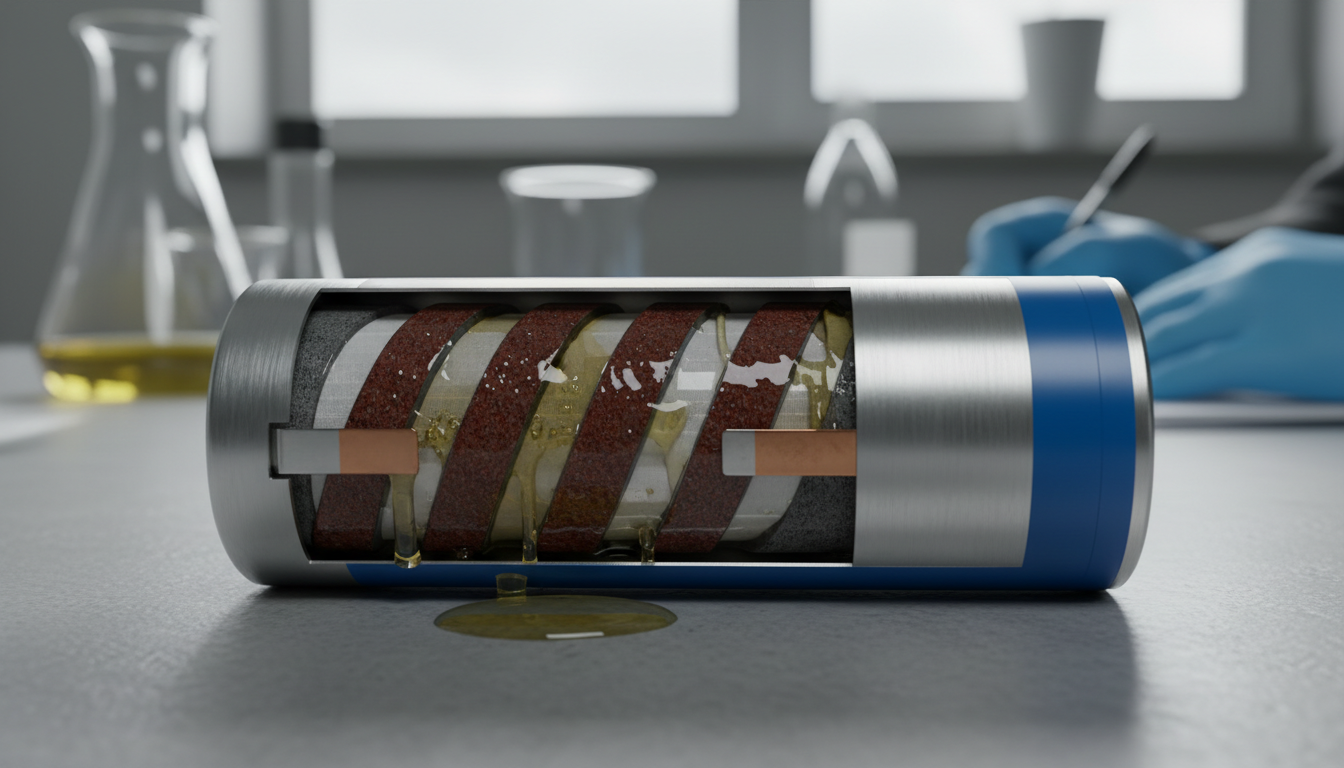
The cathode is the positive electrode where lithium ions rest during discharge. When you connect a load—like turning on your car or phone—those ions travel through the electrolyte to the anode, releasing electrons that power your device. The specific cathode material you choose directly impacts the battery's energy density, voltage, thermal stability, and cycle life.
Energy density tells you how much power fits into a given space or weight. Higher density means longer range for EVs and slimmer devices. Thermal stability reflects how well the material handles heat without degrading or catching fire. And cycle life measures how many charge-discharge cycles the battery can endure before capacity drops off.
Three chemistries have risen to the top of the market because they strike different balances between these factors: NMC, LFP, and NCA. We've seen automakers, electronics manufacturers, and energy storage developers lean on these materials for years, and ongoing research keeps refining their performance.
NMC: The Balanced All-Rounder
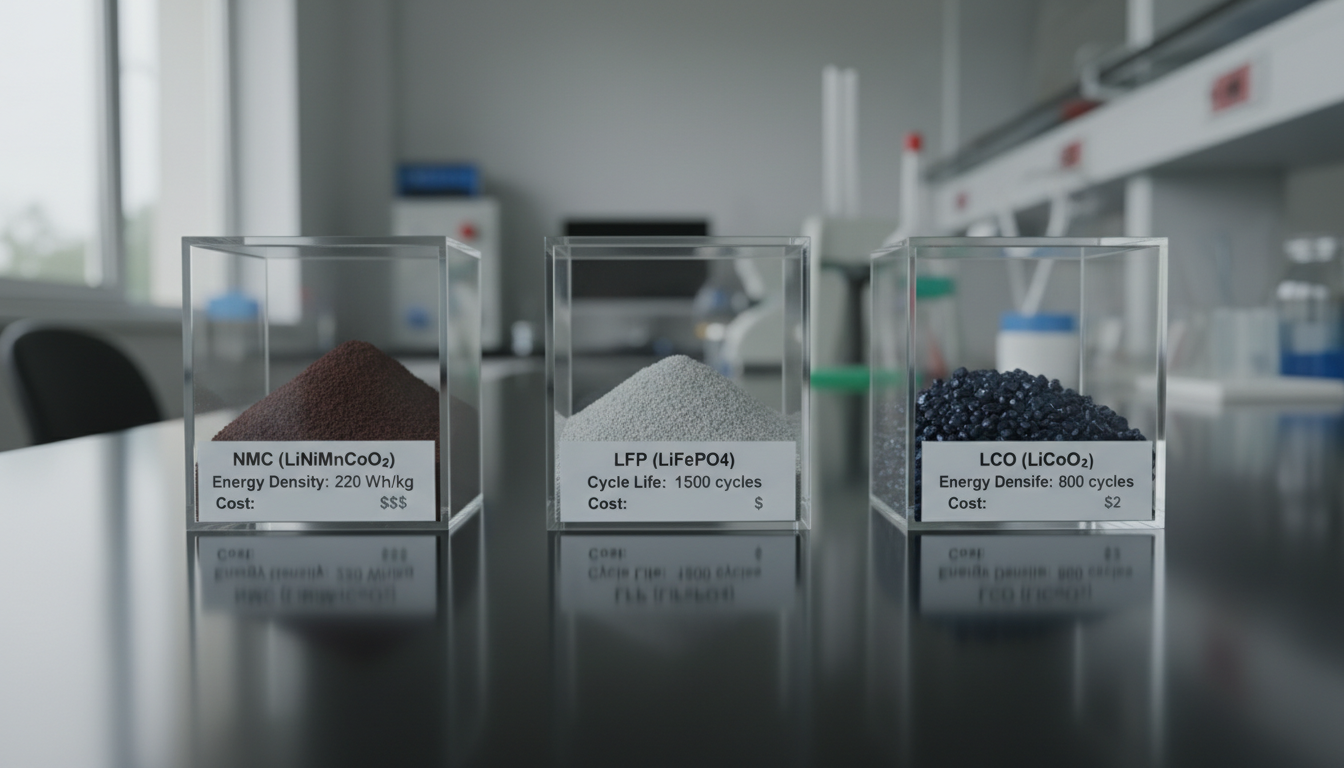
Nickel Manganese Cobalt Oxide—better known as NMC—offers a solid middle ground. By blending nickel, manganese, and cobalt in varying ratios, manufacturers can tune the material for specific needs. Common versions include NMC 111 (equal parts of each metal), NMC 532, NMC 622, and the higher-energy NMC 811.
NMC delivers 150 to 220 Wh/kg of energy density, making it a popular choice for electric vehicles that need both range and power. The nickel boosts energy capacity, cobalt adds stability, and manganese helps with safety and thermal management. This mix gives NMC batteries a longer cycle life than some alternatives while keeping costs more manageable than pure cobalt chemistries.
You'll find NMC in a wide range of EVs and home energy storage systems. It works well when you need a balance between performance and durability without pushing the price tag too high. Brands like LG Energy Solution and others have built entire production lines around this chemistry, and it remains one of the most researched and refined options on the market. Check out our active material battery performance guide to see how different compositions affect real-world results.
LFP: The Safe and Affordable Option
Lithium Iron Phosphate (LFP) takes a different approach. Instead of relying on nickel and cobalt, LFP uses iron and phosphate—materials that are cheaper, more abundant, and easier to source. This makes LFP batteries more affordable and safer, with better thermal stability than most nickel-rich chemistries.
LFP operates at a lower voltage (around 3.2–3.3V) compared to NMC's 3.6V, which means lower energy density—typically below that of NMC. But what it lacks in energy, it makes up for in longevity and safety. LFP batteries can handle 2,000 cycles or more, far exceeding many competing chemistries. They're also less prone to thermal runaway, making them a safer bet for stationary storage and lower-cost EVs.
Chinese manufacturers dominate LFP production, and the chemistry has gained serious traction in recent years. Companies like BYD and Tesla have started using LFP in their more affordable vehicle models, where cost and safety matter more than maximum range. If you're comparing options for your next project, our ternary lithium offerings provide another angle on multi-metal chemistries.
NCA: The High-Energy Champion
Nickel Cobalt Aluminum Oxide (NCA) pushes energy density to new heights. With about 80% nickel, 15% cobalt, and 5% aluminum, NCA batteries can deliver 200 to 260 Wh/kg, often outpacing NMC in pure energy terms. Tesla and Panasonic have famously relied on NCA for years, especially in high-performance models where range and power output take priority.
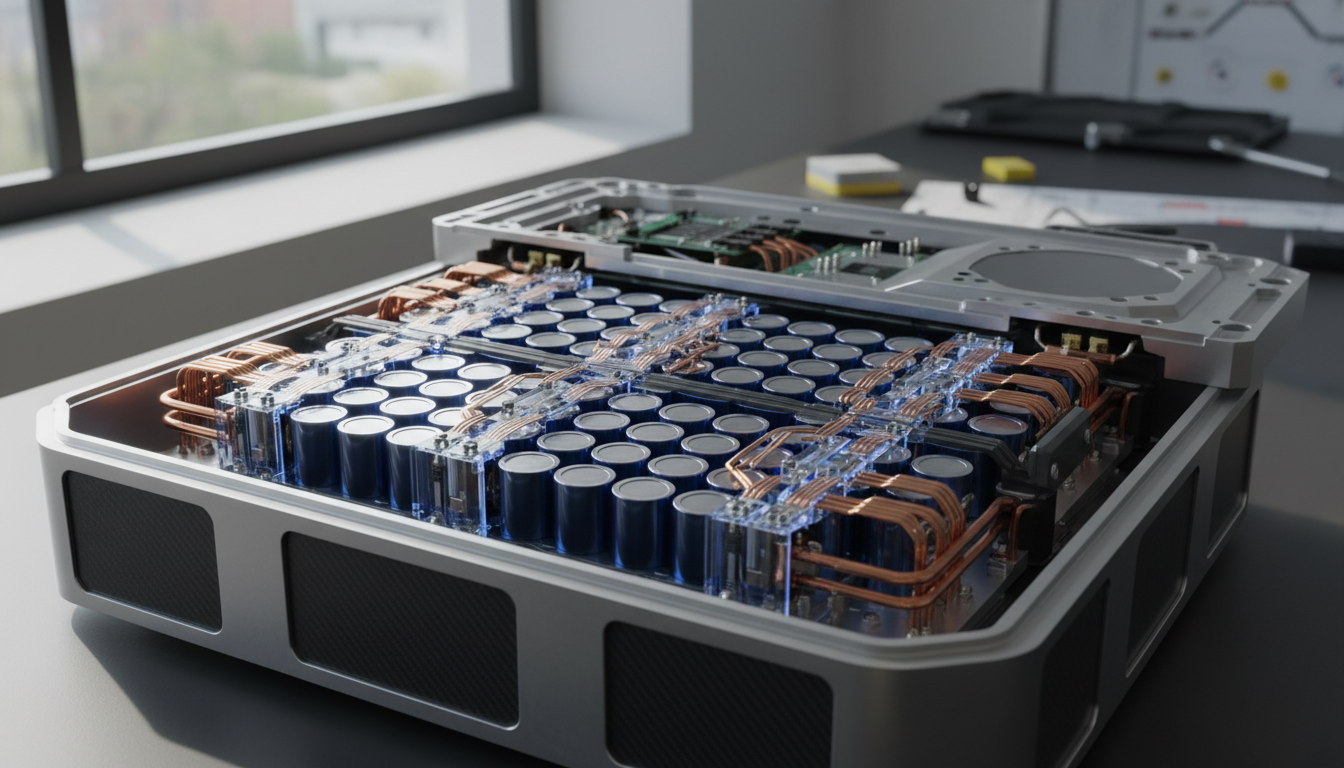
Aluminum replaces manganese in this formula, boosting stability and reducing degradation over time. That translates to longer cycle life in ideal conditions. But NCA comes with tradeoffs: it's more expensive than NMC or LFP, and it requires sophisticated thermal management to keep things running smoothly. The high nickel content makes it more sensitive to temperature swings, so you'll typically find NCA paired with advanced cooling systems in premium EVs and energy-dense electronics.
Despite the cost, NCA remains a go-to for applications where maximizing energy in a small package is non-negotiable. If you're building high-performance battery packs, you might want to explore our cell solutions that work with various cathode chemistries to meet specific design goals.
How to Choose the Right Cathode for Your Application
Picking the right cathode isn't just about maxing out one spec. It's about matching the chemistry to the job. NMC works when you need a blend of energy, power, and cycle life at a reasonable cost—think mid-range EVs and grid storage. LFP shines in applications where safety, longevity, and low cost trump energy density—buses, stationary storage, and budget-friendly electric cars. NCA fits high-end use cases where energy density and range matter most, even if it means paying more and managing heat carefully.
We're also seeing new developments on the horizon. Researchers are working on manganese-rich cathodes, LMFP (Lithium Manganese Iron Phosphate), and even lithium-rich layered oxides that could shift the landscape again. Some studies suggest single-crystal cathode structures might reduce cracking and extend battery life, while others focus on reducing or eliminating cobalt to address supply chain and sustainability concerns.
At Highstar, we keep a close eye on these trends and work with clients to integrate the latest cathode technologies into real-world battery systems. Whether you're designing for electric vehicles, consumer electronics, or renewable energy storage, the cathode you choose will define your product's performance, safety, and market position.
Conclusion
NMC, LFP, and NCA represent the backbone of today's lithium-ion battery industry. Each material brings unique strengths: NMC balances performance and cost, LFP prioritizes safety and affordability, and NCA delivers the highest energy density for demanding applications. Understanding these differences helps you make smarter decisions when designing battery systems or selecting products.
As research continues and manufacturing scales up, we'll likely see new chemistries and hybrid approaches enter the mix. But for now, these three cathode materials remain the top choices powering everything from smartphones to electric semis. The right pick depends on your priorities—whether that's range, cost, safety, or cycle life.
FAQs
What's the difference between NMC and NCA cathodes?
NMC uses nickel, manganese, and cobalt, while NCA uses nickel, cobalt, and aluminum. NCA generally offers higher energy density (200–260 Wh/kg vs. 150–220 Wh/kg for NMC) but costs more and needs better thermal management. NMC provides a more balanced performance with longer cycle life and better thermal stability, making it popular for a wider range of EV and storage applications.
Why is LFP becoming more popular in electric vehicles?
LFP batteries cost less to produce because they use iron and phosphate instead of expensive nickel and cobalt. They also offer better safety thanks to superior thermal stability and can last for 2,000+ cycles. While energy density is lower than NMC or NCA, improvements in cell design and pack efficiency have made LFP a strong choice for budget EVs and markets where cost and longevity matter most.
Can I mix different cathode materials in one battery system?
Mixing cathode chemistries within a single battery pack isn't recommended because each material has different voltage profiles, charge rates, and thermal behaviors. Managing these differences in one system creates control and safety challenges. However, some manufacturers use different cathode types across product lines—LFP for entry models, NMC for mid-range, and NCA for performance variants—to match customer needs.
Which cathode material is best for long-term energy storage?
LFP is often the best fit for stationary energy storage. Its long cycle life (2,000+ cycles), low cost, and excellent safety profile make it ideal for solar and grid applications where space isn't as tight as in vehicles. NMC can also work well if you need higher energy density and can manage the additional cost and thermal considerations.
Are there new cathode materials coming soon?
Yes, several next-generation cathodes are in development. LMFP (Lithium Manganese Iron Phosphate) adds manganese to LFP for higher voltage and energy density. Lithium-rich manganese-based cathodes aim to reduce or eliminate cobalt while boosting capacity. Single-crystal cathode structures promise better durability and less cracking. These innovations could reshape the market over the next few years as they move from lab to production.
Highstar attaches great importance to your personal privacy. When you visit our website, please agree to the use of all cookies. More information about the processing of personal data can be found at "Privacy Policy"


 Buy
Buy