Types of Anode Materials: A Guide to Battery Technology Options
Related Topics
Explore the main types of anode materials for lithium-ion batteries, from graphite to silicon and beyond, and discover how each impacts battery performance and efficiency.
Follow us on
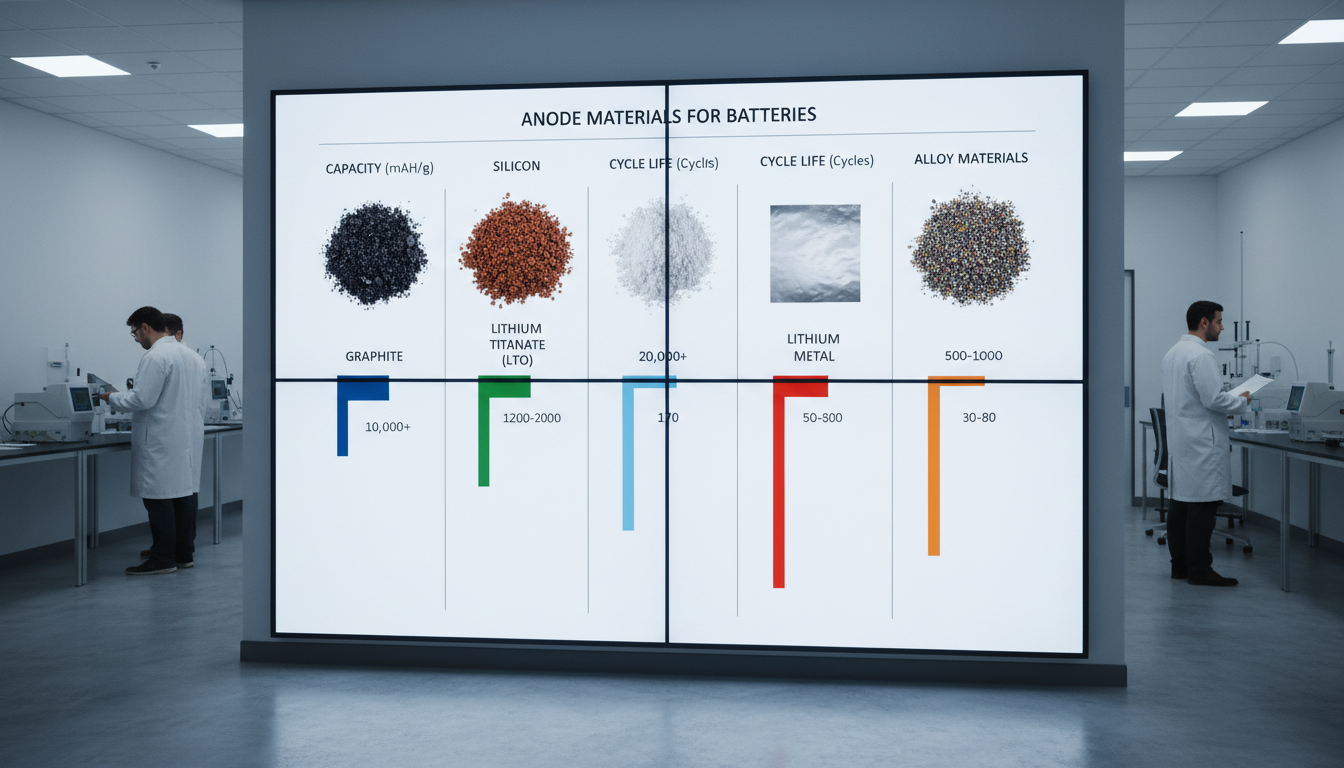
Batteries power everything from smartphones to electric vehicles, and the anode plays a starring role in how well they perform. The active material in battery performance directly affects charging speed, capacity, and how long your battery lasts. We're breaking down the main types of anode materials you'll find in modern batteries and what makes each one tick.
Carbon-Based Anode Materials
Graphite is the most widely used anode material for lithium-ion batteries due to its high electrical conductivity, low cost, and stable structure. It falls into two categories: natural and synthetic. Natural graphite has a high lithium-ion storage capacity and lower production costs, but its internal structure expands during charge and discharge cycles, which can shorten battery lifespan. Synthetic graphite undergoes high-temperature heat treatment above 2,500°C, making its internal structure more stable, extending battery lifespan, and allowing for fast charging due to its abundant lithium-ion pathways.
Beyond traditional graphite, we also see hard carbon and soft carbon materials used in specialized applications. In 2016, 89% of lithium-ion batteries contained graphite (43% artificial and 46% natural), 7% contained amorphous carbon (either soft carbon or hard carbon), 2% contained lithium titanate (LTO) and 2% contained silicon or tin-based materials. Carbon materials work well because they're abundant and can intercalate lithium ions without too much volume expansion—around 10%.
Silicon-Based Anode Materials
As battery performance and capacity increase, silicon is gaining attention as a promising anode material that can dramatically increase energy density. While graphite stores one lithium ion per six carbon atoms, silicon can store 4.4 lithium ions per silicon atom, offering more than four times the specific capacity per gram compared to graphite.
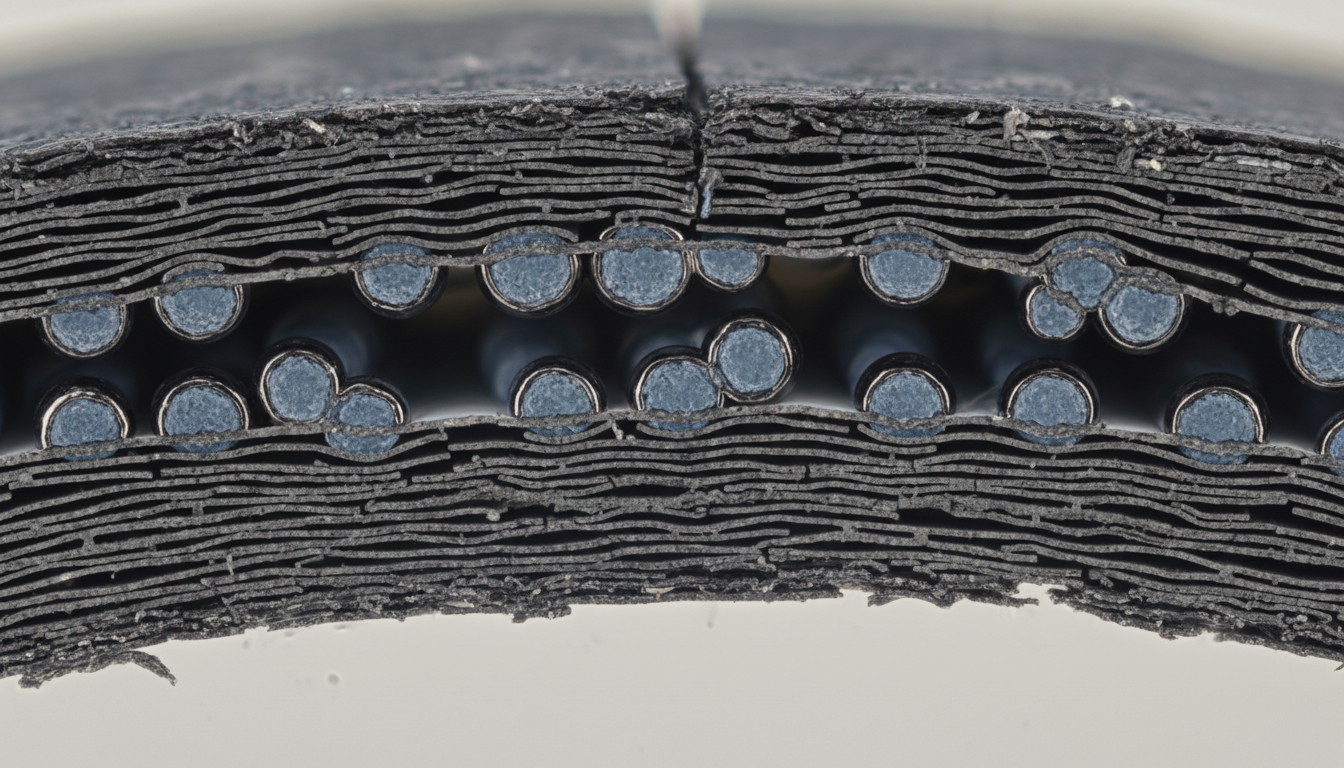
But there's a catch. Silicon anodes offer higher energy density but face challenges in terms of volume expansion and shorter cycle life. The material can swell up to 300% during charging, causing cracks and capacity loss. Silicon-based anode materials are mainly divided into two categories: silicon-carbon anode materials and silicon-oxygen anode materials, with the current mainstream direction being to use graphite as the matrix and incorporate 5% to 10% mass fraction of nano-silicon or SiOx to form a composite material.
Lithium Titanate (LTO) Anodes
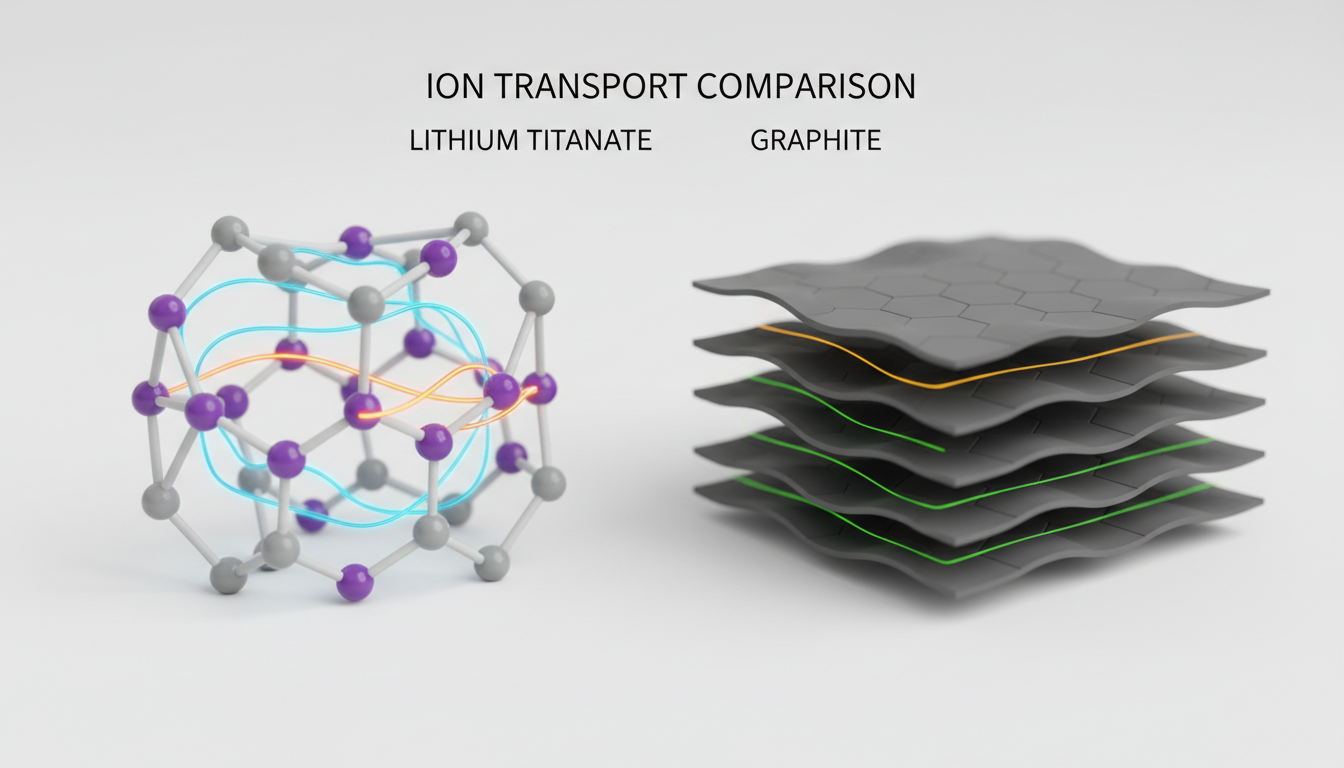
Lithium titanate offers something different—speed and safety. The ionic conductivity is one order of magnitude higher than that of graphite materials, making it especially suitable for high-rate charging and discharging. However, its specific capacity and specific energy density are low, and the charging and discharging process will cause the electrolyte to decompose and bloat; the commercial volume of lithium titanate is still very small, and its advantages over graphite are not obvious.
LTO anodes shine in applications where fast charging and long cycle life matter more than high capacity—think public transit buses or grid storage systems that need thousands of charge cycles.
Lithium Metal Anodes
Lithium metal is rapidly emerging as a next-generation anode material with an exceptionally high capacity per unit mass, allowing more energy to be stored at the same weight. Lithium metal anode materials theoretically allow lithium ions to move to the anode, where they are directly reduced and electrodeposited onto the surface without needing to find spaces within the structure, making charging possible at a faster rate compared to conventional batteries.
The tech is still developing, though. Safety concerns around dendrite formation—tiny lithium spikes that can cause short circuits—need solving before we see widespread commercial use.
Alloy-Type and Conversion Materials
The three main types of anode material for lithium-ion batteries include intercalation-type, conversion-type, and alloying-type materials, each with distinct electrochemical reaction mechanisms during charge and discharge. Alloying elements can generally be categorized into two groups based on their chemical nature: metalloids (e.g., Si, Sb, Ge) and post-transition metals (e.g., Sn, Bi), both of which contribute uniquely to the development of high-performance batteries.
These materials can deliver impressive capacities, but like silicon, they suffer from significant volume changes. Engineers tackle this through nanostructuring and composite designs that buffer the expansion.
How to Choose the Right Anode Material
Picking an anode material comes down to what you need from the battery. The material that makes up the anode determines the battery's charging speed and lifespan. If you're building cells for consumer electronics, graphite delivers proven reliability at a good price. For electric vehicles needing longer range, silicon composites make sense despite their higher cost. Our ternary lithium solutions and battery cell products leverage these material advances to meet diverse power needs.
Cost, performance, and manufacturing capabilities all play into the decision. Lithium-ion batteries using graphite anode materials have reached the theoretical specific capacity limit (372 mAh g−1), and developing high-capacity anode materials has become a key challenge in battery technology. That's why we see ongoing research into next-generation options like lithium metal and advanced silicon composites.
Conclusion
Anode materials have come a long way from simple graphite electrodes. Today we have multiple options—carbon-based, silicon, LTO, lithium metal, and various alloys—each suited to different applications. Graphite remains king for now thanks to its balance of cost and performance, but silicon composites are gaining ground in high-energy applications. Lithium metal and advanced materials wait in the wings, promising even better performance once technical hurdles clear. The anode you choose shapes everything from how fast your phone charges to how far an electric vehicle can drive, making material selection one of the most important decisions in battery design.
FAQs
What is the most common anode material used in lithium-ion batteries?
Graphite is the most widely used anode material, accounting for over 90% of commercial lithium-ion batteries. It offers good electrical conductivity, reasonable cost, and stable performance. Both natural and synthetic graphite variants are used, with synthetic graphite providing better stability and longer cycle life due to high-temperature processing that strengthens its structure.
How does silicon compare to graphite as an anode material?
Silicon can store more than 10 times the capacity of graphite—up to 4,200 mAh/g compared to graphite's 372 mAh/g. But silicon expands by about 300% during charging, causing structural damage and capacity fade. Most commercial silicon anodes blend 5-10% silicon with graphite to balance higher capacity with acceptable cycle life and structural stability.
What are the benefits of lithium titanate (LTO) anodes?
LTO anodes excel at fast charging and offer excellent safety and long cycle life—often exceeding 10,000 cycles. They have much higher ionic conductivity than graphite, making them ideal for high-rate applications. The downsides are lower energy density and higher cost, which limits their use to specific applications like buses and stationary storage where fast charging and durability outweigh capacity concerns.
Why aren't lithium metal anodes widely used yet?
Lithium metal anodes offer the highest theoretical capacity and enable faster charging, but they suffer from safety issues related to dendrite formation. These tiny lithium spikes can grow during charging and potentially cause short circuits or fires. Research continues on protective coatings and solid electrolytes to make lithium metal anodes commercially viable, with limited deployment expected to start around 2027.
Can different anode materials be combined in one battery?
Yes, composite anodes that blend different materials are increasingly common. Silicon-graphite composites are the most popular example, mixing 5-10% silicon with graphite to boost capacity while maintaining structural stability. The graphite provides a stable framework and good conductivity, while silicon adds extra capacity. Some advanced designs also incorporate carbon coatings or other additives to further improve performance and cycle life.
Highstar attaches great importance to your personal privacy. When you visit our website, please agree to the use of all cookies. More information about the processing of personal data can be found at "Privacy Policy"


 Buy
Buy